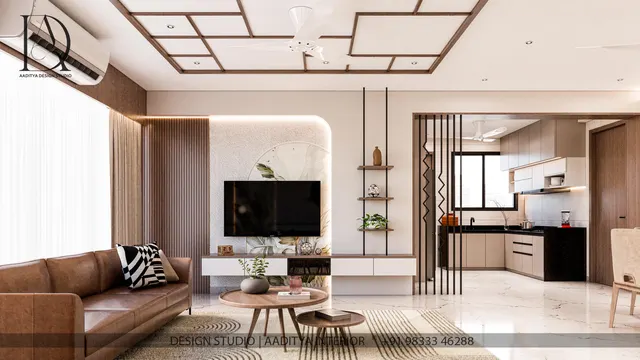
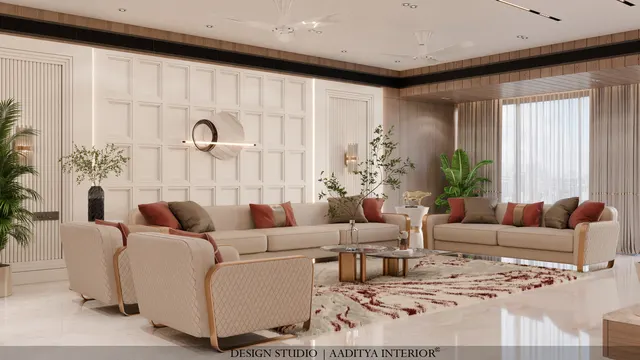
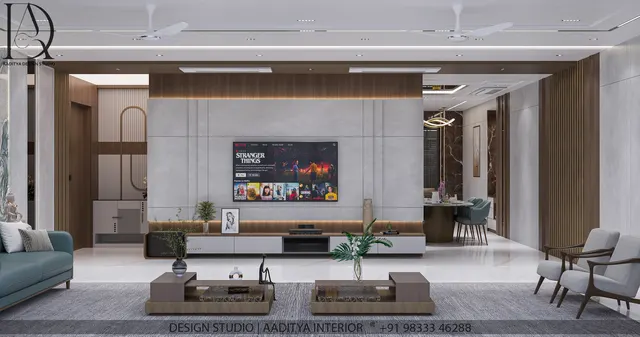
The corner sofa has become the default seating choice for Indian living rooms, and the reason is easy to see. In a typical flat the living room must do several jobs at once: it is the family sitting area in the evening, the television room, the place where guests are received, and often the children's homework corner. A straight three-seater leaves the corner of the room unused and seats three people; an L-shaped corner sofa uses that dead corner, seats five or six, and gives the family a chaise to stretch out on. It is, in effect, a small room plan drawn in upholstery.
Yet the corner sofa is also the piece of furniture most often bought wrong. It arrives too long for the wall, so it covers a plug point or blocks a door swing. It is too deep, so the walkway behind it shrinks to a sideways shuffle. The chaise lands on the wrong side, facing the wall instead of the television. Or the family discovers, too late, that the sofa cannot pass through the main door or the lift, and the delivery team has to carry it up three floors or send it back. Every one of these failures is a measurement failure, and every one of them is preventable with a tape and half an hour of planning before the order is placed.
This article gives the numbers that matter: the standard sizes of L-shaped and chaise corner sofas sold in India, the room sizes each layout suits, the clearances that keep a living room walkable, a step-by-step measuring guide, the materials and frames underneath the fabric, and indicative October 2026 prices. The dimensions follow common Indian practice and the National Building Code of India 2016, and the prices are ranges that should be confirmed with a local retailer before budgeting.
A short history of the corner sofa in India
For most of the twentieth century the Indian living room was arranged around the diwan and the straight sofa. The diwan — a low, long platform with bolsters — sat against a wall and doubled as a guest bed, while a three-seater sofa and two chairs faced the television. The arrangement was flexible but wasteful: the corner of the room stayed empty, and a family of five needed three separate pieces to sit together. The corner sofa arrived in India with the growth of organised furniture retail in the 1990s and 2000s, when brands began importing sectional designs that had been common in Europe and America for decades. Early versions were large, deep and expensive, suited to bungalows rather than flats.
The design changed as Indian homes changed. Apartments shrank, living rooms became open-plan, and the television moved from a corner cabinet to a wall-mounted panel. Furniture makers responded with compact L-shapes sized for 10 × 12 ft and 12 × 14 ft living rooms, with chaises of 1500–1800 mm rather than the 2100 mm chaises of the imported originals. The modular sectional — separate pieces that can be rearranged — followed, and it suits Indian families well, because the same set can be reconfigured when the family moves house or the room is rearranged for a festival. Today the corner sofa is one of the most popular living room seating formats in Indian homes, and the market offers everything from a compact two-piece L-shape to a six-seater U-shape with recliners.
The anatomy of a corner sofa: the dimensions that matter
A corner sofa is described by five numbers, and a buyer who understands them can read any catalogue with confidence. The overall length is the long arm of the L, measured along the wall; the overall depth is the short arm, measured out from the wall. The seat depth is the distance from the front edge of the seat to the backrest, and it decides whether a person sits upright or sinks back. The seat height is the distance from the floor to the top of the seat cushion, and the back height is measured from the floor to the top of the backrest. Two further numbers matter for comfort: the armrest height, usually 550–650 mm from the floor, and the chaise length, the distance the extended seat runs out from the sofa body.
Indian practice has settled on fairly consistent bands. A compact L-shape for a small flat runs about 2100–2400 mm along the long side and 1500–1800 mm along the short side, with a seat depth of 550–600 mm. A standard family L-shape runs 2400–3000 mm by 1800–2100 mm, seating five to six people. A large L-shape or U-shape for a bungalow living room can run 3000–3600 mm by 2100–2400 mm. Seat height is usually 400–450 mm, which suits most Indian adults and lets older family members stand up without effort. Seat depth is the number most often got wrong: a depth of 550–600 mm suits upright sitting and conversation, while 650–750 mm suits lounging and television watching, but makes it hard for shorter people to sit with their feet on the floor.
| Layout | Overall size (mm) | Seats | Suits a living room of |
|---|---|---|---|
| Compact L-shape (2 + chaise) | 2100–2400 × 1500–1800 | 4 | 10 × 12 ft to 11 × 13 ft (3.0 × 3.6 m) |
| Standard L-shape (3 + chaise) | 2400–3000 × 1800–2100 | 5–6 | 12 × 14 ft to 14 × 16 ft (3.6 × 4.2 m) |
| Large L-shape (3 + chaise, deep) | 3000–3300 × 2100–2400 | 6–7 | 14 × 18 ft and larger (4.2 × 5.4 m) |
| U-shape | 3000–3600 × 2400–2700 | 7–8 | 16 × 20 ft and larger, bungalows |
| Modular sectional (3–5 pieces) | Varies; pieces 750–1000 wide | 5–8 | Any size; rearrangeable for festivals and moves |
| L-shape with recliner end | 2700–3200 × 1800–2100 | 5 | 12 × 16 ft and larger; needs 400 mm behind |
Room-wise layouts: which sofa for which living room
The sofa must be chosen from the room, not the showroom. A showroom is a large open space with high ceilings, and every sofa looks smaller there than it will at home. The reliable method is to work from the room's clear wall lengths. Measure the two walls the sofa will sit against, then subtract the space the room needs for everything else: the door swing, the walkway to the balcony or bedroom, the television unit, and the passage to the dining area. What remains is the maximum sofa length on each side. A sofa that fills the full wall length always looks oversized; leaving 150–300 mm of wall visible at each end keeps the room balanced and gives space for a side table or a floor lamp.
In a small living room of about 10 × 12 ft, a compact L-shape of 2100–2400 mm is usually the largest sofa that still leaves a walkway. The chaise should sit on the side away from the main circulation route, so that people walking from the entrance to the bedrooms do not have to step around it. The television is best on the wall opposite the long side of the sofa, at a distance of about 2100–2700 mm for a 43–55 inch screen. In a medium room of 12 × 14 ft, a standard L-shape of 2400–2700 mm works well, with a coffee table of about 1100 × 550 mm in front and 400–450 mm of leg room between the table and the sofa front. In a large room of 14 × 18 ft or more, the sofa can float — placed away from the wall with a console behind it — which creates a walkway behind the seating and makes the room feel designed rather than filled.
| Clearance | Minimum (mm) | Comfortable (mm) | Notes |
|---|---|---|---|
| Walkway behind or beside sofa | 700 | 900 | Main route to balcony or bedroom; 600 is a squeeze |
| Leg room, sofa front to coffee table | 350 | 400–450 | Less than 350 and knees hit the table |
| Television to sofa (43–55 inch screen) | 2100 | 2400–2700 | Roughly 1.5–2 times the screen diagonal |
| Sofa back to wall (recliner end) | 400 | 500 | Recliner mechanism needs swing room |
| Door swing clearance | Full swing arc | Full swing + 50 | Sofa must never sit inside a door swing |
| Side table gap at sofa end | 100 | 150–300 | A zero gap traps dust and scuffs the wall |
| Dining passage from living room | 900 | 1050–1200 | Carrying a thali needs two-way room |
How to measure before ordering: the room and the delivery route
Measurement has two parts, and buyers usually do only the first. The room measurement is the wall length, the ceiling height, the positions of plug points, switches, the television point and the door swings, all marked on a simple sketch. The delivery-route measurement is the one that saves a return: the width and height of the main door, the lift car size and door, the staircase width and the landing, and any sharp turn in the passage. A corner sofa is delivered in one or two large pieces; a one-piece L-shape of 2700 mm will not pass through a 750 mm door, and many older buildings have lifts of only 900–1000 mm width. Modular sofas solve this — each piece is 750–1000 mm wide and passes through a standard door — and that alone is a good reason to choose modular in an apartment building with a small lift.
The practical routine takes about thirty minutes. First, measure the two walls and mark the sofa outline on the floor with masking tape, including the chaise. Second, walk the normal routes — entrance to kitchen, living room to balcony, living room to bedrooms — and check that no walkway falls below 700 mm. Third, sit on the taped outline at the intended television distance and check the viewing angle; the screen centre should sit at about eye level when seated, roughly 1000–1100 mm from the floor. Fourth, measure the delivery route and compare it with the sofa's packed dimensions, which the retailer should give in writing. Fifth, check the plug points: a corner sofa against a wall hides any socket behind it, so a socket that falls behind the sofa is a socket lost. If any check fails, change the size or the hand of the chaise before paying, not after delivery.
Seat comfort: depth, height and the backrest
Comfort in a sofa is mostly geometry. Seat height of 400–450 mm lets most adults sit with feet flat on the floor and stand up easily, which matters in a home with elderly parents. A seat height below 380 mm feels low and makes standing up an effort; above 480 mm, shorter people dangle their feet. Seat depth of 550–600 mm supports the thigh without pressing behind the knee and suits upright sitting, conversation and eating. A deeper seat of 650–750 mm suits lounging, reading and television, and it suits a chaise, where the legs are meant to stretch out. The backrest should reach about 850–1000 mm from the floor for proper shoulder support; low-back designs of 750–800 mm look sleek but tire the back during a long film. The armrest, at 550–650 mm from the floor, should be wide enough to rest a cup or a book — about 200–300 mm.
The sit test matters more than any specification sheet, and it should be done the way the family will actually use the sofa: sit for ten minutes, not ten seconds, with feet on the floor and then tucked up, lean back fully, and try the corner seat, which is the deepest and often the least comfortable if the backrest angle is wrong. A good backrest reclines at about 100–110 degrees from the seat. Cushions deserve attention too: high-resilience foam of 32–40 density holds its shape for years, while soft low-density foam feels luxurious in the showroom and sags within a year. Feather-blend cushions need regular plumping; foam cushions need only a weekly rotation. Aaditya Interior recommends testing the exact model being ordered, not a similar one, because foam and frame vary between models from the same brand.
| Comfort dimension | Typical range (mm) | Too small feels | Too large feels |
|---|---|---|---|
| Seat height | 400–450 | Hard to stand up; knees too high | Feet dangle; edge presses thighs |
| Seat depth (upright) | 550–600 | No thigh support; perched | Back unsupported without cushions |
| Seat depth (lounge/chaise) | 650–750 | Legs unsupported | Shorter people cannot reach the floor |
| Back height | 850–1000 | No shoulder support on long sits | Room looks boxed in; heavy visual weight |
| Armrest height | 550–650 | Arm hangs; no rest for a cup | Shoulder raised; feels like a wall |
| Chaise length | 1500–1800 | Legs hang off the end | Blocks the walkway beside the sofa |
Frames, foam and upholstery: what lasts in Indian homes
What a sofa looks like is the fabric; what it lasts like is the frame and foam underneath. A good frame is kiln-dried hardwood or engineered hardwood with corner blocks and screws, not staples alone. A poor frame — green wood or thin pine — warps in Indian humidity and starts creaking within two monsoons. The suspension matters too: sinuous steel springs or elastic webbing support the seat, and both are acceptable if they are close-spaced and properly fixed. Foam density is the number to ask for: high-resilience foam of 32–40 density keeps its shape for five to eight years, while 28 density and below softens noticeably within two years. A retailer who cannot state the foam density is a retailer to be cautious about.
Upholstery is a climate decision as much as a colour decision. In the heat and humidity of Gujarat and coastal India, breathable cotton-blend and linen-blend fabrics stay comfortable, while leatherette and bonded leather feel sticky in summer and can peel in humidity within three to four years. Genuine leather lasts longest and ages well, but it costs three to four times as much as fabric and needs conditioning. Performance fabrics with stain resistance suit homes with children and pets, and removable, washable covers are worth paying for in a family home — a fixed cover means a stained sofa stays stained. Dark fabrics hide dust and stains better than pale ones, but they also show lint; mid-tone greys, beiges and muted blues are the practical compromise most Indian families settle on.
| Upholstery | Feel in Indian summers | Life (typical) | Care | Indicative cost impact |
|---|---|---|---|---|
| Cotton / linen blend fabric | Breathable, comfortable | 5–8 years | Vacuum weekly; professional clean yearly | Base price |
| Polyester / performance fabric | Cooler than leatherette; stain resistant | 6–9 years | Wipe spills quickly; vacuum weekly | Base to +10–15% |
| Leatherette (PU / PVC) | Sticky in heat; can peel in humidity | 3–5 years | Wipe with damp cloth; avoid harsh cleaners | Similar to fabric, sometimes less |
| Genuine leather | Cool to sit on; ages well | 10–15 years | Condition twice a year; keep from direct sun | +150–250% over fabric |
| Velvet (polyester) | Warm; shows marks easily | 5–7 years | Brush weekly; professional clean | +15–30% over plain fabric |
Costs: what a corner sofa costs in India in October 2026
Prices vary by city, brand and fabric, but the bands below reflect the Indian market in October 2026 and are consistent with the ranges used across this blog. A compact fabric L-shape from a mid-range brand typically costs ₹35,000–₹65,000; a standard family L-shape in fabric costs ₹55,000–₹1,20,000; a large or modular sectional in fabric costs ₹90,000–₹2,00,000. Leatherette adds roughly 10–20 per cent over fabric, and genuine leather multiplies the price by two and a half to four times. Recliner mechanisms add about ₹15,000–₹30,000 per seat. Delivery and installation are often included in metro cities and charged at ₹1,000–₹3,000 elsewhere; old-sofa removal, if offered, is usually ₹1,000–₹2,500. Prices are indicative October 2026 estimates — confirm locally before budgeting.
| Sofa type | Fabric (₹) | Leatherette (₹) | Genuine leather (₹) | Notes |
|---|---|---|---|---|
| Compact L-shape, 4 seats | ₹35,000–65,000 | ₹40,000–75,000 | ₹90,000–1,60,000 | Best value for a first flat |
| Standard L-shape, 5–6 seats | ₹55,000–1,20,000 | ₹65,000–1,40,000 | ₹1,50,000–3,50,000 | The family workhorse |
| Large / U-shape, 7–8 seats | ₹90,000–2,00,000 | ₹1,10,000–2,40,000 | ₹2,50,000–6,00,000 | Bungalows and large halls |
| Modular sectional, 5–8 seats | ₹80,000–1,80,000 | ₹95,000–2,10,000 | ₹2,20,000–5,50,000 | Pieces priced per module |
| L-shape with 1 recliner | ₹75,000–1,50,000 | ₹85,000–1,70,000 | ₹1,80,000–4,00,000 | Add ₹15,000–30,000 per recliner seat |
Where the corner sofa is going: modular, smart and sustainable
Three trends are reshaping the corner sofa in India. The first is modularity: brands now sell sofas as individual seats, chaises, corners and ottomans that clip together, so a family can start with a compact L-shape and add a seat when a parent moves in or a child grows up. The second is the rise of performance and recycled fabrics — stain-resistant weaves, fabrics made from recycled plastic bottles, and foam with recycled content — driven by younger buyers who ask about materials. The third is the connected living room: sofas with built-in USB charging, storage under the chaise, and even recliners with a small motor, all of which need a plug point planned behind the sofa, not discovered afterwards. None of these trends changes the fundamentals: the room still decides the size, the frame still decides the life, and the sit test still decides the comfort.
Eight rules for buying a corner sofa
- Measure the two walls and tape the sofa outline on the floor before visiting any showroom.
- Keep every main walkway at 700 mm minimum and 900 mm where people carry things.
- Choose the chaise hand from the front view and confirm it in writing on the order.
- Measure the delivery route — lift, staircase turns and main door — and get packed sizes in writing.
- Sit-test the exact model for ten minutes, including the corner seat.
- Ask for the frame wood, foam density and spring type, and get them on the quotation.
- Pick fabric for the climate and the household: washable covers where children or pets live.
- Leave 150–300 mm of wall visible at each end of the sofa so the room does not look stuffed.
Frequently asked questions
What size corner sofa fits a 10 × 12 ft living room?
A compact L-shape of 2100–2400 mm by 1500–1800 mm is the largest that fits comfortably, leaving a 700–900 mm walkway. Go larger and the room loses its circulation; the sofa becomes the room instead of furnishing it.
Which side should the chaise be on?
The chaise goes on the side away from the main walking route and, where possible, facing the television. Stand facing the sofa from the front to name the hand: chaise on the left is a left-hand chaise. Confirm the hand in writing, because a wrong hand is the most common reason for a return.
How much gap should there be between the sofa and the coffee table?
About 400–450 mm is comfortable for legs and for reaching a cup. Less than 350 mm and knees hit the table; more than 550 mm and the table feels disconnected from the seating.
Can a corner sofa fit through a standard Indian main door?
A one-piece L-shape usually cannot pass through a 900 mm door or a small lift. Modular sofas, with pieces 750–1000 mm wide, almost always can. Measure the lift car and the staircase landing as well as the door, and get the packed dimensions in writing before ordering.
Is fabric or leatherette better for a corner sofa in India?
Breathable fabric suits Indian summers and lasts five to eight years with care; leatherette is cheaper to wipe clean but can feel sticky in heat and may peel in humidity within three to five years. For a family home with children, a stain-resistant performance fabric with washable covers is usually the best compromise.
How far should the sofa be from the television?
Roughly 2100–2700 mm for a 43–55 inch screen, or about one and a half to two times the screen diagonal. The screen centre should sit at about eye level when seated, roughly 1000–1100 mm from the floor.
Sources & standards
- National Building Code of India 2016, Part 3 (Development Control Rules and General Building Requirements) and Part 8 (Building Services, Section 1: Lighting and Natural Ventilation) — Bureau of Indian Standards
- Neufert, Architects' Data, 4th edition — living room and seating dimensions, circulation clearances
- Time-Saver Standards for Interior Design and Space Planning — residential seating and living room planning
- Bureau of Indian Standards — IS 303 (plywood for general purposes), IS 710 (marine plywood), IS 12406 (medium density fibreboard)
- Price ranges: indicative October 2026 estimates — confirm locally before budgeting