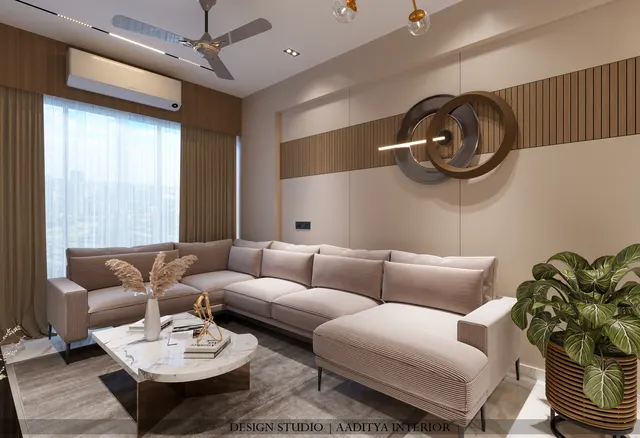
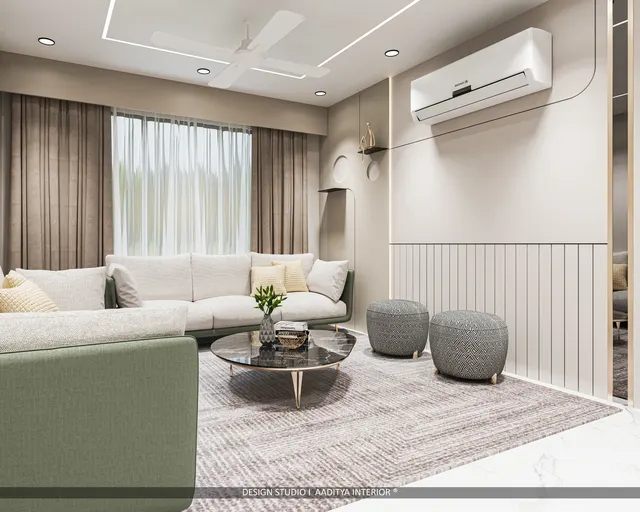
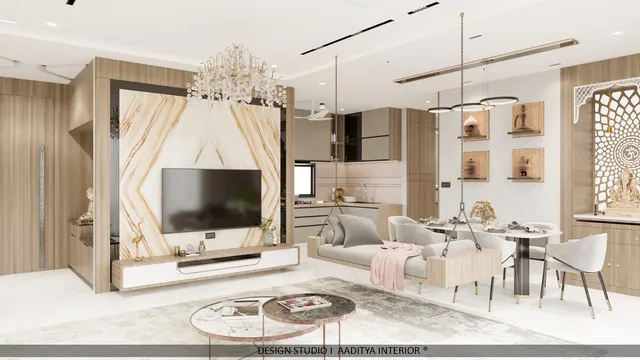
Japandi is the most talked-about interior style of recent years, and for good reason: it offers a way out of the cluttered, over-decorated, high-gloss look that dominated Indian homes for a decade, towards something calmer, warmer and quietly confident. The name is a blend, and so is the style — it fuses Japanese minimalism and the aesthetic of wabi-sabi, which finds beauty in simplicity and imperfection, with Scandinavian functionalism and the cosy warmth the Danes call hygge. The result is a home of natural materials, muted colours, clean lines and very little clutter, where every object earns its place and the overall feeling is one of restful order.
For Indian homes the appeal is real but so are the pitfalls. Done well, Japandi suits the Indian love of natural materials — wood, cane, cotton, stone — and its decluttered calm is a genuine relief in busy urban flats. Done badly, it becomes a cold, bare, uncomfortable space that ignores how Indian families actually live: with extended family, frequent guests, colour, and a great deal of daily activity. The art of Japandi in India is to keep its calm and its honesty of material while adapting its sparseness to a home that is lived in fully, not a showroom photographed once and never touched.
This article explains Japandi properly for an Indian audience: where it comes from and what the two traditions each contribute, the palette and the natural materials that define it, the low and honest furniture and its dimensions, how to get the decluttered calm without a cold and impractical home, indicative costs for the key pieces, and how to adapt the whole look to the Indian climate and way of living. The aim is a Japandi home that is beautiful and serene but also warm, practical and genuinely comfortable for an Indian family.
Where Japandi comes from
Japandi is a recent name for a fusion that designers had been drawn to for years, because the two traditions behind it share a deep common ground despite coming from opposite ends of the earth. Japanese design, shaped by Zen and by the wabi-sabi sensibility, values simplicity, natural materials, craftsmanship, asymmetry and the quiet beauty of imperfect, ageing things; it is restrained, spare and deeply considered. Scandinavian design, which matured in the twentieth century around functionalism and a response to long dark winters, values clean lines, light woods, comfort, cosiness and practicality — the warmth of hygge. Where Japanese minimalism can tend towards austerity, Scandinavian design brings softness and function; where Scandinavian design can tend towards the plain, Japanese design brings craft and soul.
Japandi is the meeting of the two: the restraint, craft and natural palette of Japan warmed by the comfort, function and light of Scandinavia. It keeps the decluttered calm and the honesty of material common to both, and resolves their differences — Japanese spaces often use darker woods and lower furniture, Scandinavian ones lighter woods and a cosier fullness, and Japandi draws on both. Understanding this is practical, not academic: when a Japandi room feels too cold, it usually needs more of the Scandinavian warmth — texture, a touch more fullness; when it feels too bland, it needs more of the Japanese craft and restraint — a single beautiful object, more negative space. The style is a balance, and knowing its two poles is how a designer tunes it.
The palette and the materials
The Japandi palette is muted, warm and narrow. It is built on soft neutrals — warm whites, oatmeal and beige, soft greige, taupe and clay — grounded by the tones of natural wood and sharpened by a single deeper accent, usually a charcoal, black or deep ink used sparingly. There are no loud colours and no high contrast; the interest comes from texture and material, not from a bright palette. Against Indian walls, which are often an unforgiving builder-white, a warm off-white or a soft greige makes an enormous difference, immediately calming a room. The accent is the discipline: one deep tone, in a few considered places, holds the scheme together without disturbing its calm.
Materials are where Japandi lives, because with such a quiet palette it is the texture and the honesty of material that carry the room. Natural wood is central — light to mid oak and ash in the Scandinavian manner, warmer teak and darker woods in the Japanese — shown with its grain honest and its finish matt, never high-gloss. Cane and rattan, linen and cotton, paper, ceramic, matt stone and a little blackened metal complete the material set. Everything is natural, tactile and understated. For India this is a happy fit: cane, cotton, teak and stone are all deeply familiar local materials, and sourcing them well is easier here than sourcing the imported look of many other styles.
| Element | Japandi choice | Avoid |
|---|---|---|
| Walls | Warm white, soft greige, clay, lime finish | Builder-white, bright colours |
| Wood | Matt oak, ash, teak; honest grain | High-gloss, heavy dark polish |
| Accent | One deep charcoal / ink, used sparingly | Multiple bright accents |
| Soft materials | Linen, cotton, wool, cane, rattan | Shiny synthetics, heavy prints |
| Hard materials | Matt stone, ceramic, paper, blackened metal | Mirror, chrome, glossy marble |
| Overall feel | Muted, textural, calm | High contrast, cluttered, glossy |
Low, honest furniture and its dimensions
Japandi furniture is low, simple and honest in its construction. Seating sits closer to the floor than the Indian norm — a sofa seat around 380 to 420 mm high rather than the usual 450 — and coffee tables, sideboards and beds follow suit, giving rooms a grounded, restful horizontality. Lines are clean and legs are often slim and tapered in the Scandinavian way or square and solid in the Japanese; joinery is shown rather than hidden, celebrated as craft. Platform beds sit low, sometimes with the mattress close to the floor. Nothing is ornate, nothing is glossy, and every piece is chosen to be both beautiful and useful — the honesty of function is part of the aesthetic. The dimensions below suit the look while staying comfortable for everyday Indian use.
| Piece | Japandi dimension | Note |
|---|---|---|
| Sofa seat height | 380-420 mm | Lower than the usual 450 mm |
| Coffee table height | 300-380 mm | Low, close to the seat |
| Sideboard / console height | 550-650 mm | Low and horizontal |
| Platform bed height | 250-400 mm (mattress top) | Low, grounded |
| Dining table height | 720-750 mm | Standard; keep the base simple |
| Open shelving depth | 250-300 mm | Shallow; displayed sparingly |
Decluttered calm without a cold home
The hardest part of Japandi is the emptiness, because true minimalism is unforgiving and an Indian home is rarely empty. The style depends on negative space — on walls and surfaces left clear, on a few beautiful objects given room to breathe rather than many crowded together. This requires real storage discipline: generous concealed storage so that daily clutter has somewhere to go, and the restraint to display very little. But emptiness alone is cold, and this is where the Scandinavian half of Japandi matters. Warmth comes back through texture — a chunky wool throw, a linen cushion, a cane chair, a wool rug — and through the grain and tactility of natural wood. A Japandi room should feel serene and uncluttered, but also warm and touchable, never bare and hard.
The practical route to this balance in an Indian home is storage, light and texture, in that order. First, build enough concealed storage — full-height wardrobes, a long low sideboard with doors, hidden kitchen storage — so that the clutter of real life disappears and the surfaces can stay clear. Second, get the light right: warm, layered lighting rather than a single harsh tube, with paper or rattan shades giving a soft glow in the evening. Third, add texture generously even as you keep colour and objects spare — natural fabrics, a rug, a plant, raw wood. A home built this way keeps the calm of minimalism while remaining comfortable and alive, which is the whole point of the Japandi compromise.
What Japanese and Scandinavian design each bring
It is worth setting the two parent traditions side by side, because the clearest way to get Japandi right is to borrow deliberately from each. From Japan come the restraint and negative space, the reverence for craft and natural, imperfect materials, the lower furniture and the darker woods, and the wabi-sabi acceptance of ageing and asymmetry. From Scandinavia come the warmth and comfort, the lighter woods, the emphasis on function and everyday usefulness, the cosy textures of hygge, and the handling of light. A Japandi room that feels wrong can almost always be diagnosed by asking which parent it is neglecting, and corrected by adding what is missing — more Japanese quiet, or more Scandinavian warmth.
| Quality | Japanese | Scandinavian |
|---|---|---|
| Mood | Restraint, quiet, Zen calm | Warmth, comfort, hygge |
| Wood tones | Warmer, darker; teak | Lighter; oak, ash, pine |
| Furniture | Low, grounded, spare | Functional, soft, cosy |
| Decor | Very few, perfect objects | A little more, comfortable fullness |
| Philosophy | Wabi-sabi, imperfection, craft | Functionalism, practicality |
| Japandi takes | Craft, restraint, negative space | Warmth, function, light |
Adapting Japandi to Indian homes and climate
Japandi adapts well to India, but it should be adapted, not transplanted. The decluttered calm must be reconciled with larger households, frequent guests and more daily activity, which means the concealed storage has to be genuinely generous and the few displayed objects chosen to survive real life. The low furniture suits Indian floor-sitting habits and works well, but seating should stay comfortable for elders, so not everything need go to the floor. The palette and natural materials translate directly — teak, cane, cotton, stone and lime finishes are all at home here — and in fact Japandi can lean on local craft beautifully, using Indian handwoven textiles, cane work and solid timber in its spirit of honest material. For the climate, matt lime and mineral wall finishes suit the warmth, natural ventilation fits the airy feel, and a few robust indoor plants bring the greenery both traditions love.
A sensible Indian Japandi also makes peace with colour and warmth more readily than a purist might. A quiet scheme does not have to be bloodless: a deep indigo, a terracotta or a muted green, used as the single accent in place of the usual charcoal, roots the look in an Indian sensibility without breaking its calm. Handwoven dhurries and cotton, brass used sparingly and matt rather than shiny, and the grain of local teak all keep the style honest while making it feel less imported. The goal is a home that reads unmistakably as Japandi in its restraint and its materials, yet belongs to its place and its family rather than to a magazine photographed in Copenhagen or Kyoto.
What the key Japandi pieces cost
Japandi can be achieved at a range of budgets, because its restraint means fewer pieces, though each wants to be well made and honestly finished. The ranges below are indicative October 2026 figures for solid-wood and natural-material pieces of reasonable quality, and should be confirmed locally, as solid timber, cane and good upholstery vary widely with material and workmanship. Much of the look, in fact, comes free: decluttering, a warm off-white on the walls, and layered warm lighting cost little and do most of the work, with the furniture following as budget allows.
| Piece | Indicative cost (Oct 2026) | Note |
|---|---|---|
| Low solid-wood sofa (3-seat) | ₹45,000-1,20,000 | Teak or oak frame, linen upholstery |
| Oak / teak low coffee table | ₹12,000-40,000 | Solid wood, matt finish |
| Slatted wood screen / partition | ₹900-2,200 per sq ft | Oak or teak slats on a frame |
| Low sideboard / console | ₹25,000-80,000 | Solid wood, simple doors |
| Cane / rattan accent chair | ₹8,000-30,000 | Natural cane, wood frame |
| Paper / rattan pendant light | ₹2,500-12,000 | Soft, diffused warm glow |
Where Japandi is heading
Japandi has outlasted the usual lifespan of a trend because its core values — calm, natural material, less clutter, honest craft — answer something real about how people want to live, especially in dense cities. Its direction now is towards greater warmth and personality, as the first wave of very spare, almost severe Japandi rooms gives way to softer, more individual versions that carry a family and a place within the discipline. For India specifically, the most interesting movement is the marriage of Japandi restraint with Indian craft — handwoven textiles, cane, solid regional timber, lime finishes — producing an Indo-Japandi that is calmer than the old maximalism but warmer and more rooted than the imported original. Studios working in natural, restrained interiors, Aaditya Interior among them, increasingly draw on this blend. The core promise will hold: a home with less in it, but everything in it natural, honest and loved.
Rules for a Japandi home in India
These rules keep a Japandi scheme calm and beautiful without letting it turn cold or impractical.
- Start with the walls: replace builder-white with a warm off-white, soft greige or lime finish.
- Keep a muted, narrow palette grounded by a single deep accent used sparingly.
- Choose natural, matt materials — solid wood, cane, linen, cotton, stone — and avoid gloss and shiny synthetics.
- Go low and honest with furniture: a 380-420 mm sofa seat, low tables, show the joinery.
- Build generous concealed storage so surfaces can stay clear, and display very few, well-chosen objects.
- Bring warmth back through texture — wool, linen, cane, a rug, raw wood — so the calm never turns cold.
- Light the home warmly and in layers, with paper or rattan shades, not a single harsh tube.
- Adapt to Indian life: comfortable seating for elders, a local accent colour, handwoven textiles and robust plants.
Frequently asked questions
What is Japandi style?
Japandi is a hybrid interior style that fuses Japanese minimalism and the wabi-sabi love of simple, imperfect, natural things with Scandinavian functionalism and the cosy warmth of hygge. The result is a calm, decluttered home of natural matt materials, a muted palette grounded by a single deep accent, and low, honest, well-made furniture. It keeps the restraint and craft of Japan and the warmth and function of Scandinavia, so a Japandi room feels serene but also comfortable and lived-in.
Does Japandi work in Indian homes?
Yes, very well, provided it is adapted rather than copied. Its natural materials — teak, cane, cotton, stone, lime finishes — are all familiar in India, and its decluttered calm is a relief in busy flats. The adaptations that matter are generous concealed storage for larger, more active households, comfortable seating for elders alongside the low pieces, and a willingness to use a quiet local accent colour and handwoven textiles so the home feels rooted rather than imported.
What colours are used in Japandi?
A muted, warm, narrow palette: warm whites, oatmeal and beige, soft greige, taupe and clay, grounded by the tones of natural wood and sharpened by a single deeper accent, usually charcoal, black or deep ink used sparingly. There are no loud colours or high contrast; the interest comes from texture and material. In an Indian adaptation, the single accent can be a deep indigo, terracotta or muted green in place of charcoal, which roots the look without breaking its calm.
How is Japandi different from plain minimalism?
Minimalism can be cold, hard and austere; Japandi is warm. Both strip away clutter and keep a spare palette, but Japandi insists on natural, tactile materials and on the Scandinavian warmth of texture and soft light, so it feels comfortable and alive rather than clinical. It also brings the Japanese reverence for craft and imperfection, so the few objects in a Japandi room have soul. In short, Japandi is minimalism made warm, natural and human.
What furniture suits a Japandi home?
Low, simple, honestly made furniture in natural matt wood: a sofa with a seat around 380 to 420 mm high, low coffee tables at 300 to 380 mm, low sideboards and platform beds, clean lines and visible joinery, with slim tapered or solid square legs. Cane and rattan chairs, linen and cotton upholstery, and a slatted wood screen as a soft divider are all characteristic. Nothing ornate, nothing glossy, and every piece both beautiful and useful.
Sources & standards
- General design references on Japanese aesthetics (wabi-sabi) and Scandinavian functionalism and hygge, described as established design traditions
- Neufert, Architects' Data — furniture and seating dimensions underlying the low-furniture guidance
- Time-Saver Standards for Interior Design and Space Planning — living-room layout and clearances
- Bureau of Indian Standards — IS 303 and IS 710 plywood grades and solid-timber references for natural-material furniture
- Manufacturers' and craftspeople's standard price ranges for solid-wood and cane furniture, described generically
- Price ranges: indicative October 2026 estimates — confirm locally before budgeting