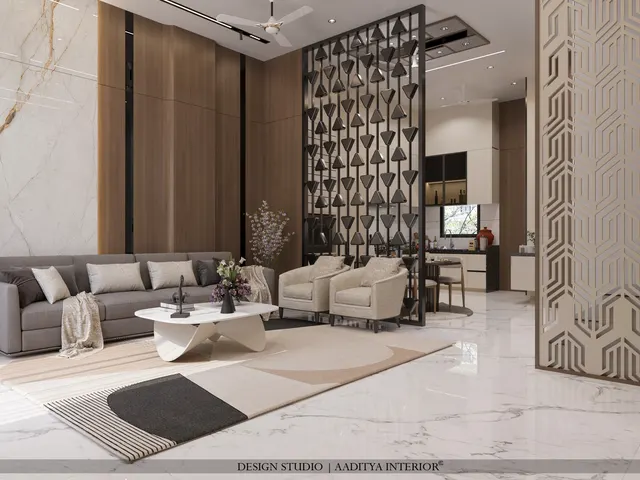
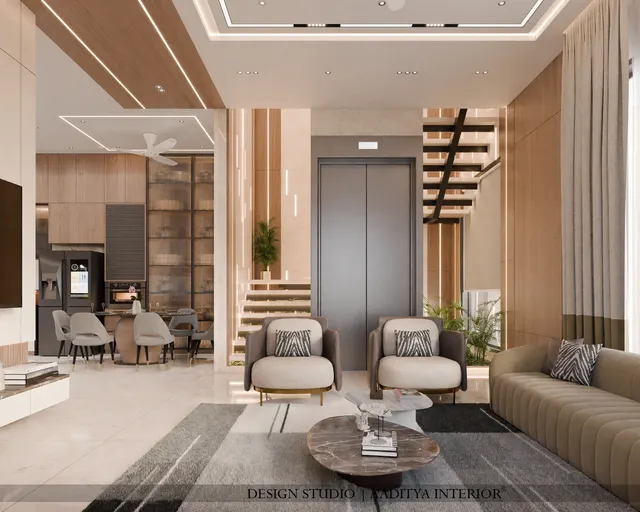
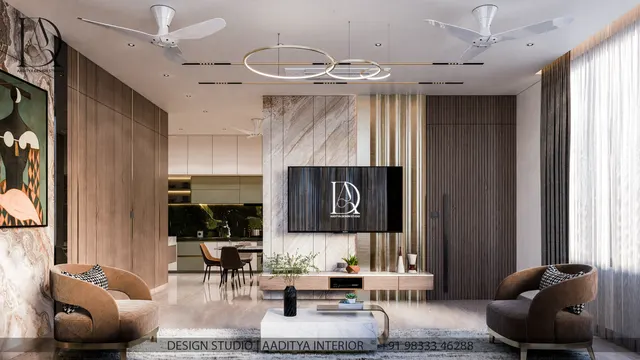
For a decade, the Indian design conversation was dominated by minimalism: white walls, hidden storage, one statement light and as little else as possible. It photographed beautifully and, for many families, felt a little cold — a showroom to be kept tidy rather than a home to be lived in. Maximalism is the swing back. It is the deliberate art of more: layered colour, mixed pattern, collected objects, and the warmth of a room that clearly belongs to someone. For Indian homes in particular it is less a foreign import than a homecoming, because the traditional Indian interior — the haveli, the family drawing room, the festival-decorated house — was maximalist long before the word existed.
The trouble is that maximalism is the easiest style to get wrong. Done well, it is rich, personal and layered; done badly, it is simply clutter with good lighting. The difference is not the amount of stuff but the discipline underneath it: a held colour palette, a deliberate mix of pattern scales, a rhythm of objects, and enough visual rest for the eye. This article explains what Indian maximalism actually is, where it comes from, and how to build it in a real flat or house — the colours, the layering, the patterns and the objects — so that the result reads as collected and confident rather than crowded and accidental.
What maximalism actually is
Maximalism is often described as the opposite of minimalism, but that is only half true. Both are disciplined; they simply spend their discipline differently. Minimalism removes until only the essential remains; maximalism adds, but curates every addition so that the whole holds together. The governing idea is layering — colour over colour, pattern over pattern, object beside object — unified by a few repeating threads: a limited palette that recurs across the room, a material or metal that reappears, a rhythm in how things are grouped. When those threads are present, a very full room feels intentional. When they are absent, the same quantity of things feels like a jumble. Maximalism is therefore a style of editing as much as of accumulation, which is exactly why it is hard.
The Indian roots of maximalism
India hardly needs to import maximalism. The painted and mirrored interiors of Rajasthani and Gujarati havelis, the layered textiles of a traditional drawing room, the brass and copper of a well-used kitchen, the riot of colour at a wedding or a festival — these were rich, pattern-dense, object-full interiors centuries before the term was coined. The Indian home has long been comfortable with ornament: carved wooden doors, inlaid furniture, jaali screens, block-printed textiles, and walls that carried colour rather than apologising for it. What the current revival does is take that instinct and give it a contemporary discipline — pairing the old richness with cleaner architecture, better lighting and an edited hand — so that an Indian family can have the warmth of the ancestral home without the heaviness.
| Element | What it brings | Indian source to draw on | Where to use it |
|---|---|---|---|
| Colour | Depth and mood | Jewel tones, haveli frescoes | Feature walls, large upholstery |
| Pattern | Energy and rhythm | Block print, ikat, jaali | Curtains, cushions, rugs |
| Texture | Warmth and richness | Brass, carved wood, weave | Objects, hardware, furniture |
| Objects | Personality and story | Collected brass, ceramics, art | Grouped on shelves and consoles |
| Art | Focus and narrative | Miniatures, folk art, photos | Gallery walls |
| Greenery | Life and softness | Potted plants, palms | Corners and empty rests |
Fig. 1 shows the principle in section: a maximalist wall is not one thing but a stack of layers. A coloured or papered ground sets the mood; a gallery of framed art sits over it; a console with a rhythm of objects grounds it; and textiles and a lamp add the final softness. Crucially, each layer has its own internal order — the frames align to a loose grid, the objects step up and down in a deliberate rhythm — so the richness reads as composed. Strip away that order and the same wall becomes a pile.
Building a maximalist colour palette
Colour is where maximalism lives or dies. The instinct to use every colour at once is exactly the trap. The reliable method is to hold a palette of three to five colours and let them recur all over the room in different materials — a deep teal on the wall, picked up in a cushion, a bound book, the glaze of a vase and the thread of a rug. Jewel tones suit Indian maximalism especially well: emerald, sapphire, ruby, mustard and ochre, warmed by the brass and terracotta that Indian interiors already carry. A near-neutral is still useful as a breathing space — a cream sofa, a wooden floor — so that the strong colours have somewhere to rest. The discipline is simple to state and hard to keep: new things are allowed into the room only if they belong to the palette.
Mixing pattern without chaos
Pattern mixing is the skill that separates confident maximalism from a mess, and the trick is scale. Three patterns that share a colour story but differ in scale will almost always work together: one large-scale pattern (a bold block-print curtain, a big floral), one medium (a geometric cushion, an ikat), and one small or near-solid (a fine stripe, a textured weave). The large pattern anchors, the medium supports, the small gives the eye a rest. Patterns of the same scale fight each other; patterns of wildly different colour stories look accidental. A single unifying colour running through all of them — a thread of the same ochre in the floral, the geometric and the stripe — is the glue.
| Pattern role | Scale | Example in an Indian room | How much to use |
|---|---|---|---|
| Anchor | Large | Bold block-print or floral curtain; large rug | One per zone |
| Support | Medium | Ikat or geometric cushion; patterned chair | Two or three |
| Rest | Small / solid | Fine stripe, textured weave, plain velvet | Freely, as breathing space |
| Thread | Any | A single colour shared across all patterns | In every pattern |
| Wildcard | Any | One unexpected animal or novelty print | One, used sparingly |
Layering textiles, objects and art
Beyond colour and pattern, maximalism is built from layers of actual things, and each layer has a craft to it. Textiles are the easiest and most forgiving: a rug, then a throw, then a stack of cushions in mixed scales turns a plain sofa into a composed one in an afternoon. Objects — brass, ceramics, books, plants, travel finds — should be grouped rather than scattered, in odd numbers and varied heights, so the eye reads a still life rather than a shelf of clutter. Art is best hung as a gallery wall: a collection of frames, mixed in size but aligned to a loose grid, that tells a personal story. The common thread is that nothing stands alone; everything belongs to a group, and every group has an internal order.
Lighting is the layer most often forgotten, and in a maximalist room it is decisive. A single bright ceiling light flattens all the careful layering into a uniform glare, which is why a rich room needs light the way it needs objects: in layers. A warm general light sets the base; table and floor lamps pool light at eye level and give the room its evening mood; and small accent lights — a picture light over the gallery wall, a lamp inside a shelf of objects — pick out the pieces worth seeing. Warm colour temperatures flatter the jewel tones and the brass that Indian maximalism loves, and dimmers let one room shift from bright and busy by day to deep and intimate by night. Good lighting is what makes a layered room feel composed after dark rather than simply full.
The craft of the gallery wall
A gallery wall is the clearest test of maximalist discipline. The frames should vary in size and even in style, but they are held together by three rules: a consistent gap between them, usually 50–75 mm; a loose alignment, often a shared centre line as in Fig. 3; and the whole group treated as a single rectangle whose centre sits at roughly eye level, about 1500 mm from the floor. The safest method is to cut paper templates the size of each frame, tape them to the wall and move them until the composition feels balanced, before a single nail goes in. A mix of personal photographs, prints, a small mirror and a textile hung flat makes the wall feel earned rather than bought.
The discipline of rest
The least intuitive rule of maximalism is that it needs emptiness. A richly layered room only reads as rich if the eye has somewhere to pause — a plain stretch of wall, an uncluttered tabletop, a quiet corner. Without those rests, the richness becomes noise and the room feels exhausting. Think of it as music: the loud passages need the quiet ones to land. In practice this means resisting the urge to fill every surface, leaving at least one wall calmer than the rest, and keeping circulation paths clear. A maximalist room is full, but it is not uniformly full; it has peaks and valleys, and the valleys are what make the peaks sing.
| Common maximalist mistake | Why it goes wrong | The fix |
|---|---|---|
| Every colour, no palette | No thread to unify the room | Hold three to five colours; repeat them |
| All patterns the same scale | They fight for attention | One large, one medium, one small |
| Objects scattered singly | Reads as clutter, not collection | Group in odd numbers, varied heights |
| Every surface filled | No visual rest; feels exhausting | Leave one calm wall and clear tabletops |
| Frames hung at random | Gallery wall looks accidental | Even gaps, loose grid, eye-level centre |
| Matched furniture sets | Reads as a showroom, not collected | Mix old and new, wood and metal |
Maximalism in small Indian flats
Maximalism is often assumed to need a big house, but it suits a compact flat surprisingly well, because a small room can carry strong colour and pattern without feeling empty. The adjustments are modest: use the full height of the room, since vertical layering — tall curtains, a high gallery wall, shelves to the ceiling — adds richness without taking floor space; keep large furniture in the neutral so the colour lives in the movable layers; and lean on built-in storage so that the visible objects are chosen, not dumped. A 2BHK can be every bit as layered and personal as a bungalow; it simply asks for tighter editing and cleverer use of walls and height.
Materials, texture and the Indian hand
Colour and pattern get the attention, but texture is what gives a maximalist room its depth and keeps it from looking like a flat printout of itself. The Indian material palette is unusually rich in exactly the textures maximalism loves: the warm gleam of brass and copper, the grain of carved and turned wood, the weave of cotton dhurries and silk, the cool of marble and terrazzo, the irregular glaze of studio ceramics. Mixing these hard and soft, matte and shiny, smooth and rough surfaces in one room does as much work as colour, because the eye reads variety of surface as richness even where the palette is restrained. A single brass lamp against a rough plaster wall, a velvet cushion on a cane chair, a stone top on a painted cabinet — each pairing adds a layer without adding a new colour.
This is also where the handmade earns its place. Maximalism thrives on objects that carry the mark of a maker — block-printed cloth, hand-beaten metal, hand-thrown pots, folk and tribal art — because their small irregularities give the room a human warmth that machine-perfect finishes cannot. For Indian homes this is a natural strength rather than an effort, since so much of the country's craft produces exactly this kind of object. The practical caution is durability: in a home that is actually lived in, keep the hardest-wearing surfaces practical and washable and let the delicate, handmade pieces sit where they are admired rather than abused.
| Material / finish | Texture it adds | Typical role | Indicative cost (Oct 2026) |
|---|---|---|---|
| Brass and copper accents | Warm sheen | Lamps, handles, objects | ₹800–12,000 per piece |
| Carved or turned wood | Grain and shadow | Furniture, screens, frames | Varies widely by work |
| Handwoven dhurrie / rug | Soft, matte weave | Floor anchor, layering | ₹2,000–25,000+ |
| Velvet and silk cushions | Plush, light-catching | Sofa and bed layers | ₹600–3,000 each |
| Studio ceramics | Irregular glaze | Grouped objects, vases | ₹400–6,000 each |
| Rough plaster / lime wall | Matte, tactile ground | Backdrop for colour | ₹40–150 per sq ft |
The prices above are indicative October 2026 ranges and swing enormously with craft, size and provenance; a mass-made brass tray and a collector's piece share a label but not a price. They are a planning guide, not a quotation. The real investment in a maximalist room is rarely any single object, but the time spent collecting pieces that belong together and arranging them with care.
Where the style is heading
Maximalism in India is settling from a trend into a durable option, and its future looks like a marriage of the global revival with specifically Indian material. The clearest direction is a sustainable, personal maximalism: layered rooms built from inherited furniture, vintage finds, hand-crafted textiles and local art rather than fast, matched sets — which is both greener and more interesting than buying a room in one go. Designers increasingly pair maximalist layering with restrained architecture, letting clean walls and good lighting carry a rich, collected foreground. For Indian homes the appeal is obvious: it gives a family permission to keep the brass, the block print and the grandmother's chair, and to make them look deliberate rather than dated.
Maximalism is not the absence of rules. It is a great many rules, held so lightly and so confidently that the room looks as if it simply grew that way.
Rules for a maximalist room that works
- Hold a palette of three to five colours and repeat each across several materials in the room.
- Keep a near-neutral ground — walls or large upholstery — so the strong colours have somewhere to rest.
- Mix patterns by scale: one large anchor, one medium support, one small or solid for rest.
- Run a single unifying colour through every pattern so the mix reads as a collection.
- Group objects in odd numbers and varied heights; never scatter them singly across a surface.
- Hang art as a gallery wall with even 50–75 mm gaps and the group centred at eye level.
- Leave at least one wall and some tabletops deliberately calm, so the richness reads as intentional.
- Mix old and new, wood and metal; avoid matched furniture sets that look like a showroom.
Frequently asked questions
What is maximalist interior design?
Maximalism is a style built on layering colour, pattern, texture and objects into a rich, personal room, held together by discipline rather than left to chance. It is the opposite of minimalism in feel but not in effort: both are carefully edited, one by removing and the other by curating what is added. Indian maximalism draws on the country's own tradition of ornamented, textile-rich, object-full interiors.
How is maximalism different from clutter?
Clutter is quantity without order; maximalism is quantity with order. The difference is a held colour palette, a deliberate mix of pattern scales, objects grouped rather than scattered, and enough empty space for the eye to rest. Remove those disciplines and the same number of things becomes a mess; keep them and a very full room looks intentional and composed.
How do you mix patterns without it looking messy?
Mix by scale and unify by colour. Use one large-scale pattern as an anchor, one medium pattern to support it and one small or near-solid pattern as rest, and make sure a single colour runs through all of them. Patterns of the same scale fight each other, and patterns with no shared colour look accidental, so varying scale while repeating a colour is the reliable route.
Can maximalism work in a small Indian flat?
Yes, often better than expected, because a small room can carry strong colour and pattern without feeling empty. Use the full height of the room for vertical layering, keep large furniture neutral so the colour lives in cushions, curtains and art, and rely on built-in storage so the visible objects are chosen rather than dumped. A 2BHK can be richly maximalist with tighter editing.
What colours suit Indian maximalism?
Jewel tones suit it especially well — emerald, sapphire, ruby, mustard and ochre — warmed by the brass, copper and terracotta that Indian interiors already carry. Hold three to five of them as a palette and let each recur across walls, textiles and objects, keeping a near-neutral such as cream or natural wood as a resting ground so the strong colours do not overwhelm.
Sources & standards
- Victoria and Albert Museum — collections on Indian domestic interiors, textiles and decorative arts
- Neufert Architects' Data — room proportions, picture-hanging heights and furniture dimensions
- Time-Saver Standards for Interior Design and Space Planning — colour, lighting and composition principles
- Bureau of Indian Standards — National Building Code of India 2016, Part 8 (lighting of interior spaces)
- Aaditya Interior design notes — The Story of the Indian Jaali; block-print and textile guides
- Price ranges: indicative October 2026 estimates — confirm locally before budgeting