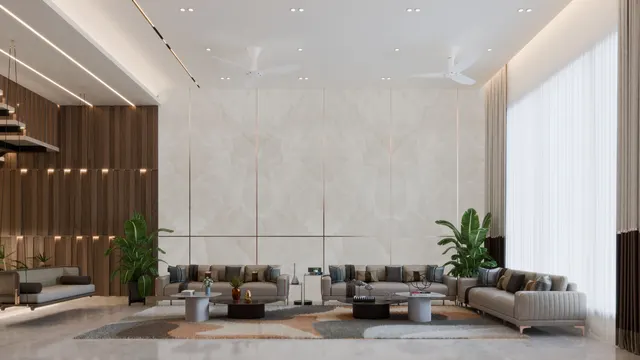
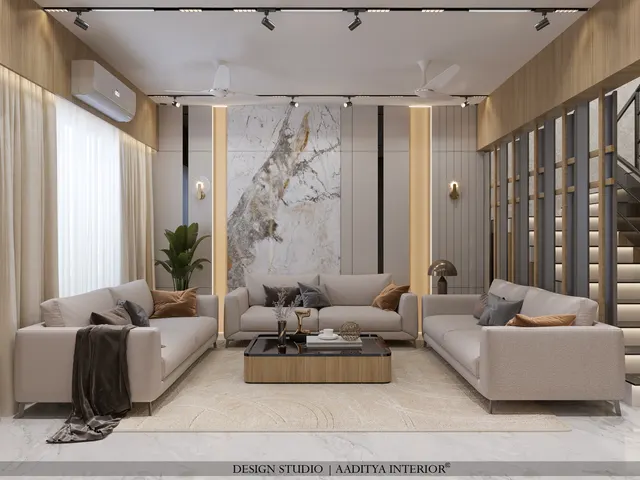
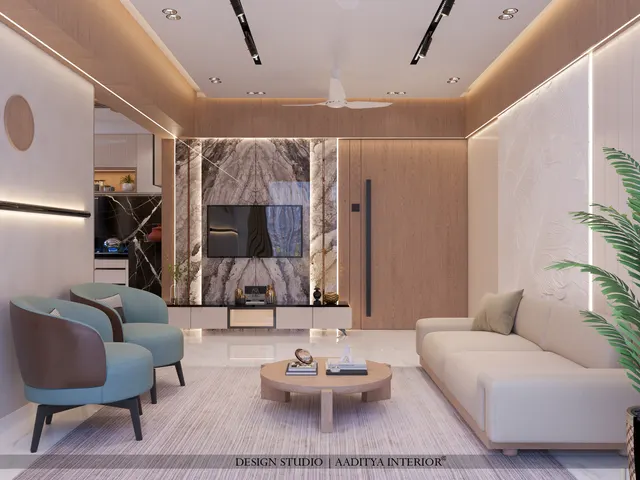
Quiet luxury is the design idea of the moment, but it is also very old. The phrase spread from fashion in the early 2020s to describe clothes without logos — beautifully cut, made from excellent cloth, recognisable only to people who look closely. Interiors followed: rooms without gold trims, high-gloss shutters, mirror strips, crystal chandeliers or feature walls on every side; rooms instead of oatmeal, stone, oak and linen, where the expense is in the proportion, the workmanship and the light.
In Indian homes the idea has a particular appeal and a particular challenge. Many families have lived through a decade of loud interiors — glossy acrylic kitchens, multi-level POP ceilings, profile-light grids, rose-gold everything — and are now tired of them. But a calm room is harder to execute than a busy one. A busy room hides an uneven wall, a crooked shutter or a misaligned light behind its decoration. A quiet room exposes every junction. Done badly, quiet luxury looks plain or unfinished; done well, it looks effortless and lasts for twenty years.
This article explains what quiet luxury really is, where it comes from, and how to build it in an Indian flat or bungalow: the palette, the materials, the proportions and junctions, the lighting, the furniture and textiles, and what it costs. It builds on this site's article on what makes a home feel expensive and keeps to the same cost bands.
What quiet luxury is — and what it is not
Quiet luxury is not a colour, a furniture brand or an aesthetic of beige. It is a set of priorities. The room should be calm at first glance: a restrained palette, few materials, uncluttered surfaces and furniture with clear shapes. It should reward a second look: the grain of a veneer that runs continuously across a row of shutters, a stone with gentle movement, the weight of a solid handle, a curtain that falls in deep, even folds, a light that grazes a textured wall rather than glaring from the ceiling. And it should be comfortable: soft, acoustically calm, well ventilated, with everything stored away.
It differs from minimalism in warmth and softness. Minimalism, as this site's minimalist design article explains, is about hiding a lot and showing little; quiet luxury shares the hidden storage, but it adds layered textiles, natural materials with visible character, generous upholstered furniture and a few chosen objects. It differs from conventional luxury in what it signals. Loud luxury announces cost through shine, metallic trims, ornate mouldings and recognisable brands; quiet luxury expresses quality through things that cannot be faked cheaply — proportion, material and workmanship.
| Aspect | Loud luxury | Quiet luxury | Why the quiet version ages better |
|---|---|---|---|
| Colour | High contrast, black and gold, saturated accents | Tonal warm neutrals, one muted deeper tone | Neutrals do not date with fashion colours |
| Surfaces | High gloss, mirror, acrylic | Matt, honed, oiled, brushed | Matt hides fingerprints and small ripples |
| Metal | Gold or rose-gold trims on many surfaces | One metal finish, used sparingly and solid | Plated trims wear at edges; solid metal patinas |
| Ceiling | Multi-level POP, profile-light grids | Flat ceiling with a slim perimeter band | Flat ceilings feel higher and collect less dust |
| Walls | Several feature walls, wallpaper, textures | Plain walls, one material panel at most | Art and furniture remain the focus |
| Furniture | Matching sets, tufted and carved | Fewer, larger pieces with clean lines | Pieces can move between rooms and homes |
| Signals of cost | Brand names, shine, ornament | Proportion, material, joinery, light | Workmanship cannot be faked by a cheaper copy |
Where the look comes from
Quiet luxury borrows from several traditions that valued restraint. Japanese interiors contributed the idea that an empty, well-proportioned room with natural materials can be the highest refinement, and that imperfection and age add beauty. Scandinavian design contributed warm timber, soft light and comfort as a priority. Mid-twentieth-century Italian and European modernism contributed the idea of precise, beautifully made furniture and detailing that is luxurious because of its craft rather than its ornament. Many of the best hotels of the past few decades, in Asia as much as in Europe, have used the same language: calm rooms, natural materials and impeccable service hidden behind the walls.
India has its own quiet traditions. The courtyard houses of Gujarat and Rajasthan used lime-plastered walls, stone floors, solid timber doors and shade, with decoration concentrated in a few places — a carved doorway, a jharokha, a painted ceiling. Kerala houses used dark timber, laterite and red oxide floors with very little else. Chettinad mansions were famous for their imported tiles and Burma teak, yet their best rooms are calm, pillared halls. Tropical modernism in South Asia, associated with architects such as Geoffrey Bawa in Sri Lanka and Charles Correa in India, combined plain surfaces, deep shade and natural materials with an ease that many quiet-luxury interiors try to recreate. An Indian quiet-luxury home can draw on these roots rather than copying a Northern European palette that may look cold in Indian light.
| Tradition | What it contributes | How to use it in an Indian home |
|---|---|---|
| Japanese interiors | Emptiness, natural material, beauty in imperfection | Clear surfaces, hand-made ceramics, timber with visible grain |
| Scandinavian design | Warm wood, soft light, comfort | Oak or ash veneer, linen, warm 2700–3000 K light |
| Italian and European modernism | Precise joinery and furniture craft | Fewer, better pieces; flush, aligned detailing |
| Gujarat and Rajasthan courtyard houses | Lime walls, stone floors, solid timber, shade | Lime or mineral plaster, Kota or marble floor, teak doors |
| Kerala and Chettinad houses | Dark timber, oxide floors, calm pillared halls | Red or ivory oxide floor, timber ceiling detail, few objects |
| South Asian tropical modernism | Plain surfaces, deep shade, inside–outside living | Verandah-like sit-outs, louvres, plants, open plans with shade |
The palette: warm, tonal and suited to Indian light
A quiet-luxury palette is tonal: several shades of one family rather than contrasting colours. In Indian homes the warm neutrals work best — ivory, oatmeal, sand, greige, mushroom, warm taupe — because strong tropical daylight and warm evening lamps make cool greys look flat and dull. Walls are typically light, with a light reflectance value (LRV) of about 60–75, so rooms stay bright; one deeper, muted tone — tobacco, olive, charcoal-brown, deep teal — appears in a rug, an upholstered piece or a single joinery unit to give the room an anchor.
The palette should also suit dust and use. Pure white sofas and pale carpets are beautiful in photographs but impractical near a road in Surat or Delhi, or in a house with children. Mid-tone oatmeal and greige fabrics with performance finishes, slipcovers that can be washed, and rugs with some texture and colour variation keep the look without constant cleaning. A good rule is to choose the palette from the floor up: the floor, the largest furniture and the main joinery decide the room, and wall colour follows them.
| Palette | Walls and ceiling | Joinery and floor | Textiles and accent | Suits |
|---|---|---|---|---|
| Ivory and oak | Warm ivory (LRV ≈ 70–75) | Natural oak veneer; light marble or porcelain | Oatmeal linen, olive cushions | Flats with modest daylight |
| Sand and walnut | Sand or warm beige | Walnut veneer; honed beige stone | Cream bouclé, tobacco leather | Large living rooms, evening use |
| Greige and stone | Greige (LRV ≈ 60–65) | Grey-beige stone; matt laminate in stone tone | Charcoal and taupe, brushed nickel | Bright, west-facing rooms |
| Lime and terracotta | Off-white lime plaster | Red or ivory oxide floor; teak | Natural cotton, rust, indigo | Bungalows, farmhouses, heritage-style homes |
| Mushroom and olive | Mushroom or putty | Smoked oak; honed marble | Olive velvet, cream linen | Bedrooms and studies |
Materials: fewer, better and honest
Quiet luxury relies on three or four main materials per room, each used generously. A typical living room might use a light stone or marble floor, one timber veneer for all joinery, plain plastered walls and linen textiles — with one metal finish for handles and lamps. Repeating a material across a room, in long continuous runs, is what makes it feel deliberate: a veneer that runs across a 3600 mm wall of shutters with the grain matched, or a stone that wraps a fireplace or TV niche in one piece, reads as expensive; small patches of many materials read as decoration.
Honesty matters as well. Real veneer, real stone and real lime plaster age gracefully; they develop patina and can be repaired. Printed imitations — wood-grain foils, marble-print sheets, faux-metal laminates — look acceptable on day one and worse every year, and they are the first thing a close look reveals. That does not mean every surface must be costly. Matt laminates in plain colours or quiet textures are honest materials that suit quiet luxury very well; it is the imitation of a costlier material that undermines the look.
| Element | Quiet-luxury choice | Avoid | Indicative cost (October 2026) |
|---|---|---|---|
| Joinery shutters | Matt laminate in plain tones; natural veneer on feature units; PU in matt | High-gloss acrylic, glossy wood-grain foils | Laminate ₹350–650; veneer ₹600–1,100; PU ₹1,000–1,800 per sq ft |
| Floors | Indian or imported marble, honed; engineered wood; large porcelain in stone tone | Glossy marble-print tiles with busy veining | Indian marble ≈ ₹250–800 installed; vitrified ₹60–120 + laying ₹25–40 |
| Walls | Premium emulsion in matt; lime or mineral plaster on one wall | Several textures, wallpaper on every wall | Emulsion ₹20–30; lime plaster ≈ ₹60–180 per sq ft |
| Ceiling | Flat gypsum with a slim perimeter band | Multi-level POP and profile-light grids | Plain gypsum ₹60–80; designer ₹80–180 per sq ft |
| Lighting | Warm 2700–3000 K, CRI 90+, concealed sources | Cool white, exposed strips, RGB | Cove LED ₹150–300 per running ft; panels ₹400–1,200 |
| Hardware | Solid brushed brass, bronze or black metal; recessed pulls | Plated gold trims, crystal knobs | Soft-close upgrade ₹5,000–15,000 per wardrobe |
| Textiles | Linen, cotton, wool, bouclé; full-height curtains | Shiny polyester, heavy valances | Depends on fabric — get room-wise quotes |
Proportion and junctions: where quiet luxury is built
Because a quiet room has little decoration, its proportions are on display. The most effective moves are about height. A flat ceiling with only a 100–150 mm perimeter drop for curtains and light keeps the room as tall as possible. Doors raised to 2400 mm, or to the underside of the ceiling, make a 2850 mm room feel generous. Curtains hung from the ceiling, not from just above the window, lengthen the wall. Full-height joinery that reaches the ceiling, rather than stopping at 2100 mm with a loft above, reads as architecture rather than furniture.
The junctions are where quiet luxury is won or lost. Where a wall meets the floor, a flush skirting with a 10 × 10 mm shadow gap, or a skirting set in plane with the plaster, looks crisp; a thick tile skirting stuck on the wall looks builder-grade. Where a door frame meets the wall, a flush or concealed frame is quieter than a heavy architrave. Shutter gaps of 2–3 mm, consistent across a whole wall, and shutters that align top and bottom with each other and with the door, make joinery read as one piece. Curtain pockets of about 150–200 mm wide in the ceiling hide tracks and motors. These details cost little extra in material but demand good drawings and site supervision.
Light: warm, layered and hidden
Light does more for quiet luxury than any material. The look depends on soft, warm light coming from several low and hidden sources rather than one bright ceiling fixture. In practice that means three layers on separate switches or dimmers: an ambient layer from a perimeter cove or wall washers that light the walls and ceiling; a task layer of reading lamps, under-cabinet strips and a dining pendant; and an accent layer that grazes a textured wall, lights a niche or picks out one artwork. Colour temperature of 2700–3000 K and a colour rendering index (CRI) of 90 or above make stone, wood and skin look right; cool 6000 K panels flatten every material and should be avoided in living and sleeping spaces.
Sources should be invisible wherever possible. Cove strips sit in an aluminium profile with a diffuser, set back far enough that the strip itself cannot be seen from a seated position. Downlights are deep-set or trimless, with anti-glare optics, and kept to the perimeter rather than in a grid across the ceiling. Table and floor lamps with fabric or paper shades do much of the evening work. Dimmers — even simple ones — let the room move from bright cleaning light to a low glow, which is where the mood of quiet luxury lives.
Furniture, textiles and objects
Quiet-luxury rooms have fewer pieces of furniture, and each is larger and better made. A deep three-seater or an L-sofa with a seat depth of about 600–650 mm, in a textured fabric, does more than a sofa set with matching chairs. A solid-wood or stone coffee table with a substantial top, a pair of well-shaped lounge chairs and a long, low console are often enough for a living room. Pieces should be mixed rather than matched — one timber, one upholstery fabric family, one stone — so the room looks collected over time rather than bought from one showroom in one afternoon.
Textiles carry the softness. Full-height curtains in linen or cotton blends, with a sheer layer for day and a lined layer for night; a large rug — about 2000 × 3000 mm or larger in a living room — so the front legs of every seat sit on it; cushions in two or three textures rather than prints; and bedding in plain cotton or linen. Objects are few and chosen: a large artwork rather than many small frames, hand-made ceramics, a few books, a plant with presence. In Indian homes, craft can do this beautifully — handloom textiles, a Bidri or bell-metal object, a stone or terracotta piece — so long as it is edited.
Where to spend and where to save
Quiet luxury is often assumed to be expensive, because it is associated with the very rich. In practice it is one of the most budget-flexible styles, because it removes many costly decorative items — multi-level ceilings, profile lights, wallpaper, mirror cladding, decorative mouldings — and spends the money on a few fundamentals. At the mid-range band of about ₹1,200–2,000 per sq ft of carpet area, a flat can have flat ceilings, warm layered lighting, matt laminate joinery with one veneer feature, a good floor, full-height curtains and one large rug. At the premium band of about ₹2,000–3,500, veneer and PU can extend across more joinery, the floor can be natural stone, and details like shadow-gap skirting and curtain pockets can run through the house. Full luxury interiors of ₹3,500–6,000 or more per sq ft add bespoke furniture, natural stone in more places, integrated controls and acoustic separation.
| Budget band (per sq ft carpet, October 2026) | Spend first on | Deliver with | Skip |
|---|---|---|---|
| Mid-range ₹1,200–2,000 | Flat ceilings, warm layered lighting, full-height curtains, one large rug | Matt laminate, one veneer feature, premium emulsion, solid handles | Wallpapers, textures, decorative ceilings, mirror cladding |
| Premium ₹2,000–3,500 | Shadow-gap skirting, curtain pockets, full-height doors and joinery | Veneer and matt PU, honed stone or engineered wood, CRI 90+ dimmable lights | Imported furniture in every room; ornament |
| Luxury ₹3,500–6,000+ | Natural stone, bespoke joinery and furniture, integrated services | Book-matched stone in one place, lighting scenes, acoustic and climate control | Nothing essential — but still keep the palette short |
A worked example: in a 1,250 sq ft 3BHK at a mid-range rate of about ₹1,600 per sq ft, the interior costs roughly ₹20 lakh before loose furniture and appliances. A quiet-luxury approach might take ₹1–2 lakh out of decorative ceilings, wallpapers and feature panelling and put it into a better lighting layout with dimmers, ceiling-to-floor curtains, veneer on the living-room joinery and solid handles. The total barely moves; the result looks much more expensive. These figures are indicative October 2026 estimates and should be confirmed with itemised local quotes.
Common mistakes
The most common mistake is confusing quiet with cold. A room of grey walls, grey floor and grey sofa under 6000 K panel lights is not quiet luxury; it is a waiting room. The fix is warmth — warm neutrals, wood, textured fabric and 2700–3000 K light. The second mistake is too little texture: a tonal palette needs variation in surface — bouclé against linen, honed stone against oiled wood, lime plaster against matt paint — or it looks flat. The third is buying the look rather than building it: beige furniture placed in a room with crooked shutters, a glossy floor and a grid of downlights will not look quiet. The architecture of the room has to change first.
Other mistakes are practical. Pale fabrics without washable covers in a dusty city; a white kitchen with no closed storage, so the counter fills with appliances; a perfect empty console that becomes a dumping ground because there is nowhere to put keys and mail; and natural materials chosen without understanding their care, such as unsealed marble in a dining area or oiled wood near a wet zone. Quiet luxury depends on storage planned first, and on materials chosen for the way the family really lives.
Where quiet luxury is heading
The quiet-luxury look will eventually be replaced by a newer fashion word, but its principles are likely to last because they are not really a trend: proportion, honest materials, good light and precise workmanship have defined good interiors for centuries. Several developments will strengthen it. Better LED products with high colour rendering and warm dimming make soft, hidden lighting easier and cheaper. Indian craft — handloom, stone, metal, terracotta — is increasingly being used in edited, contemporary ways. And as families keep homes longer and renovate less often, interiors that do not date become better value. The risk is that 'quiet luxury' becomes a beige catalogue style. The answer is to treat it as a method — subtract decoration, invest in fundamentals — rather than a colour scheme.
Rules for a quiet-luxury home
- Choose three or four materials per room and use each generously, in long continuous runs.
- Keep the ceiling flat with only a 100–150 mm perimeter band, and raise doors to 2400 mm or full height.
- Use warm neutrals with LRV about 60–75 on walls and one deeper, muted tone as the anchor.
- Prefer matt, honed and oiled surfaces; avoid high gloss, mirror cladding and plated trims.
- Light in three warm layers (2700–3000 K, CRI 90+) on separate switches or dimmers; hide the sources.
- Draw the junctions — shadow-gap skirting, curtain pockets, flush frames, 2–3 mm shutter gaps — before work starts.
- Plan closed storage for everything that would otherwise sit on a surface.
- Buy fewer, larger, better pieces of furniture and mix rather than match them.
- Choose textiles and colours that suit Indian dust and family life, with washable covers.
Frequently asked questions
What is quiet luxury in interior design?
Quiet luxury is a style that avoids obvious signs of spending — gold trims, gloss, logos, ornament — and relies on proportion, natural materials, precise workmanship, soft textiles, hidden storage and warm layered light. Rooms look calm at first glance and reveal their quality at close range.
Which colours are used in quiet luxury interiors?
Warm neutrals — ivory, oatmeal, sand, greige, mushroom and taupe — on walls and large surfaces, with one deeper, muted tone such as tobacco, olive, charcoal-brown or deep teal in a rug, an upholstered piece or a single joinery unit. In Indian light, warm neutrals usually look better than cool greys.
Is quiet luxury the same as minimalism?
No. Both rely on hidden storage and restraint, but minimalism aims to show as little as possible, while quiet luxury adds warmth and softness — layered textiles, natural materials with visible character, generous furniture and a few chosen objects.
Can quiet luxury be done on a budget?
Yes, more easily than most styles, because it removes costly decoration. At about ₹1,200–2,000 per sq ft of carpet area, the essentials — flat ceilings, warm layered lighting, matt laminate joinery with one veneer feature, full-height curtains and one large rug — are achievable. The key cost is good drawings and careful workmanship.
Does quiet luxury need marble?
No. A honed Indian marble or natural stone suits the style well, but engineered wood, a large porcelain slab in a quiet stone tone, Kota stone or an oxide floor can all work. What matters is a calm, consistent floor with few joints and no busy printed veining.
Sources & standards
- Bureau of Indian Standards — National Building Code of India 2016, Part 8 (building services: lighting and natural ventilation)
- Bureau of Indian Standards — IS 3646 (code of practice for interior illumination)
- Bureau of Energy Efficiency — star labelling and efficiency guidance for LED lighting
- Neufert, Architects' Data — furniture dimensions and room clearances
- Time-Saver Standards for Interior Design and Space Planning — residential furniture clearances and detailing
- CIBSE / Society of Light and Lighting — Lighting Guide for residential and hospitality interiors (general reference on colour temperature and CRI)
- Price ranges: indicative October 2026 estimates — confirm locally before budgeting