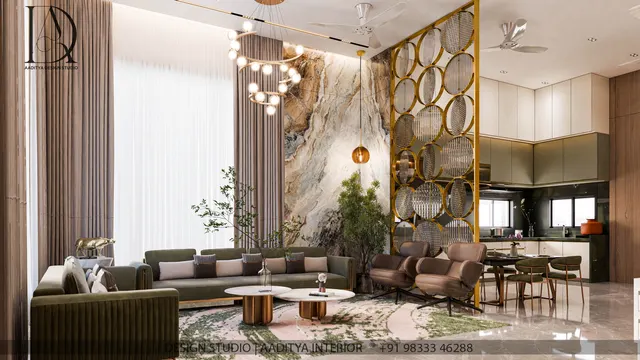
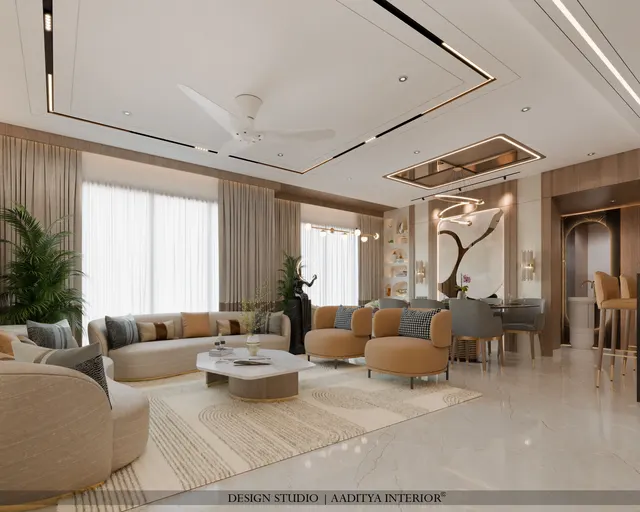
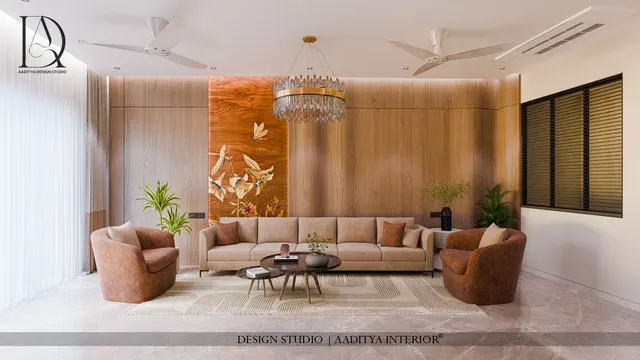
Scandinavian interiors are probably the most photographed homes on the internet: white walls, pale oak floors, a grey sofa on slim wooden legs, a sheepskin over a chair, a paper pendant and a pot of green leaves on the windowsill. The look is so familiar that many Indian homeowners ask for it by name — and many are disappointed when it is built. The white walls glare in the afternoon, the pale fabrics turn grey with city dust within a season, the rug is too warm for May, and the room that looked serene on a screen feels bare and slightly cold in a Surat or Chennai flat.
The problem is not the style. It is that the style has been copied as a set of objects rather than understood as a response to a place. Scandinavian design grew out of long, dark northern winters, a low sun, small homes, a strong craft tradition and a social belief that good design should be affordable to ordinary families. Every one of its signatures — the light colours, the raised furniture, the many small lamps, the honest wood — solves a problem. Some of those problems also exist in India; some are reversed. A designer who knows which is which can build a Scandinavian home that works in Indian sun, heat, humidity and family life.
This article explains where the style came from, the principles that define it, the colours, woods, fabrics and furniture dimensions it uses, and the precise adjustments that make it suitable for Indian flats and bungalows. It also compares it with its close relatives — minimalism, Japandi and Indian contemporary — so that a homeowner can tell which one they actually want before the first drawing is made.
What Scandinavian interior design actually is
Scandinavia, strictly, means Denmark, Norway and Sweden; Finland and Iceland are usually included under the wider word Nordic, and in design writing the two terms are used almost interchangeably. Scandinavian interior design is the domestic design language that developed in these countries through the twentieth century and became known internationally after the Second World War. Its essence can be put in one sentence: a home should be light, simple, useful, durable and warm, and it should be built from honest materials that ordinary families can afford.
It is often confused with minimalism, but the two have different motives. Minimalism removes things to reach calm; Scandinavian design keeps things that are useful or loved and arranges them so that the room stays bright and easy to live in. A Scandinavian room has books, blankets, plants, ceramics, candles and family photographs. What it avoids is heaviness: dark polished surfaces, ornate carving, overstuffed furniture, thick drapery and decoration that has no job. Two everyday words capture the attitude. The Danish hygge describes a cosy, sociable comfort — warm light, a blanket, a hot drink with friends. The Swedish lagom means not too much and not too little — just enough. Both have been heavily marketed in the last decade, but the ideas behind them are old and simple.
A short history: from Nordic winters to the world
The roots of the style lie in rural Nordic homes, where long winters and scarce daylight made light-coloured surfaces, painted furniture and careful use of every window a practical necessity. In the 1890s the Swedish painter Carl Larsson and his wife Karin, a textile artist and designer, decorated their home at Sundborn with light painted walls, simple furniture, woven textiles and uncluttered rooms. Carl Larsson's watercolours of that home, published as a book around 1899, were widely reproduced and gave many Swedish families a picture of a bright, informal home that broke with heavy Victorian interiors.
In 1919 the Swedish art historian Gregor Paulsson published a pamphlet whose title, Vackrare vardagsvara — More Beautiful Everyday Things — became a slogan for the idea that industry should make well-designed, affordable objects for ordinary people. The Stockholm Exhibition of 1930 then introduced functionalism to a wide Nordic public. Through the 1930s the Finnish architect Alvar Aalto bent laminated birch into chairs and stools, showing that modern furniture could be warm wood rather than cold tubular steel.
The years after the Second World War were the golden age. Danish designers in particular — Hans Wegner, Arne Jacobsen, Finn Juhl, Børge Mogensen and Poul Henningsen among them — produced chairs, tables and lamps that are still manufactured today: Wegner's Wishbone chair of 1949, Jacobsen's stacking Series 7 chair of 1955 and Henningsen's PH5 pendant of 1958 are textbook examples. A touring exhibition called Design in Scandinavia travelled across the United States and Canada between 1954 and 1957 and helped fix the term in the international imagination. From the 1950s the Swedish company IKEA, founded in 1943, took the ideas of light wood, flat-pack furniture and affordable design to a mass market, and eventually to India as well.
| Period | What happened | What it added to the style |
|---|---|---|
| Before 1900 | Rural Nordic homes with painted timber, woven textiles, small windows | Light colours and simple, repairable furniture as a response to dark winters |
| c. 1899 | Carl and Karin Larsson's Sundborn home made famous through Carl's paintings | The image of an informal, bright, family-centred home |
| 1919–1930s | More Beautiful Everyday Things; Stockholm Exhibition 1930; Aalto's bent birch | Design for ordinary people; functionalism softened by wood |
| 1945–1960s | Danish Modern: Wegner, Jacobsen, Juhl, Mogensen, Henningsen | Iconic chairs and lamps; craft joined to industrial production |
| 1954–1957 | Design in Scandinavia exhibition tours North America | The term Scandinavian design becomes international |
| 1950s onwards | Flat-pack, affordable mass-market furniture spreads from Sweden | The look becomes available to most households worldwide |
| 2010s–2020s | Hygge and lagom popularised; Japandi blends Nordic and Japanese ideas | Warmer palettes, more texture, more natural materials |
The five principles behind the look
A room can have white walls and a grey sofa and still not be Scandinavian. Equally, a room in teak and cotton with warm off-white walls can be deeply Scandinavian. What decides it is not the catalogue but five working principles.
1. Light first
Everything is arranged to collect and spread daylight: pale walls and ceilings, light floors, sheer or no curtains, mirrors opposite windows, and furniture kept low so that light reaches deep into the room. After dark, light comes from several small sources at different heights — a pendant, a floor lamp, a table lamp, candles — rather than one bright ceiling fitting. Poul Henningsen's lamps were designed specifically to give glare-free light by shielding the bulb, which tells us how seriously the Nordic tradition treats comfortable light.
2. Function and honesty
Every object should have a job and should show how it is made. Wooden joints are visible, legs are visible, the grain of the wood is visible. There is little applied ornament; beauty comes from proportion, material and good making. This is why Scandinavian furniture ages well: there is nothing on it to go out of fashion.
3. Natural materials
Pale woods — oak, ash, beech, birch and pine — dominate, alongside wool, linen, cotton, leather, ceramics, paper and stone. Synthetic finishes are kept matte and quiet. The natural materials bring warmth to a light palette that would otherwise feel clinical.
4. Lightness of form
Furniture is raised on legs, chairs have open backs and arms, tables are slim, shelves float. Seeing the floor under a sofa and the wall behind a chair makes a small room feel larger, and it makes cleaning easier. This single principle matters more than colour in small Indian flats.
5. Warmth and comfort
The style is not austere. Throws, cushions, rugs, plants, books and warm lamplight are essential. A Scandinavian room should invite someone to sit down for an hour. When this fifth principle is forgotten, the result is the cold, showroom version that many people dislike.
Why the northern sun explains the style — and why India needs the opposite
The single most useful fact for adapting Scandinavian design to India is a piece of geometry. At midday on the winter solstice the sun in Stockholm, at about 59 degrees north, stands only around 7 degrees above the horizon, and even at the summer solstice it reaches only about 54 degrees. Low sun means weak light that travels deep into rooms; it also means very short winter days. Every light surface, every unobstructed window and every mirror in a Nordic home exists to catch as much of that scarce light as possible.
Surat, at about 21 degrees north, sits at the other extreme. At midday in late December the sun is still about 45 degrees high, and around the June solstice it is almost directly overhead. Daylight is abundant, intense and hot for most of the year. The challenge in an Indian room is not to collect light but to filter it — to cut glare and heat while keeping brightness. White gloss walls and bare windows, which help in Stockholm, create glare and heat gain in Surat. The Indian version of the style must therefore keep the light palette but soften it: warm whites with a matte finish, sheer curtains or blinds as standard, external shading on east and west glass, and furniture placed away from the hottest windows.
The comparison also explains why Scandinavian rooms in India often feel hotter than expected. A white-painted wall reflects light well, but a glossy white surface opposite a west window bounces glare straight into the eyes. The answer is not to abandon light walls; it is to choose a matte or eggshell finish in a warm white or pale greige, to shade the window from the outside where possible, and to use linen or cotton sheers so that the light that enters is diffuse. A 450–750 mm chhajja on south windows and vertical fins or a jaali on west windows do more for comfort than any choice of paint.
Colours, woods, fabrics and finishes
The classic Scandinavian palette is a base of white, off-white and pale grey, with natural wood, black accents in metal and line, and soft muted colours — sage, dusty blue, clay, mustard, blush — introduced through textiles and ceramics. For Indian homes Aaditya Interior recommends shifting the whole palette a few degrees warmer. Pure cool whites look blue and harsh under strong tropical daylight and under cool-white LEDs; warm whites, ivories and very light greige tones read as calm and bright without glare, and they hide dust and handprints far better.
| Element | Nordic original | Indian adaptation | Indicative cost (October 2026) |
|---|---|---|---|
| Walls | Cool white or pale grey, often gloss or satin | Warm white, ivory or light greige in matte or eggshell | Premium emulsion ₹20–30 per sq ft of paintable area |
| Feature wall | Pale panelling or plain white | Limewash-look or fine texture on one wall; or vertical fluted panel | Texture ₹40–150+ per sq ft |
| Floors | Wide pale oak or ash boards | Light wood-look vitrified tile, or laminate in dry rooms | Vitrified ₹85–160 per sq ft laid; laminate flooring higher |
| Cabinet shutters | Oak or birch veneer, white lacquer | Ash or oak veneer, or matte laminate in a light wood grain | Matte laminate ₹350–650; veneer ₹600–1,100 per sq ft |
| Accent colour | Sage, dusty blue, mustard, black line | Sage, terracotta, indigo, mustard — echoing Indian textiles | Through fabrics and ceramics; minimal extra cost |
| Metal | Black powder-coated steel, brass | Black or bronze powder coat; brass accents sparingly | Varies with item |
| Ceiling | Flat, white, no false ceiling | Flat gypsum with a slim cove or shadow gap | Gypsum ₹60–80 per sq ft; cove LED ₹150–300 per running ft |
Woods: what to use in India
Solid European oak, ash and birch are imported and expensive in India, and solid timber of any species moves with monsoon humidity. The practical route is to use veneers or good wood-grain laminates for built-in furniture and to reserve solid wood for loose pieces such as chairs and tables. Rubberwood, widely used in Indian ready-made furniture, takes a light finish well and suits the style. Teak is darker than the Nordic norm but is a traditional, durable Indian wood; used in a natural matte oil or a light polish, it gives a warm, mid-century look that many Danish designers themselves favoured in the 1950s and 1960s. Sheesham is usually too dark and too strongly figured for a classic Scandinavian room, but works as a single accent piece.
Fabrics: swap wool for cotton and linen
Wool throws, sheepskins and thick rugs make sense at minus ten degrees; they make far less sense in a 34-degree, 70 per cent humidity afternoon. The Indian version keeps the texture and drops the warmth: handloom cotton, khadi, linen and linen blends for curtains, cushions and upholstery; cotton dhurries and jute rugs underfoot; cane and rattan on chairs. India's own textile traditions — block prints, ikat, kantha — fit the style beautifully as long as the colours are muted and the patterns are used in one or two places rather than everywhere. Choose removable, washable covers on sofas, because pale fabrics and city dust are not friends.
| Item | Nordic choice | Better choice for Indian climate | Why |
|---|---|---|---|
| Sofa upholstery | Wool bouclé, heavy wool | Cotton–linen blend, performance fabric with washable covers | Cooler to sit on; easier to clean |
| Throws | Wool, sheepskin | Cotton waffle, light khadi, muslin | Usable through most of the year |
| Rugs | Thick wool, shaggy pile | Cotton dhurrie, jute, flat-weave | Cooler, easier to wash and to beat out dust |
| Curtains | Often none, or light linen | Linen or cotton sheer plus a lined blackout for bedrooms | Filters glare and gives privacy in dense cities |
| Chairs | Bentwood, moulded plywood, paper cord seat | Cane, rattan, rubberwood, paper cord | Breathable seats; local craft supply |
| Plants | Ferns, fiddle-leaf fig | Areca palm, money plant, snake plant, ZZ plant | Tolerate Indian indoor conditions and AC |
Furniture and lighting dimensions
Scandinavian furniture is generally lower, slimmer and more open than typical Indian showroom furniture. That lightness is the most transferable part of the style, especially in small flats. The key numbers are seat heights, leg heights, arm widths and the spacing between pieces. A sofa raised 150–200 mm on legs shows the floor beneath it and makes the room feel larger; slim arms of 100–150 mm instead of 250–300 mm padded arms save 300 mm or more on a three-seater, which in a 3300 mm-wide living room is the difference between a comfortable path and a squeeze.
| Item | Typical Scandinavian dimension | Typical heavy showroom equivalent | Saving or benefit |
|---|---|---|---|
| Three-seater sofa length | 1950–2100 mm with slim 100–150 mm arms | 2200–2400 mm with 250–300 mm padded arms | 200–300 mm of extra walkway |
| Sofa seat height | 420–450 mm | 400–430 mm on a skirted base | Easier to stand up; legs show floor |
| Clear height under sofa | 150–200 mm | 0–50 mm (skirted base) | Room reads larger; robot vacuum fits |
| Lounge chair | 650–750 mm wide, open arms | 850–950 mm wide, solid arms | Two chairs fit where one did |
| Coffee table | 900–1200 mm long, 400–450 mm high, slim top | 1200–1500 mm, 450 mm, heavy base | Lighter look; easier cleaning |
| TV or media unit | Wall-hung or on legs, 400–450 mm deep | Floor-standing, 450–600 mm deep | Floor shows beneath; less dust trap |
| Dining chair | Seat 450 mm, open back, 450–500 mm wide | Upholstered high back, 500–550 mm wide | Six chairs fit a 1800 mm table more easily |
Lighting in layers
Scandinavian lighting is warm, low and plural. The aim is to light surfaces and faces softly rather than flood the room from the ceiling. In practice an Indian living room in this style needs four layers: a warm ambient layer from a slim cove or flat panel lights at 2700–3000 K; a pendant over the dining table; one or two floor or table lamps at the seating corners; and small accent light on a shelf or artwork. Total ambient levels around 100–300 lux suit a living room, with more on the dining table and task areas. A cool 6500 K tube light, which is still common in Indian homes, destroys the look instantly — it turns warm wood grey and white walls blue. Cove LED strip installed costs about ₹150–300 per running foot, and panel or spot lights about ₹400–1,200 each (indicative October 2026).
A Scandinavian living room in an Indian 2BHK
The plan below shows a typical 2BHK living room of about 3600 × 4800 mm — the comfortable size used across this blog — arranged in the Scandinavian manner. Notice what is not there: no floor-standing showcase, no heavy TV wall in veneer and glass, no large L-sofa. The seating is a slim three-seater and two open-armed chairs around a round coffee table on a flat-weave rug. The media unit is wall-hung on the short wall facing the sofa, about 3 m away. Storage is closed and pale. The windows have linen sheers. The result seats four to five comfortably and leaves a route of about 1100 mm from the door past the group.
The same principles scale down. In a 3300 × 4200 mm room, replace the two chairs with one chair and a pouf, choose a 1950 mm sofa and a 900 mm round table, and push the media unit flat to the wall. In a 3BHK with a 4200 × 5400 mm hall, add a second chair pair or a daybed by the window rather than switching to a bulky sectional. The style rewards fewer, better pieces with space between them.
Scandinavian compared with its close relatives
Homeowners often use Scandinavian, minimalist, Japandi and modern as if they were the same word. They overlap, but each has a different centre of gravity, and knowing the difference prevents a mismatched brief. A designer who is told Scandinavian but shown Japandi pictures will make different choices on wood tone, furniture height and colour.
| Style | Palette | Wood tone | Furniture | Mood | Fits Indian homes when… |
|---|---|---|---|---|---|
| Scandinavian | Light whites and greys, soft muted accents | Pale: oak, ash, birch, pine | Raised on legs, slim, open; mid-century classics | Bright, cosy, informal | Whites are warmed, fabrics are cotton and linen, glare is controlled |
| Minimalism | Two or three neutrals | Any, but restrained | Few pieces; lots of hidden storage | Calm, ordered | Storage is planned first; see the minimalism guide on this blog |
| Japandi | Earthier: beige, clay, charcoal | Mixed pale and dark woods | Lower, heavier, more Japanese restraint | Quiet, serene | Seat heights stay practical for elders |
| Indian contemporary | Warm neutrals with rich accents | Teak, walnut-look, cane | Built-ins plus crafted loose pieces | Warm, layered | Craft is edited, not piled up |
| Mid-century modern | Wood with bold accents (mustard, teal) | Teak and walnut | Tapered legs, organic forms | Retro, warm | One or two iconic pieces anchor the room |
Where the style is going
Scandinavian design today is warmer and more textured than the white-on-white look that spread through social media in the 2010s. Designers are using richer woods, earthy colours, limewash and plaster walls, more curves and more handmade objects; Japandi is one visible result. Sustainability, always latent in the Nordic emphasis on durability and repair, is becoming explicit: certified timber, low-VOC paints, second-hand and refurbished classics, and furniture designed to be taken apart and repaired. For India this direction is good news. A warmer, more textured, more sustainable Scandinavian look sits naturally beside handloom textiles, cane, terracotta and lime plaster, all of which India produces in abundance. The future Indian Scandinavian home is likely to be less of an import and more of a conversation between two craft traditions that both value honest materials and everyday beauty.
Rules for a Scandinavian home that works in India
- Choose warm whites, ivories or pale greige in matte or eggshell — never cool gloss white opposite a sunny window.
- Control the sun first: chhajjas on south glass, fins or jaalis on west glass, linen or cotton sheers on every living-room window.
- Raise furniture on legs with 150–200 mm of visible floor beneath, and choose slim 100–150 mm sofa arms in small rooms.
- Use veneer or wood-grain laminate for built-ins and save solid wood for chairs and tables, so monsoon movement does not crack shutters.
- Replace wool and sheepskin with cotton, linen, khadi, jute and cane; keep washable covers on pale upholstery.
- Light in layers at 2700–3000 K: cove or panels, a pendant, two lamps and one accent — never a single cool tube light.
- Keep storage closed and pale, and limit open display to one curated shelf so dust does not undo the look.
- Add warmth on purpose: plants, a throw, books, ceramics and one textile pattern from an Indian craft tradition.
Frequently asked questions
Is Scandinavian interior design suitable for Indian homes?
Yes, with adjustments. The light palette, raised furniture and simple forms work well in small Indian flats, but the style needs warmer whites, matte finishes, sheers and external shading to manage strong sun, and cotton and linen instead of wool to suit the heat. Washable covers and closed storage keep it looking fresh in dusty cities.
What colours are used in Scandinavian design?
A base of white, off-white and pale grey, with natural wood tones and black accents, plus soft muted colours such as sage green, dusty blue, clay, blush and mustard. For Indian light, choose warm whites and light greige rather than cool blue-whites, and bring colour in through textiles and ceramics.
What is the difference between Scandinavian and Japandi?
Japandi blends Scandinavian comfort with Japanese restraint. It uses an earthier palette, mixes pale and dark woods, and favours lower, heavier furniture and fewer objects. Scandinavian is brighter, more informal and more colourful in its accents.
Which wood is best for a Scandinavian look in India?
For built-in furniture, ash or oak veneer or a light wood-grain laminate gives the look at a sensible cost and stays stable in humidity. For loose furniture, rubberwood and light-finished teak are practical Indian choices. Avoid very dark or heavily figured woods as the main material.
Does Scandinavian design cost more than other styles?
Not inherently. Flat ceilings, plain walls and fewer decorative elements save money; the money goes into good loose furniture, lighting and quality shutters. A mid-range home in this style typically lands in the same overall band as other mid-range interiors, about ₹1,400–1,800 per sq ft of carpet area for a complete home (indicative October 2026).
Sources & standards
- Gregor Paulsson, Vackrare vardagsvara (More Beautiful Everyday Things), Svenska Slöjdföreningen, 1919
- Nationalmuseum, Stockholm and Designmuseum Danmark, Copenhagen — collections and notes on Nordic design history and Danish Modern furniture
- Design in Scandinavia touring exhibition, United States and Canada, 1954–1957 — museum and exhibition records
- Bureau of Indian Standards — IS 3646 Part 1 (code of practice for interior illumination); National Building Code of India 2016, Part 8 (building services: lighting and natural ventilation)
- Bureau of Energy Efficiency — Energy Conservation Building Code guidance on shading and daylighting for Indian climates
- Neufert, Architects' Data — furniture and circulation dimensions for living rooms
- Solar altitude values calculated from latitude and solstice declination (approximately ±23.4°) using standard solar geometry
- Price ranges: indicative October 2026 estimates — confirm locally before budgeting