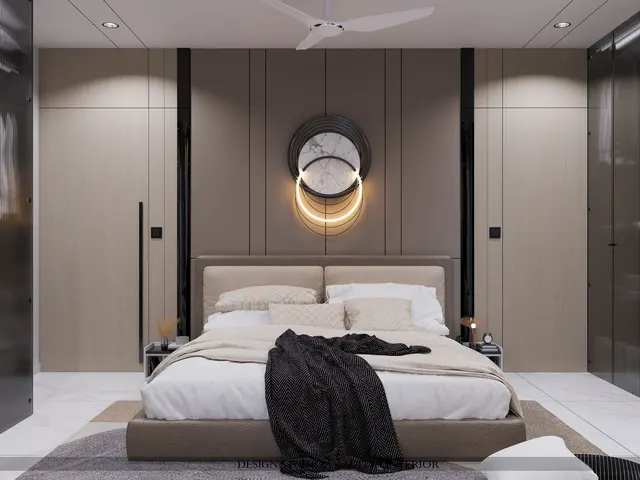
A single bed looks like the simplest piece of furniture a home can buy, and that is exactly why it is so often bought wrong. A family walks into a showroom, likes the headboard, checks the price, and only discovers the mistake on delivery day, when the bed will not pass the staircase landing, or when it leaves no room to open the wardrobe, or when the sleeper's feet hang past the end because the frame was ordered a foot too short. The bed itself is rarely at fault. The fault is that nobody measured the sleeper, the room and the route the bed must travel before ordering it.
Indian bedrooms make the problem sharper. A single bed in India does many jobs at once. It is a child's bed, a guest bed, a servant's bed, a teenager's bed, a parent's bed in a small flat, and often a daytime seat as well. The same nominal size is sold in timber, plywood, metal and engineered wood, with or without storage, with or without a headboard, and the quoted length in feet can hide a difference of 150 mm — enough to decide whether a tall sleeper sleeps comfortably or not. The mattress adds another layer: a mattress sold as a single can be 760, 900 or 1050 mm wide, and a frame built for one width will not hold another properly.
This article settles the single bed properly for Indian homes. It traces where the size came from, fixes the standard lengths and widths used in India, shows how much clear space a single bed needs in a real bedroom, explains frames, mattresses and storage, and gives indicative October 2026 prices. The dimensions follow Indian practice and the clearance guidance of Neufert's Architects' Data and the National Building Code of India 2016, and every figure is dimensioned in millimetres so it can be checked on site with a tape.
A short history of the single bed in India
For most of Indian history, sleeping was not done on a framed bed at all. The charpai — a wooden frame strung with rope or tape — was the standard sleeping platform in village homes, and it still is in many parts of the country. It was light, it could be carried into the courtyard on a hot night, and its size was set by the timber available and the person who would sleep on it, usually about 1830 mm long and 900 mm wide. The takht, a low wooden platform, played a similar role in town houses and courtyards, serving as a seat by day and a bed by night. Both forms taught Indian carpenters the two dimensions that still govern the single bed: long enough for an adult to lie flat, and wide enough to turn over without falling off.
The framed single bed, with legs, a headboard and a mattress, arrived with colonial furniture and then with factory-made furniture in the twentieth century. Railway workshops, government hostels, school dormitories and hospitals all needed beds in large numbers, and they needed them in fixed sizes so that mattresses, sheets and bed linen could be bought in bulk. The 1830 mm length — six feet — and the 900 mm width — three feet — became the default because they matched the charpai, the available timber lengths and the human body at the same time. A person of average height needs about 150 to 200 mm of length beyond the head and the feet, so a 1830 mm bed suits most adults, while taller sleepers need the 1980 mm version.
The modern Indian single bed keeps that history visible. The most common showroom single is still 900 by 1830 mm, the same footprint as a traditional charpai, and the sheet sizes sold in Indian markets — single sheets for a 900 mm bed — follow the same module. What has changed is what sits under and around the bed: storage drawers and hydraulic lifts, plywood carcasses instead of solid timber frames, and mattresses of coir, bonded foam and pocket springs. The dimensions have stayed steady while the construction has moved on, which is why a buyer who knows the three numbers — width, length and sleeping height — can buy confidently in any city.
Two lessons from that history matter at the time of buying. The first is that the 1830 mm length is a module, not a law: it suits most adults, but a sleeper taller than about 1830 mm should order 1980 mm, and a child under ten can sleep comfortably on a 1500 or 1675 mm bed for a few years before outgrowing it. The second is that width is the dimension that decides comfort. A 760 mm bed is a narrow single, fine for a child or a guest room, but an adult who turns in sleep will feel the edge; a 900 mm bed is the comfortable standard, and a 1050 mm bed suits a broad sleeper or a parent who reads to a child at bedtime.
What a single bed is, and how it differs from a diwan and a double bed
Showrooms use the words bed, diwan, daybed and single bed loosely, so it helps to fix them before spending money. A single bed is a framed sleeping platform with a headboard, a mattress support and legs or a plinth, built for one sleeper and usually placed against a wall or in the centre of a small bedroom. A diwan is a long, low seat against a wall, usually without a proper headboard, meant for sitting by day and sleeping by night; it is lower, often without a frame height that suits a mattress, and it belongs in a living room rather than a bedroom. A double bed is simply a wider version of the same idea, 1350 to 1800 mm wide, built for two sleepers, and it needs a much larger room.
The practical difference is height. A single bed is built so that the top of the mattress sits 450 to 600 mm above the floor, which is the height from which most adults can sit down and stand up without effort. A diwan sits lower, at 400 to 450 mm, which is comfortable for sitting but less so for an older person getting out of bed in the morning. A single bed also has a headboard, which protects the wall from pillows and gives the sleeper something to lean against while reading. A buyer who wants a bed for nightly sleep should buy a bed; a buyer who wants daytime seating that sometimes sleeps a guest should buy a diwan.
A second distinction matters at the time of buying: made-to-order against ready-made. A carpenter-made single bed is built to the room, so the length can be 1980 mm for a tall sleeper and the storage can be planned around the wardrobe and the door swing. A ready-made bed is cheaper and faster, but it comes in fixed sizes — usually 900 by 1830 mm or 900 by 1980 mm — and the buyer must check that the fixed size fits the room and the staircase. In flats above the ground floor, the staircase and the lift decide the question: a one-piece headboard taller than 1200 mm may not turn on a landing, and a bed that arrives in parts is often the safer choice.
| Piece | Usual size (mm) | Sleeps | Best for |
|---|---|---|---|
| Narrow single bed | 760 × 1830 | 1 child or small adult | Children, guest rooms, very small bedrooms |
| Standard single bed | 900 × 1830 | 1 adult | The most common Indian single bed |
| Long single bed | 900 × 1980 | 1 tall adult | Sleepers taller than 1830 mm |
| Wide single bed | 1050 × 1980 | 1 adult, comfortably | Broad sleepers, parents reading to children |
| Diwan (for comparison) | 1830 × 760–900 | 1 person, occasionally | Living-room seating that doubles as a bed |
| Double bed (for comparison) | 1350–1800 × 1980 | 2 people | Master bedrooms; needs a much larger room |
The table shows why the standard single is standard: it is the smallest bed that sleeps an adult comfortably every night, and it fits in the smallest bedroom that is still usable. A 760 mm bed saves 140 mm of floor width, which matters in a very small room, but it gives up comfort every night for years. A 1050 mm bed costs more floor area and more money, but it is the right choice for a growing teenager or a guest room that must serve adults of every size. The decision should be made by the sleeper's height and build, not by the showroom's display.
Standard sizes: the numbers that work in Indian bedrooms
There is no single law that fixes bed sizes in India, and the National Building Code does not prescribe furniture dimensions. The sizes below are the trade standards that Indian carpenters, showrooms and mattress makers actually use, and they are consistent with the clearance guidance in Neufert's Architects' Data and the Time-Saver Standards. A buyer who orders these numbers will find mattresses, sheets, bed covers and storage boxes that fit without alteration, which is the real test of a standard size.
| Dimension | Narrow single | Standard single | Long / wide single |
|---|---|---|---|
| Width | 760 mm (2 ft 6 in) | 900 mm (3 ft) | 1050 mm (3 ft 6 in) |
| Length | 1830 mm (6 ft) | 1830 mm (6 ft) | 1980 mm (6 ft 6 in) |
| Mattress size | 760 × 1830 mm | 900 × 1830 mm | 900–1050 × 1980 mm |
| Mattress thickness | 100–150 mm | 100–200 mm | 150–200 mm |
| Sleeping height (top of mattress) | 450–550 mm | 450–600 mm | 450–600 mm |
| Frame height (without mattress) | 250–300 mm | 250–350 mm | 250–350 mm |
| Headboard height above mattress | 450–600 mm | 600–900 mm | 600–900 mm |
| Leg or plinth height | 100–150 mm | 100–150 mm | 100–150 mm |
Three rows in that table cause most of the mistakes. The first is length: a buyer who orders 1830 mm for a sleeper who is 1850 mm tall has bought a bed that is too short on the first night, and the only fix is a new frame. The rule is simple — the bed should be at least 150 mm longer than the sleeper, and 300 mm longer is comfortable. The second is mattress thickness: a 200 mm mattress on a 350 mm frame puts the sleeping surface at 550 mm, which suits most adults, but the same mattress on a 450 mm storage base puts it at 650 mm, which is too high for a child or a short adult. The third is headboard height: a headboard that rises 900 mm above the mattress looks grand in a showroom and blocks a window or a switchboard in a small bedroom.
Feet and inches still dominate Indian conversation, so it helps to keep the conversions in mind. A 900 mm width is 3 feet, a 1830 mm length is 6 feet, and a 1980 mm length is 6 feet 6 inches. Carpenters often quote in feet, and a careless conversion can lose 25 mm here and there; the safe habit is to write the order in millimetres and to check the finished frame with a tape before the mattress is ordered. A mattress should be ordered only after the frame is measured, because a mattress 25 mm too wide will not sit flat and a mattress 25 mm too short leaves a gap that collects dust.
Clearances and placement: how much room a single bed really needs
A bed's footprint is only half the story. The space around it decides whether the bedroom works. A single bed 900 mm wide needs at least 600 mm of clear floor on one long side so that the sleeper can get in and out and make the bed, and 750 to 900 mm is comfortable. The foot of the bed needs at least 600 mm to the wall or the wardrobe, and 900 mm if wardrobe doors swing open towards the bed. A door must be able to open fully without hitting the bed or the bedside table, and the route from the door to the bed should be at least 750 mm wide so that a person can walk through carrying bedding.
| Clearance | Minimum | Comfortable | Why it matters |
|---|---|---|---|
| Beside the bed (one long side) | 600 mm | 750–900 mm | Getting in and out, making the bed |
| Foot of the bed to wall or wardrobe | 600 mm | 900 mm | Wardrobe doors, walking past the bed |
| Bed to study table or desk | 600 mm | 750 mm | Pulling out the chair without hitting the bed |
| Door swing to bed | Door must clear | 900 mm beyond swing | A door hitting the bed damages both |
| Bed to window or balcony door | 300 mm | 600 mm | Curtains, cleaning, fresh air |
| Space to open storage drawers | 600 mm | 750 mm | Drawers pull out 500–600 mm; knees need room too |
| Bedside table width | 400 mm | 450–600 mm | Lamp, book, phone and a glass of water |
The smallest bedroom that fits a single bed properly is about 2400 by 2700 mm, and even that needs careful planning: the bed goes against one long wall, the wardrobe on the opposite wall, and the study table at the foot of the bed or under the window. A bedroom of 2700 by 3000 mm is comfortable, because it allows a bedside table, a wardrobe with sliding doors and a small desk without crowding. A bedroom smaller than 2400 mm on the short wall should not take a 900 mm bed with a bedside table; a 760 mm bed, or a bed without a bedside table, is the honest choice.
Storage changes the clearance maths as well. A bed with drawers needs 600 mm of free floor in front of the drawers, and a bed with a hydraulic lift needs the same space above it, because the mattress rises and the lid must open fully. A bed placed hard against a wall on both long sides looks tidy and is a mistake: the sleeper must climb in from the foot, the bedding cannot be changed properly, and the wall behind the bed grows damp in the monsoon. Leave at least 50 mm between the bed and the wall so that air can move and bedding can be tucked in.
Frames, mattresses and storage: what lasts in Indian homes
A single bed is slept on every night, sat on by children, leaned on by guests and sometimes used as a step to reach a high shelf, so its frame must be strong. The best frames in India are solid hardwood — teak or sheesham — with mortise-and-tenon joints, but they are heavy and expensive. The most common good frame is 18 mm BWR plywood (IS 303) for the carcass and storage boxes, with a hardwood or plywood headboard, because plywood holds screws well, resists moisture better than particle board, and can be repaired. Metal frames of powder-coated MS tube are strong and slim and suit hostels and paying-guest rooms, but they need good welds and they feel cold and hard without a thick mattress.
| Material / build | Where it is used | Strengths | Watch out for |
|---|---|---|---|
| Solid teak or sheesham frame | Frame, legs, headboard | Lasts decades, repairable, takes polish | Heavy; check the timber is seasoned |
| 18 mm BWR plywood (IS 303) | Carcass, base, storage boxes | Strong, screw-holding, moisture resistant | Edges must be lipped or banded |
| 18 mm HDHMR | Carcass, base | Dense, smooth, good for paint | Heavy; not for wet mopping |
| MDF (plain) | Decorative panels only | Smooth painted finish | Never for the frame or base |
| Metal frame (MS tube) | Hostel and PG beds | Strong, slim, foldable | Needs powder coating; check welds |
| Engineered wood (ready-made) | Budget showroom beds | Cheap, light, quick delivery | Check the slats; thin frames sag |
The mattress is the second decision, and it is where comfort is actually decided. A single mattress 900 by 1830 mm is usually 100 to 200 mm thick. Coir mattresses are firm, cool and cheap, and they suit Indian summers, but they are heavy and they soften over a few years. Bonded foam is light and cheap, but it holds heat and sags. HR foam and pocket springs cost more and hold their shape longer, and a pocket-spring mattress suits a sleeper with back trouble because it supports the body in sections. The right choice depends on the sleeper's weight and back: a heavier sleeper needs a firmer, thicker mattress, and a child needs a firm mattress that will not let the spine sink.
Storage is the third decision, and it is worth planning before the frame is ordered. Drawers under a single bed hold clothes, bedding and books, and they cost less than a hydraulic lift, but they need 600 mm of floor in front of them and they collect dust. A hydraulic lift base holds more — the whole area under the mattress — and it suits a small flat where the bed is the only large storage, but it costs more and the mechanism must be checked every year. A bed without storage is the cheapest and the lightest, and it suits a room that already has a wardrobe; the space under a plain bed should still be kept clear so that air can move and the floor can be cleaned.
Costs in Indian cities: indicative October 2026 prices
Prices vary by city, timber and finish, so the figures below are ranges, not quotations, and a buyer should take two or three quotes before ordering. The biggest cost driver is the frame material: a carpenter-made plywood bed costs far less than a solid teak bed of the same size, and a ready-made engineered-wood bed costs less again, but it will not last as long. The mattress is the second cost, and it is the wrong place to save money, because a cheap mattress is replaced every two or three years while a good one lasts seven to ten.
| Item | Indicative October 2026 price | Notes |
|---|---|---|
| Carpenter-made single bed, plywood frame | ₹12,000–₹22,000 | Frame and base only; mattress and polish extra |
| Carpenter-made single bed, hardwood frame | ₹22,000–₹40,000 | Teak or sheesham; polish extra ₹3,000–₹6,000 |
| Ready-made single bed, engineered wood | ₹10,000–₹20,000 | Showroom piece; check the slats, not just the fabric |
| Ready-made single bed, solid wood | ₹25,000–₹55,000 | Premium showroom and online brands |
| Single mattress 900 × 1830 mm, 100–150 mm | ₹5,000–₹12,000 | Coir or bonded foam; HR foam at the upper end |
| Single mattress, pocket spring, 150–200 mm | ₹12,000–₹25,000 | Better support; suits sleepers with back trouble |
| Storage: drawers (2) or hydraulic lift | ₹4,000–₹10,000 extra | Drawers cheaper; hydraulic lift dearer, holds more |
| Headboard, upholstered, single | ₹3,000–₹8,000 | Washable fabric; check the padding thickness |
The cheapest way to buy a single bed is rarely the cheapest way to own one. A particle-board frame that sags in two years costs more, over five years, than a plywood frame that lasts fifteen. Aaditya Interior recommends spending the budget in this order: a strong frame first, a good mattress second, and the headboard and finish last, because the frame and the mattress decide comfort and the finish can be refreshed later. A buyer who must save money should choose a plain plywood bed without storage and add a good mattress, rather than buying a storage bed with a thin mattress.
Choosing the right single bed: a room-by-room guide
The right choice depends on the room and the sleeper, not on the catalogue. In a child's bedroom, the bed should be low — a sleeping height of 450 to 500 mm — with rounded edges, a firm mattress and no sharp metal corners, and the length should allow for growth: a 1830 mm bed bought for a ten-year-old will still fit at eighteen. In a teenager's bedroom, the bed must share the room with a study table and a wardrobe, so a 900 by 1830 mm bed with drawers under it is usually the best fit, and the study table should go under the window for daylight.
In a guest room, the single bed is often the only bed, so it should suit adults of every size: a 900 by 1980 mm bed with a medium-firm mattress is the safe choice, and a second single bed or a folding bed can be kept for a second guest. In a small flat, the single bed may be the main bed, and storage matters more than looks: a hydraulic lift bed holds the bedding, the winter blankets and the suitcases that would otherwise fill the wardrobe. In a paying-guest room or a hostel, a metal frame with a firm coir mattress is the practical choice, because it is strong, easy to clean and cheap to replace.
Who will use the bed matters as much as the room. A home with older parents should choose a sleeping height of 500 to 550 mm, a firm mattress and a headboard to lean against, and the bed should stand where the sleeper can reach a light switch without getting up. A home with a small child should choose a low bed with a guard rail on the open side for the first few years. A home where the bed will be moved often — a rented flat, for instance — should choose a bolted frame that comes apart, rather than a glued frame that must be carried whole down the stairs.
| Room / sleeper | Bed to buy | Mattress | Notes |
|---|---|---|---|
| Child under 10 years | 760–900 × 1830 mm, low frame | Firm coir, 100–125 mm | Guard rail on the open side |
| Teenager with study table | 900 × 1830 mm, drawers under | Medium-firm, 125–150 mm | Desk under the window for daylight |
| Guest room | 900 × 1980 mm | Medium-firm, 150 mm | Suits adults of every height |
| Small flat, main bed | 900 × 1830 mm, hydraulic lift | Medium-firm, 150 mm | Storage holds bedding and blankets |
| Older parent | 900 × 1830 mm, 500–550 mm high | Firm, 150 mm | Headboard and a light switch within reach |
| Hostel / paying guest | 900 × 1830 mm, metal frame | Firm coir, 100 mm | Strong, easy to clean, cheap to replace |
The single bed tomorrow: lighter frames, smarter storage and better mattresses
The single bed is changing, because Indian homes are changing. Flats are getting smaller, families are getting more mobile, and buyers want furniture that can be moved, stored and repaired rather than thrown away. Flat-pack beds with bolted joints, once seen only in imported furniture, are now made in India in plywood and HDHMR, and they suit rented flats because they come apart for the next move. Modular headboards with shelves, lights and charging points are appearing in small bedrooms, where the headboard does the work of a bedside table.
Storage is also getting smarter. Hydraulic lift bases, once seen only in expensive double beds, are now common on single beds, and gas struts have become reliable enough for daily use. Under-bed drawers on soft-close runners are replacing the old open boxes, and some makers now offer a single bed with a pull-out second bed underneath — a trundle — which sleeps a second guest without taking up floor space during the day. Mattresses are changing too: rolled and vacuum-packed mattresses are now delivered to the door, and zoned foam mattresses, firmer at the hips and softer at the shoulders, are reaching Indian showrooms at mid-range prices.
The future is not a different size. The 900 by 1830 mm module is likely to survive, because it fits the human body, the sheet and the room, and because every mattress maker, sheet maker and carpenter in India already works to it. What will change is the construction around it: lighter, stronger panels, better mechanisms, and mattresses that can be unrolled, aired and replaced in parts. A buyer who orders the standard size today will still find mattresses and sheets for it in ten years, which is the quiet advantage of a size that has already survived a century.
Ten rules for buying and placing a single bed
- Measure the sleeper first: the bed should be at least 150 mm longer than the tallest sleeper, and 300 mm longer is comfortable.
- Measure the room with a tape, and mark the bed outline on the floor with masking tape before ordering.
- Measure the staircase, the lift and the door: a one-piece headboard taller than 1200 mm may not turn on a landing.
- Leave 600 mm of clear floor on one long side, and 750 to 900 mm where the room allows it.
- Check the wardrobe doors: they must open fully without hitting the bed or the bedside table.
- Order the mattress only after the frame is measured; a mattress 25 mm too wide will not sit flat.
- Choose an 18 mm BWR plywood carcass over particle board for any bed that will be used every night.
- Test the sleeping height: sit on the finished bed and check that both feet touch the floor flat.
- Keep 50 mm between the bed and the wall so that air can move and bedding can be tucked in.
- Take two or three quotes, and spend the budget on the frame and the mattress before the finish.
Frequently asked questions
What is the standard single bed size in India?
The standard single bed in India is 900 mm wide (3 feet) and 1830 mm long (6 feet), with a mattress of the same size, 900 by 1830 mm. A narrow single is 760 mm wide, and a long single is 900 mm wide and 1980 mm long (6 feet 6 inches) for taller sleepers. The sleeping height, measured to the top of the mattress, is usually 450 to 600 mm.
What size mattress fits a single bed?
The mattress must match the inside of the frame, not the outside. For a standard single bed the mattress is 900 by 1830 mm; for a narrow bed it is 760 by 1830 mm; for a long bed it is 900 by 1980 mm. Mattress thickness is usually 100 to 200 mm. Always measure the finished frame before ordering the mattress, because a mattress 25 mm too wide will not sit flat.
What is the minimum bedroom size for a single bed?
The smallest bedroom that fits a single bed properly is about 2400 by 2700 mm, with the bed against one long wall and the wardrobe on the opposite wall. A bedroom of 2700 by 3000 mm is comfortable, because it also allows a bedside table and a small study table. Below 2400 mm on the short wall, a 760 mm bed or a bed without a bedside table is the honest choice.
How much does a single bed cost in India?
A carpenter-made single bed with a plywood frame costs about ₹12,000–₹22,000, and a hardwood frame costs about ₹22,000–₹40,000, both without a mattress. A ready-made engineered-wood single bed costs about ₹10,000–₹20,000. A good single mattress costs about ₹5,000–₹12,000, and a pocket-spring mattress about ₹12,000–₹25,000. Price ranges: indicative October 2026 estimates — confirm locally before budgeting.
Is a 6 by 3 feet bed enough for an adult?
Yes, for most adults. A 6 by 3 feet bed — 1830 by 900 mm — suits a sleeper up to about 1680 mm tall, because the bed should be at least 150 mm longer than the sleeper. A taller sleeper should order a 6 feet 6 inches bed (1980 mm long). A broad sleeper, or a parent who reads to a child at bedtime, should consider the 1050 mm wide version.
Should I buy a single bed with storage?
Buy storage only if the room needs it. Drawers under the bed suit clothes and books, and a hydraulic lift holds bedding and blankets in a small flat. Both need 600 mm of free floor in front of the bed, and both add about ₹4,000–₹10,000 to the cost. If the room already has a wardrobe, a plain bed without storage is cheaper, lighter and easier to clean under.
Sources & standards
- National Building Code of India 2016, Part 3 (Development Control Rules and General Building Requirements) and Part 4 (Fire and Life Safety) — Bureau of Indian Standards
- Bureau of Indian Standards — IS 303 (plywood for general purposes), IS 710 (marine plywood), IS 12406 (medium density fibreboard)
- Neufert, Ernst — Architects' Data, 4th edition: bedroom, bed and clearance dimensions
- Ramsey, Sleeper and Hoke — Architectural Graphic Standards / Time-Saver Standards for Residential Development and Housing: bedroom furniture clearances
- Bureau of Indian Standards — IS 3087 (particle board) and IS 15059 (mattress terminology) for panel and mattress materials used in beds
- Price ranges: indicative October 2026 estimates — confirm locally before budgeting