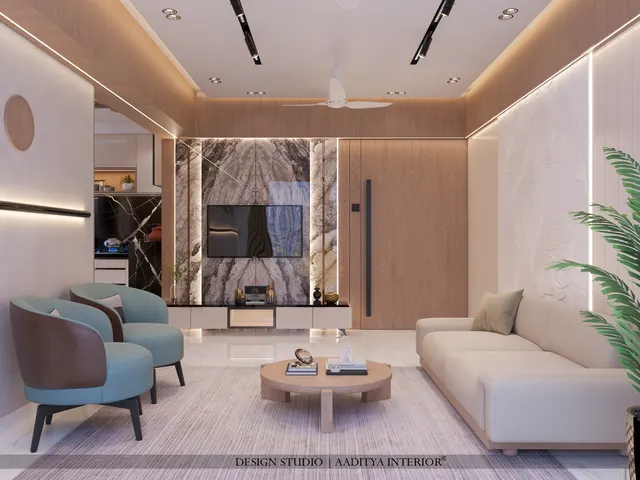
Every Indian home has the same visitor. Parents arrive from the hometown for a week, a cousin lands late at night, a friend stays over after a wedding, and suddenly the question is where everybody will sleep. In a three-bedroom flat the answer is usually the guest room, but in the one- and two-bedroom flats that most Indian families actually live in, there is no guest room at all. The living room has to become a bedroom after dinner and a living room again before breakfast. That is the job the sofa-cum-bed was made for, and it is why the piece has become one of the most bought items of furniture in Indian cities.
The trouble is that a sofa-cum-bed is two pieces of furniture pretending to be one, and most buyers measure only one of them. A family checks that the sofa fits against the living-room wall, pays for it, and only discovers on the first night that the bed, once opened, runs into the coffee table, blocks the balcony door, or leaves no room to walk around it. Or the reverse happens: the open bed is a generous 1500 mm wide, but the closed sofa is so deep and so low that nobody wants to sit on it during the day. A sofa-cum-bed that is the wrong size in either of its two states fails at the very job it was bought for. The dimensions have to be right twice over — once as a sofa and once as a bed.
This article gives both sets of numbers. It traces how folding beds developed in India, explains the six mechanisms sold today and how each one opens, lists the standard closed and open sizes in millimetres and feet, covers mattress thickness and sleeping comfort, and shows how to measure a room and leave the right clearance. Prices are indicative October 2026 ranges for Indian showrooms and online stores, excluding GST where stated, and should be confirmed locally before budgeting.
A short history of the folding bed in India
India has folded its beds away for far longer than the sofa-cum-bed has existed. The oldest answer to the problem was the charpai — a light wooden frame strung with rope or tape, which could be leaned against a wall, stacked with others in a corner, or carried out to the courtyard on a hot night. In village homes and in the courtyards of old city houses, sleeping was never fixed to one room: the charpai moved with the season, the weather and the number of people staying over. The folding cot that followed it, with a hinged wooden or steel frame and a canvas or tape base, kept the same idea and added a mechanism. Both were cheap, repairable by any carpenter, and completely honest about what they were — beds first, and nothing else.
The divan was the first piece of Indian furniture to try to be two things at once. A low wooden box with a mattress on top, often with storage inside, the divan served as a daytime seat along the wall of a living room and a single bed at night. In the homes of the nineteen-sixties and seventies it was everywhere, usually made by a local carpenter in teak or sheesham, with a thin cotton mattress and a bolster at one end. The divan worked because its dimensions were already settled by the body: about 900 mm wide for one sleeper, about 1900 mm long, and a sitting height near 450 mm. Those numbers have survived almost unchanged into the modern sofa-cum-bed, and they still describe a comfortable single bed today.
The sofa-cum-bed as Indians know it today arrived in the cities in the nineteen-seventies and eighties, as flats shrank and the joint family began to split into smaller households. Early models were simple fold-out frames: the seat pulled forward and the backrest folded flat, with a thin foam mattress stretched across both. They were clever, but the sleeping surface was uneven — the fold in the middle could always be felt — and the mechanism, usually a basic steel hinge, wore out or jammed. Many homes kept one anyway, because the alternative was a mattress on the floor for every guest. The lesson of those early models still applies: a sofa-cum-bed is judged at night, not in the showroom.
The nineteen-nineties and two-thousands brought the pull-out mechanism and, with it, a real mattress. Instead of folding the sofa itself flat, the bed slid out from under the seat on a steel frame, carrying a separate mattress that stayed flat and uncreased. Hydraulic and gas-lift versions followed, making heavy frames easy to open. At the same time, the futon and the click-clack arrived from Japan and Europe, aimed at studio apartments and paying-guest rooms where one piece of furniture had to do everything. By the twenty-tens, the sofa-cum-bed was no longer a compromise piece bought only for guests: in small flats it had become the main bed, used every night. That shift is what makes the dimensions in this article matter — a bed used once a month can forgive a thin mattress, but a bed used every night cannot.
Why Indian homes need the dual dimension
The Indian case for the sofa-cum-bed is stronger than in most countries, and the reasons are practical rather than fashionable. Flats are sold on super built-up area, so a two-bedroom flat often has a living room of only 12 × 14 ft and a second bedroom of 10 × 10 ft that already holds a bed, a wardrobe and a study table. Parents visit for weeks, not weekends, and festivals bring whole families under one roof. At the same time, the Indian way of receiving guests is generous: nobody is asked to sleep on a bare floor if a bed can be found. A sofa-cum-bed fits this pattern exactly — it is a sofa for the eleven months of ordinary life and a bed for the month of visitors. But it only works when both of its dimensions have been planned, and that planning starts with the mechanism, because the mechanism decides the open size, the mattress thickness and the clearance in front.
Six mechanisms, and how each one opens
Every sofa-cum-bed on the Indian market uses one of six mechanisms, and the mechanism is the first decision a buyer should make, because it decides how the piece opens, how thick the mattress can be, how much floor it needs, and how long it will last. Two mechanisms dominate showrooms — the pull-out and the fold-out — while the futon, the click-clack, the tri-fold and the wall-bed hybrid serve particular rooms. The table below compares them on the points that matter in daily use, and the figure after it shows the two most common types in side elevation so the motion can be seen clearly.
| Mechanism | How it opens | Mattress | Open size (typical) | Best for | Watch out for |
|---|---|---|---|---|---|
| Pull-out | Seat slides forward on a steel frame; hidden section unfolds | Separate, 100–150 mm | 1200–1500 × 1900 mm | Nightly sleeping, guest rooms | Heavy; needs 600–900 mm clear floor |
| Fold-out | Backrest folds flat beside the seat; one long surface | Attached, 75–125 mm | 1200–1500 × 1850–1900 mm | Occasional guests, tight budgets | Fold line felt through thin mattress |
| Futon | Wooden slat frame folds flat; loose mattress on top | Loose futon, 100–150 mm | 900–1400 × 1900 mm | Studio flats, floor-level sleeping | Low seat; mattress slides on the frame |
| Click-clack | Backrest clicks through positions and drops flat | Attached, 75–100 mm | 1200–1400 × 1850 mm | Small rooms, students, rented flats | Thin mattress; hinge wears with heavy use |
| Tri-fold | Seat unfolds in three panels, like a folding bed | Attached, 75–100 mm | 900–1200 × 1900 mm | Single sleepers, narrow rooms | Narrow bed; two fold lines |
| Wall-bed hybrid | Sofa sits in front of a bed that folds down from the wall | Full bed mattress, 150–200 mm | 1500 × 2000 mm | Studio flats, home offices | Needs 2000 mm+ clear floor and a solid wall |
The pull-out is the workhorse of the Indian market and the right choice when the bed will be used often. Inside the sofa, a steel frame carries a folded mattress; the user pulls a handle under the front of the seat, the frame slides out on runners, and a hinged section rises to bring the whole sleeping surface to one level. Because the mattress is separate from the seat cushions, it stays flat, keeps its shape, and can be 100–150 mm thick — thick enough for an adult to sleep on every night. The price is weight and floor space: a double pull-out weighs far more than a fold-out, and opening it needs the full length of the bed plus room to stand, which is why the clearance figures later in this article matter so much.
The fold-out is the older, simpler idea. The backrest is hinged at the seat, and it folds backwards and down until it lies flat beside the seat, making one long sleeping surface out of the seat and the back. It opens in one movement, costs less, and has no heavy sliding frame to maintain. The compromise is the mattress: because the same foam serves as both the seat and the bed, it is usually 75–125 mm thick, and the fold in the middle is always there to be felt, however good the foam is. A fold-out suits guests who stay for a night or two; for nightly use, most people end up adding a topper, which is an extra cost and an extra item to store.
The remaining four mechanisms each solve a different problem. A futon is a low wooden slat frame with a loose mattress on top; it folds flat in the middle, sits very low to the floor, and suits floor-level sleeping and Japanese-style rooms, though the mattress tends to slide and the seat height is too low for older users. A click-clack uses a ratchet hinge that lets the backrest sit upright, recline, or lie flat, which makes it a good reading chair and a fair bed, but its thin mattress and small hinge are not built for heavy nightly use. A tri-fold unfolds in three panels and is the narrowest option, useful in a single bedroom or a passage-like room. The wall-bed hybrid is the most ambitious: by day it is a proper sofa, and by night a full bed folds down from the wall above or behind it, carrying a real 150–200 mm mattress. It sleeps best of all six, but it needs a solid wall, professional fixing, and more than 2000 mm of clear floor — which rules it out of most small living rooms.
Closed dimensions: the sofa you sit on every day
A sofa-cum-bed spends far more of its life closed than open, so its closed dimensions deserve the first look. A good one must work as an ordinary sofa: the seat must be the right height for sitting down and standing up, the seat must be deep enough to sit back comfortably without swallowing a shorter person, and the whole piece must fit the wall it stands against without blocking a door, a window or a passage. The numbers below are the standard Indian sizes, and they line up closely with the dimensions of an ordinary three-seater sofa, because a sofa-cum-bed that sits badly will not be used as a sofa at all — it will become an expensive guest bed that nobody sits on.
| Model (closed) | Overall width | Overall depth | Seat height | Seat depth | Sits |
|---|---|---|---|---|---|
| Single sofa-cum-bed | 900–1050 mm | 900–950 mm | 400–450 mm | 550–600 mm | 1 person |
| Double, two-seater | 1500–1650 mm | 900–1000 mm | 400–450 mm | 550–600 mm | 2 people |
| Double, three-seater | 1800–2000 mm | 900–1000 mm | 400–450 mm | 550–600 mm | 3 people |
| L-shaped, with chaise | 2100–2400 mm | 900–1000 mm | 400–450 mm | 550–600 mm | 3–4 people |
| Queen, wide double | 2000–2200 mm | 950–1000 mm | 400–450 mm | 550–600 mm | 3 people |
Seat height is the most unforgiving of these numbers. At 400–450 mm from the floor to the top of the seat cushion, most adults can sit down and stand up without effort, and feet rest flat on the floor. Below 400 mm the seat feels like sitting on a low divan — fine for a young person, hard on older knees, and tiring over an evening of television. Above 450 mm, shorter people find their feet dangling and their thighs pressed by the front edge of the seat. Futons and some click-clack models sit at 350–400 mm, which is one reason they suit younger users and studio flats better than family living rooms. When testing a sofa-cum-bed in a showroom, the buyer should sit on it as a sofa first, feet flat, back against the backrest, and stay there for a few minutes before ever opening it.
Seat depth of 550–600 mm is the range that suits most Indian bodies: deep enough to sit back with a cushion behind, shallow enough that a person of average height can sit upright with feet on the floor. Overall depth of 900–1000 mm follows from the seat depth plus the backrest and the frame, and it is the number that decides how far the piece stands out from the wall. In a living room of 12 ft width, a sofa 1000 mm deep leaves about 2650 mm of free floor in front of it — enough for a coffee table and a walkway. In a room of 10 ft width, the same sofa leaves only about 2050 mm, which is workable but tight once a centre table is added. Width is simpler to judge: a three-seater at 1800–2000 mm fits the standard 10–12 ft living-room wall with room for a side table at each end, while a 2200 mm queen model needs a wall of at least 2400 mm, or it will crowd the corners.
Open dimensions: the bed you sleep on at night
Open the sofa and the numbers change completely. The depth of 900–1000 mm becomes a length of 1850–2000 mm, and the width of the sofa becomes the width of the bed. This is the moment when most buying mistakes are revealed, because the open bed is nearly twice as long as the closed sofa is deep, and it reaches into the middle of the room. A double sofa-cum-bed that opens to 1500 × 2000 mm needs a clear rectangle of that size on the floor, plus room to walk around it. In a 12 × 14 ft living room that is easy; in a 10 × 12 ft room it takes the whole floor.
| Open bed | Open size (mm) | Open size (feet) | Sleeps | Room it suits |
|---|---|---|---|---|
| Single | 900 × 1900 | 3 × 6.2 ft | 1 adult | Small bedroom, study, balcony room |
| Double, compact | 1200 × 1900 | 4 × 6.2 ft | 2 adults, snug | Guest room, 10 × 12 ft living room |
| Double, standard | 1400 × 1900 | 4.6 × 6.2 ft | 2 adults | 2BHK living room, 12 × 14 ft |
| Double, large | 1500 × 2000 | 5 × 6.6 ft | 2 adults, comfortable | Living room 12 ft or wider |
| Queen | 1500–1800 × 2000 | 5–6 × 6.6 ft | 2 adults + child | Large living room, studio flat |
| King (wall-bed hybrid) | 1800 × 2000 | 6 × 6.6 ft | 2 adults, generous | Studio flat with 2000 mm+ clear floor |
Length deserves attention first, because it is the dimension most often got wrong. A bed of 1900 mm suits most sleepers, but a person taller than about 1830 mm (6 ft) will find their feet at the edge, and should look for a 2000 mm model. The extra 100 mm costs almost nothing in the showroom but is the difference between sleeping well and sleeping curled up. Width is the second check: a 1200 mm double is really a bed for two people who do not mind touching, or for one person and a child, while 1400–1500 mm is the width at which two adults can sleep without disturbing each other. Couples who buy a 1200 mm model to save money usually regret it within a month, and the saving is small compared with the price of replacing the piece.
The height of the open bed matters too, and it is rarely printed on the label. A pull-out bed typically sleeps at 400–450 mm from the floor — the same as the seat height — which is comfortable for getting in and out of, and matches the height of an ordinary bed. A fold-out sleeps at the same height, since the seat itself becomes the bed. A futon, by contrast, sleeps at 200–300 mm, close to the floor, which younger sleepers accept happily and older guests often struggle with. The figure below draws the open bed in plan, inside a typical living room, so the clearance around it can be seen at a glance.
Mattresses and sleeping comfort
A sofa-cum-bed is only as good as its mattress, and the mattress is where manufacturers save money first. The foam in a cheap model is often a single low-density slab that feels fine for five minutes in a showroom and sags within months, and the fold in a fold-out model presses through it from the first night. The buyer should ask three questions about the mattress: how thick it is, what density the foam is, and whether it is one piece or several. Thickness can be measured with a tape in the showroom; density is usually printed on the specification card, and a density of 32 kg per cubic metre or more is the mark of foam that will hold its shape, while 24 kg per cubic metre and below is soft, cheap foam that flattens quickly.
| Mechanism | Mattress thickness | Nightly use? | Topper needed? | What to check |
|---|---|---|---|---|
| Pull-out | 100–150 mm | Yes, comfortable | Rarely | Frame bars felt through mattress |
| Fold-out | 75–125 mm | Occasional only | Yes, 50–75 mm topper | Fold line in the middle |
| Futon | 100–150 mm | Yes, if firm | Rarely | Mattress sliding on slats |
| Click-clack | 75–100 mm | Occasional only | Yes, 50 mm topper | Hinge pressure points |
| Tri-fold | 75–100 mm | Occasional only | Yes, 50 mm topper | Two fold lines |
| Wall-bed hybrid | 150–200 mm | Yes, best of all | No | Mattress straps hold it upright |
The rule that covers most cases is simple: a mattress of 100 mm or more, in foam of reasonable density, sleeps an adult well; below 100 mm, the frame underneath starts to make itself felt, and a topper becomes necessary rather than optional. A topper of 50–75 mm, usually memory foam or a soft polyurethane, costs about ₹3,000–8,000 for a double size in October 2026 and transforms a fold-out or click-clack from an occasional bed into a bed a guest can actually sleep on for a week. The catch is storage: a rolled topper needs a place to live during the day, and a home that buys a fold-out plus a topper should plan a shelf or a loft for it, or the topper ends up folded on top of the wardrobe. Some families solve this by keeping the topper permanently on the sofa-cum-bed, under a fitted cover — which works, but makes the closed sofa sit slightly higher and softer than the showroom model.
Two more comfort points are easy to miss. First, the join: in a pull-out, the place where the sliding frame meets the fixed seat is the weak spot, and the buyer should lie across it, not just on one side of it, because a bar or a gap under the hips will be felt all night. In a fold-out, the same test applies to the fold line. Second, the base: a slatted wooden base breathes better than a solid board in humid Indian weather, and a mattress that sits on a solid board in a coastal city can trap moisture underneath. A washable, removable cover is worth asking for, especially where the bed will be used by children or by elderly parents, and a mattress that can be turned or rotated will last longer than one that cannot.
Measuring the room and the clearance to open it
The most useful hour in buying a sofa-cum-bed is spent at home with a measuring tape, not in the showroom. The measurement that matters most is the clear floor in front of the sofa, because that is the space the bed will occupy when it opens. For a pull-out or fold-out, the bed reaches 1850–2000 mm out from the wall, and the person opening it needs to stand in front of it while pulling. The working rule is 600–900 mm of clear floor beyond the foot of the open bed — enough to stand, to walk past, and to make the bed in the morning. A room that gives only 300 mm beyond the bed will sleep two people, but nobody will be able to walk around them, and the balcony door will be blocked for the whole stay.
| What to measure | How to measure it | Minimum to allow | If it is less than that |
|---|---|---|---|
| Clear floor in front | Wall face to the nearest fixed item | 600–900 mm past the open bed | Move the coffee table; choose a shorter bed |
| Open bed length | Wall to foot of the bed, tape on floor | 1900 mm, or 2000 mm for tall sleepers | Choose a 1900 mm model, not 2000 mm |
| Door swing | Arc of every door near the bed | Door must open fully with bed open | Reverse the door or fit sliding door |
| Balcony / passage door | Door leaf plus walking path | 600 mm walking path kept clear | Bed blocks the exit — unsafe at night |
| Wall-bed clear floor | Wall face to opposite wall or furniture | 2000 mm or more, full width | Wall bed cannot open; choose pull-out |
| Delivery path | Main door, lift, staircase, turns | Sofa width + 100 mm at each turn | Order a knock-down model that assembles inside |
Doors cause more trouble than any other item. A bedroom door that swings into the space where the bed opens will hit the bed every time, and a balcony door that opens inwards can be blocked entirely by an open double bed — which is not only inconvenient but unsafe, since the balcony is often the second way out of a flat. The fix is cheap if it is planned early: reverse the door so it swings the other way, fit a sliding door, or move the sofa to the opposite wall. The expensive version of the same fix is discovering the problem after delivery, when the sofa is already in the room and the carpenter has to be called back. The same logic applies to the delivery path itself: a three-seater of 2000 mm width, carried on its side through a 900 mm door and up a staircase with a tight landing, may not reach the room at all. Measure the main door, the lift car, the staircase width and every turn, and ask the store whether the model comes in knock-down form that assembles inside the room.
The room itself should also be checked against the National Building Code of India 2016, Part 3, which sets the minimum sizes for habitable rooms — a larger habitable room of at least 9.5 m² with a minimum width of 2.4 m, and a second habitable room of at least 7.5 m². A living room that meets the code can still be too small for a double sofa-cum-bed once the television unit, the coffee table and the walkway are drawn in, so the code figure is a floor, not a target. The practical test is to mark the open bed on the floor with masking tape, live with the outline for an evening, and walk the route from the bed to the bathroom in the dark. If the tape forces a sideways shuffle past the television unit, the room needs a single model, or the furniture needs to move. Aaditya Interior recommends this tape test to every client before ordering, because it costs nothing and prevents the most common regret in this category.
Choosing the right type: frames, materials and costs
Once the size is settled, the choice comes down to three things: the frame, the upholstery, and the price. The frame is the skeleton, and it decides how long the piece will last. A hardwood or engineered-wood frame with a steel mechanism is the standard for a good Indian sofa-cum-bed; a frame made only of softwood or particle board will loosen at the joints within a few years, especially in a home where the bed is opened often. Plywood to IS 303 for general purposes, or IS 710 marine plywood where the piece may face damp, is the material to ask for by name, and a seller who cannot say what the frame is made of is a seller to walk away from. The mechanism itself should be steel, not aluminium, in a double model, because the frame carries the weight of two adults plus the mattress every night.
Upholstery is the second decision, and Indian conditions make it a practical one rather than a decorative one. Fabric is cooler and more comfortable in summer, and a removable, washable cover is worth paying for where the piece will be slept on by children or guests. Leatherette, or faux leather, wipes clean and suits homes with small children, but it feels warm in summer and can peel in heat and humidity after a few years, especially on the seat where the body rests. A tightly woven fabric in a mid-tone colour hides dust and the odd stain far better than a pale plain fabric, and a patterned fabric hides the wear of nightly use better still. Whatever the covering, the seat cushions should be removable, so they can be aired in the sun — a habit that keeps both the fabric and the foam fresh in Indian weather.
| Category | What it includes | Indicative price (₹) | Best for |
|---|---|---|---|
| Basic fold-out / click-clack | Thin mattress, basic steel hinge | ₹15,000–35,000 | Occasional guests, rented flats |
| Mid-range pull-out | 100–125 mm mattress, steel frame | ₹35,000–70,000 | Regular guests, family living rooms |
| Premium / hydraulic pull-out | 125–150 mm mattress, gas-lift frame | ₹70,000–1,50,000 | Nightly sleeping, studio flats |
| Wall-bed hybrid with sofa | Full mattress, wall fixing, cabinet | ₹1,00,000–2,50,000 | Studio flats, home offices |
| Mattress topper, double | 50–75 mm memory foam topper | ₹3,000–8,000 | Improving a fold-out or click-clack |
| Fabric re-upholstery (later) | New cover, foam check, frame tightening | ₹8,000–20,000 | Extending life after 5–7 years |
Prices are indicative October 2026 ranges for Indian showrooms and online stores, excluding GST where applicable, and they move with the city, the brand, the fabric and the mechanism. A basic model at ₹15,000–35,000 is honest value for a guest bed used a few nights a month, but it will not survive nightly use, and its thin mattress will need a topper. The mid-range at ₹35,000–70,000 is where most families should look: a proper pull-out frame, a mattress of 100 mm or more, and a warranty worth reading. The premium band at ₹70,000–1,50,000 buys a hydraulic or gas-lift frame that opens with one hand, a thicker mattress, and better foam — sensible when the piece is the main bed in a studio flat. The wall-bed hybrid at ₹1,00,000–2,50,000 includes the wall cabinet and professional fixing, and should always be quoted with installation included, because the fixing is half the product. A topper at ₹3,000–8,000 is the cheapest upgrade in this whole category and the one most often skipped; for a fold-out it is not an accessory, it is part of the bed.
Two buying checks protect the money. First, the warranty: a steel frame should carry three to five years, and the mechanism should be covered in writing, not promised verbally. Second, the return and exchange policy: many online stores allow a return only if the piece is unused and in its packing, which means the buyer cannot open it, lie on it and send it back. Where possible, buy from a showroom where the exact model can be opened, sat on and slept on for a few minutes, and ask for the price to include delivery, assembly and the removal of packing. Delivery and assembly for a heavy pull-out can cost extra in some cities, and a model that arrives unassembled in a flat with no lift is a problem the buyer should not discover on the day.
Where sofa-cum-beds are going next
The sofa-cum-bed is changing faster now than at any point in its history, and the change is driven by the same force that created it: smaller homes. Indian cities are building more studio and one-bedroom flats than ever before, and in those homes a piece of furniture that does two jobs is not a convenience but a necessity. Manufacturers are responding with lighter frames, easier mechanisms and better mattresses. Gas-lift and hydraulic frames that once belonged only to premium models are moving into the mid-range, so that a person living alone can open a double bed with one hand. Mattresses are improving too: pocket-spring and high-resilience foam versions, once sold only for ordinary beds, are now made in the sizes and thicknesses that fit inside a sofa-cum-bed frame.
The more interesting change is in the room around the bed. Wall-bed hybrids, once a curiosity, are becoming a normal option in studio flats, with the sofa built into the front of a cabinet that folds down into a full bed. Storage is being designed into the piece itself — drawers under the seat, a lift-up storage box in the chaise — because a small flat has nowhere else to keep bedding. And the materials are getting easier to live with: washable covers, stain-resistant fabrics and frames that can be tightened or repaired rather than replaced. What will not change is the test this article has applied throughout: the piece must sit well by day and sleep well by night, and the buyer should measure both states before paying. The mechanism may get lighter and the mattress thicker, but the tape on the floor will still be the best tool in the shop.
Ten rules for buying a sofa-cum-bed
- Measure the open bed first and the closed sofa second — the bed is the size that causes trouble, not the sofa.
- Mark the open bed on the floor with masking tape and walk around it before ordering, including the route to the bathroom at night.
- Choose the mechanism for how often the bed will be used: pull-out for nightly sleeping, fold-out for occasional guests.
- Insist on a mattress of 100 mm or more in foam of at least 32 kg per cubic metre density, and lie across the join, not just on one side.
- Keep 600–900 mm of clear floor beyond the foot of the open bed, and check that no door or balcony exit is blocked.
- Check the seat height of 400–450 mm and the seat depth of 550–600 mm by sitting on the closed sofa for several minutes.
- Ask what the frame is made of — hardwood or plywood to IS 303, with a steel mechanism — and get the frame warranty in writing.
- Buy a topper of 50–75 mm with any fold-out or click-clack, and plan where it will be stored during the day.
- Measure the delivery path — main door, lift, staircase and every turn — and confirm whether the model assembles inside the room.
- Budget for the whole cost: the bed, the topper if needed, delivery, assembly and GST, all confirmed before paying.
Frequently asked questions
What is the standard size of a sofa-cum-bed in India?
The standard double sofa-cum-bed closes to about 1800 mm wide and 900–1000 mm deep, and opens to a bed of 1400–1500 mm wide by 1900–2000 mm long. A single model closes to about 900–1050 mm wide and opens to 900 × 1900 mm. Seat height is 400–450 mm and seat depth is 550–600 mm in both cases. These are the sizes most Indian showrooms stock, and they fit the living rooms of most two- and three-bedroom flats.
How much space is needed in front of a sofa-cum-bed to open it?
Allow 600–900 mm of clear floor beyond the foot of the open bed, on top of the bed's own length of 1850–2000 mm. In practice that means about 2600–2900 mm of clear depth from the wall for a double model. A wall-bed hybrid needs more: over 2000 mm of clear floor across its full width. A light coffee table on castors, or one that can be lifted aside, makes nightly opening far easier than a heavy fixed table.
Is a sofa-cum-bed good for daily sleeping?
Yes, if it is the right type. A pull-out with a separate mattress of 100–150 mm, or a wall-bed hybrid with a full 150–200 mm mattress, sleeps well every night. A fold-out or click-clack with a 75–100 mm attached mattress is better for occasional use; for nightly sleeping it needs a 50–75 mm topper, and even then the fold line can be felt. The frame matters too: a steel pull-out frame with a written warranty of three to five years is built for daily opening, while a basic hinge is not.
What mattress thickness is best for a sofa-cum-bed?
For regular sleeping, 100–150 mm is the right range, in foam of at least 32 kg per cubic metre density. Below 100 mm the frame underneath starts to press through, and above 150 mm the mattress may not fold or slide back into the sofa. Wall-bed hybrids are the exception, since they carry a full bed mattress of 150–200 mm that never folds. If the mattress supplied with the sofa is thinner than 100 mm, a topper of 50–75 mm, costing about ₹3,000–8,000, is the practical fix.
What is the difference between a pull-out and a fold-out sofa-cum-bed?
In a pull-out, the bed slides out from under the seat on a steel frame and carries a separate mattress that stays flat, so it sleeps better and the mattress can be thicker. In a fold-out, the backrest folds flat beside the seat, so the seat itself becomes the bed; it opens in one movement and costs less, but the mattress is thinner and the fold in the middle can always be felt. Pull-outs suit nightly use and cost about ₹35,000–70,000 in the mid-range; fold-outs suit occasional guests and start at about ₹15,000.
Can a sofa-cum-bed fit in a small 10 × 12 ft room?
A single model at 900 × 1900 mm open fits comfortably, and a compact double at 1200 × 1900 mm fits if the room holds little else. A standard double at 1500 × 2000 mm will take most of the floor, leaving little room to walk around it, so the room should be measured with masking tape before ordering. In a 10 × 12 ft room, a single or compact double with a light, movable centre table is usually the better choice than a full double.
Sources & standards
- National Building Code of India 2016, Part 3 — Development Control Rules and General Building Requirements (minimum habitable room sizes and clearances)
- Bureau of Indian Standards — IS 303: Specification for plywood for general purposes
- Bureau of Indian Standards — IS 710: Specification for marine plywood
- Neufert, Ernst and Peter — Architects' Data, 4th edition (Wiley-Blackwell): standard furniture dimensions, seating and sleeping clearances
- Time-Saver Standards for Interior Design and Space Planning (McGraw-Hill): seating, sleeping and circulation dimensions
- Indian furniture manufacturers' published standard size charts for sofa-cum-beds (2026 catalogues)
- Price ranges: indicative October 2026 estimates — confirm locally before budgeting