Most living rooms waste one whole wall. There is the sofa wall, the TV wall, the window wall — and then a fourth wall that ends up holding one framed print and a lot of blank paint. A bookshelf or display wall is the obvious fix: it turns that dead surface into storage, display and character all at once, and it costs less than most feature walls because much of it is open air. The catch is that shelves only look good when their depth, spacing and lighting are right, and when they are actually styled rather than stuffed.
These seven ideas run from the cheapest (a single floating ledge) to the most built-in (a full glass-front display unit), with real project photographs and the few dimensions that make the difference. Standard trade sizes to keep in mind: a book shelf wants about 250–300 mm of depth and 300–380 mm of clear height between shelves for ordinary books, taller for large formats; display-only shelves can be shallower. A short how-to-choose table and the usual questions follow.
1. Build the shelves into the TV or feature wall
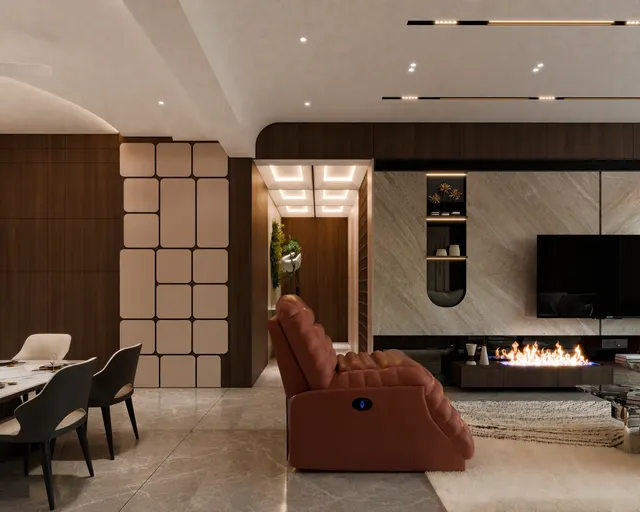
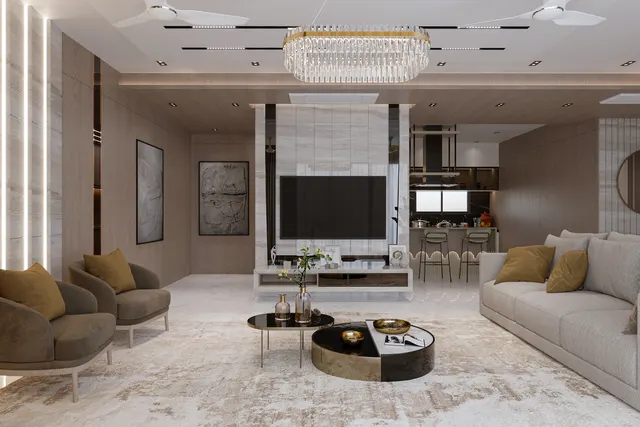
The most space-efficient shelf wall is the one that shares the TV wall. Instead of a plain feature wall with a floating console, extend the joinery into open shelves and lit niches around and above the media unit, so one wall does display, storage and television together. A low console takes the heavy, closed storage; a slim backlit niche or a run of open shelves above holds books and objects. Keeping the shelving asymmetric around the screen stops it looking like a showroom and lets taller pieces breathe. This is the idea that suits most Indian living rooms because it adds display without claiming a second wall.
2. A grid of open cubbies
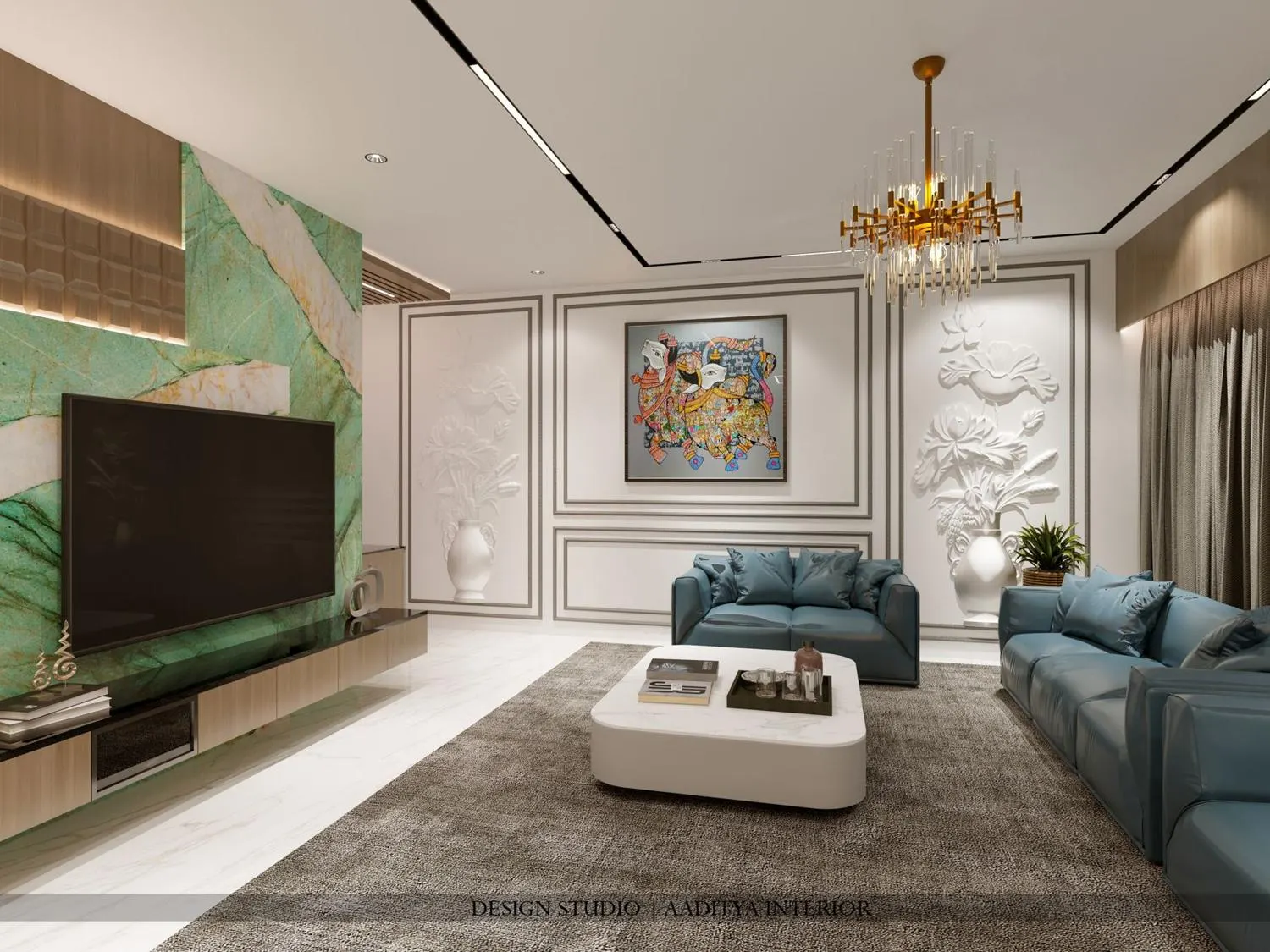
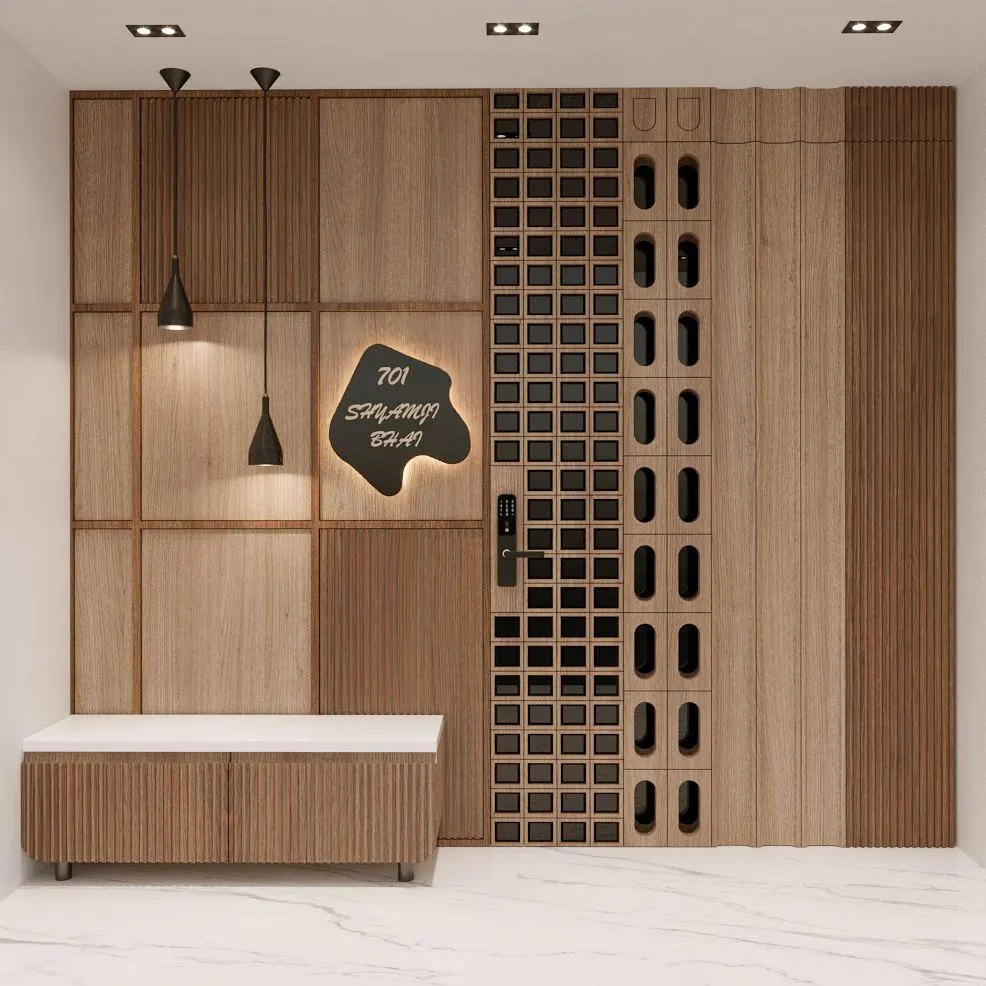
A grid of open cubes is the most graphic way to make a shelf wall, and it doubles as a room divider when it is open on both sides. Equal square openings read as a pattern in their own right, so even half-filled they look deliberate; a dark back to each cube makes books, boxes and objects pop against it. The discipline is to vary what goes in — some cubes with upright books, some with a single object, some left empty — so the grid does not turn into visual noise. Cube grids suit contemporary and warm-minimalist rooms, and work especially well at an entry or between living and dining as a screen that still stores things.
3. Floating open shelves
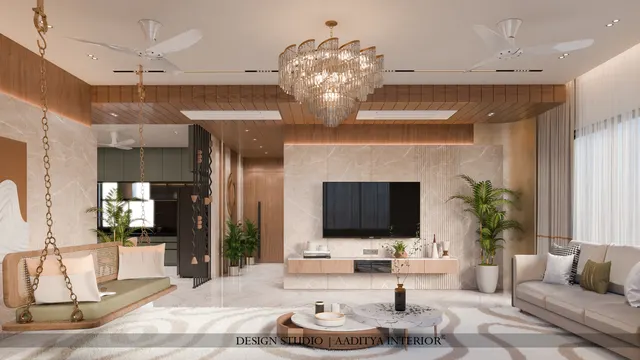
Floating open shelves — slim planks that appear to grow straight from the wall with no visible brackets — are the lightest, most modern shelf wall, and among the cheapest. A few staggered shelves over a console or a sideboard turn a bare wall into a styled one, and because they are open on every side they keep the room feeling airy. The trade-off is strength and styling discipline: the concealed bracket must be rated for the load (books are heavy), long shelves need support to avoid a visible droop, and open shelves show everything, so they must be curated and dusted. Backlighting or a strip under each shelf makes them glow in the evening and lifts them from storage to feature.
4. A glass-front display unit
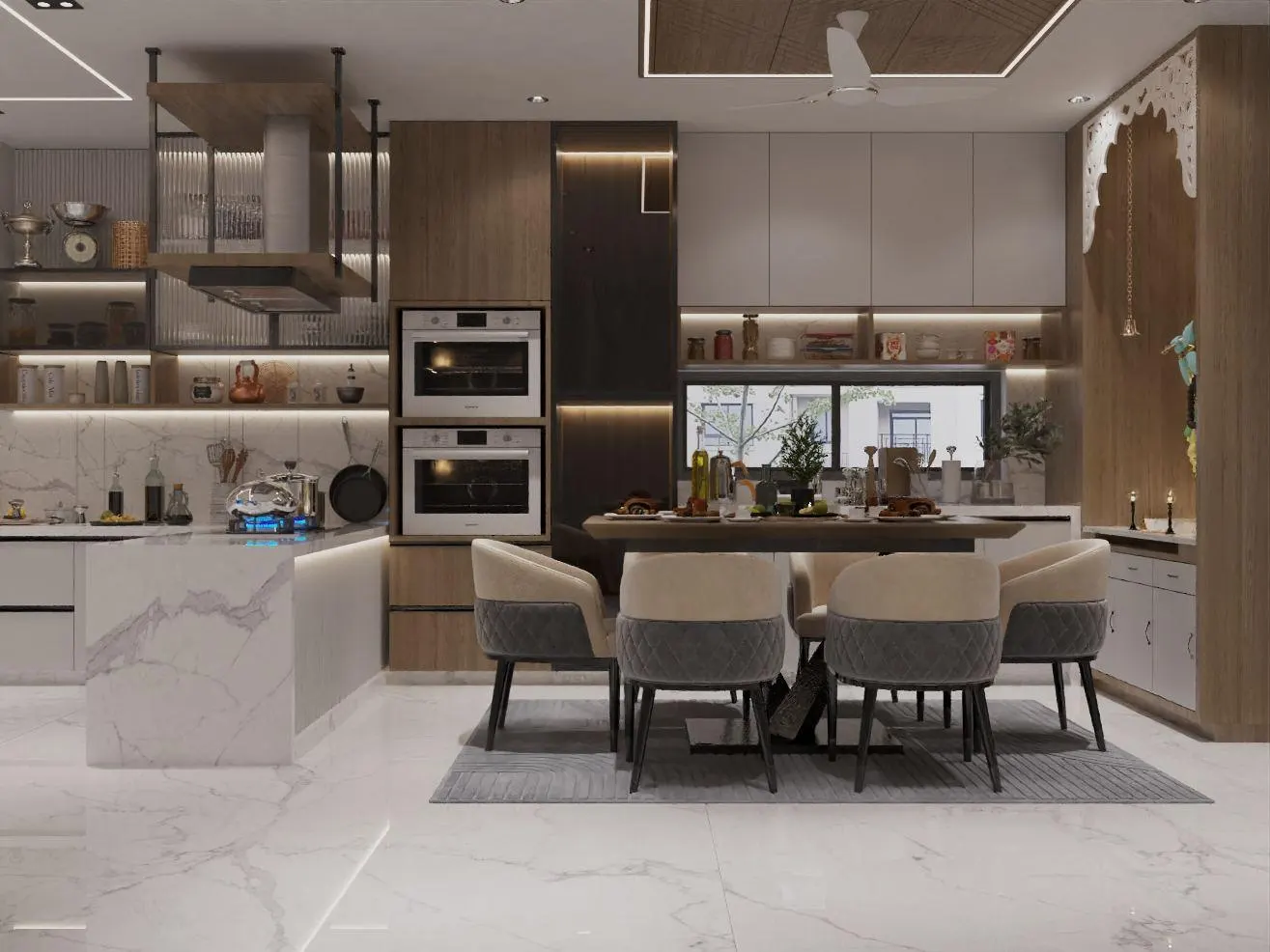
When a living room holds books and objects worth protecting — first editions, collectibles, glassware, travel pieces — a glass-front display unit is the upgrade from open shelves. Framed glass shutters keep dust and little hands off the contents while still showing them, and internal LED lighting turns the unit into a lit cabinet after dark. Glass-front units read as more formal and more premium than open shelving, so they suit dressed living rooms and lounges; the cost is higher because of the joinery, the glass and the hardware. A mix of a glass-front section for the precious pieces and open shelves for everyday books gives the best of both.
5. A single floating ledge
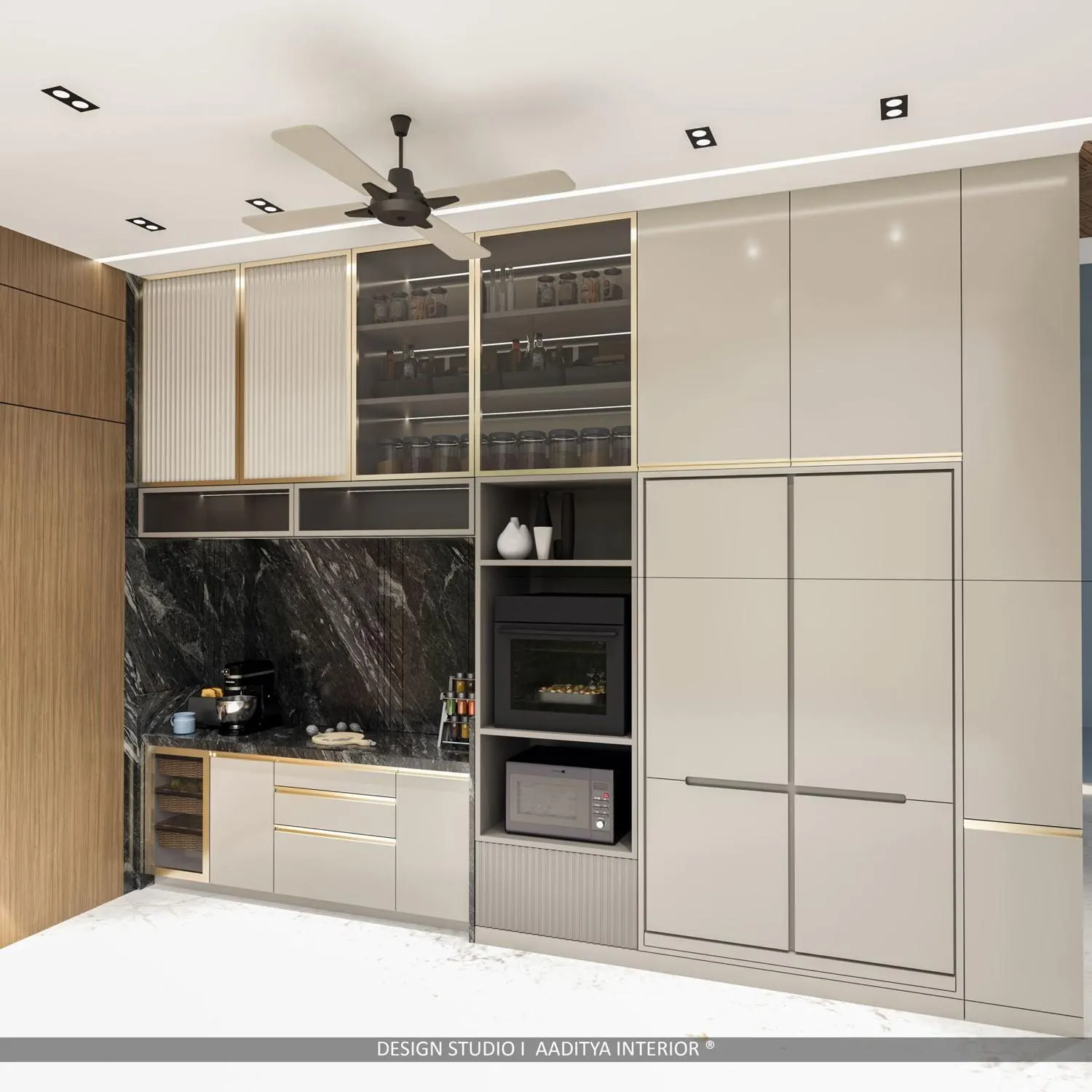
Not every shelf wall needs to be a library. Where the room is small, or the look is minimalist, a single long floating ledge can be the whole idea — a slim horizontal line that holds a leaning artwork, a few books stacked flat, a lamp and one sculptural object. It is the cheapest shelf wall there is, it builds out only a little from the wall, and it reads as calm rather than busy. A thin integrated light along the ledge, or a picture light above it, turns the one shelf into a composed vignette. This is the restrained alternative to a full wall of shelving.
6. Slim asymmetric wall shelves
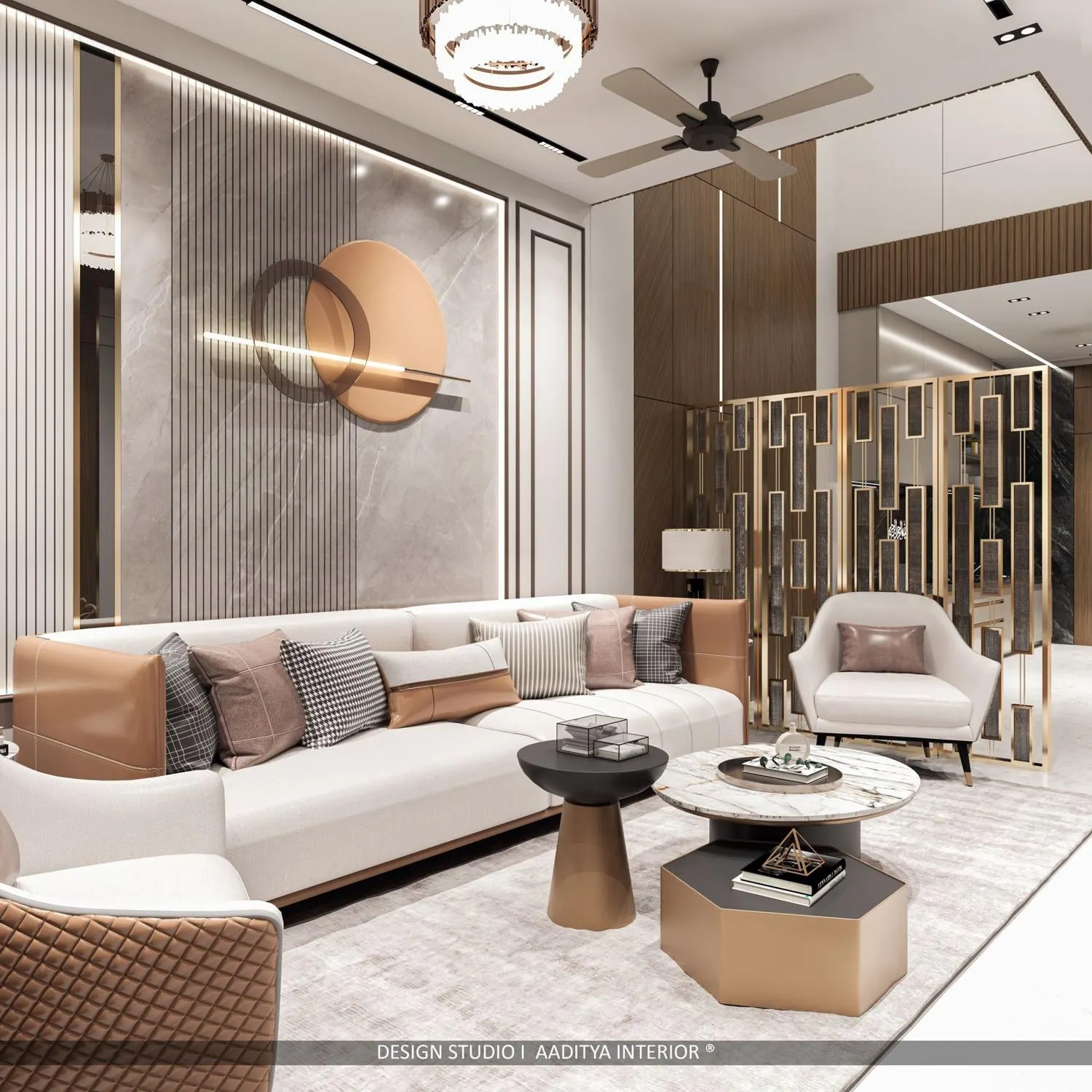
Between the single ledge and the full unit sits the asymmetric arrangement: a handful of slim shelves of different lengths, staggered up a wall beside a seat or a reading corner. Because the lengths and gaps vary, the composition looks collected rather than built, and it is forgiving — a few books, a plant, a frame and a clock are enough to fill it. Slim shelves keep the build-out minimal and the cost low, and they are the easiest shelf wall to add to a finished room because they need only good wall fixings, not full joinery. Keep the heaviest items low and lighter objects high so the wall feels balanced.
7. Size and light your shelves right
Whatever style is chosen, the dimensions decide whether the wall works. Ordinary hardback and paperback books need about 250–300 mm of shelf depth and 300–380 mm of clear height between shelves; large-format and coffee-table books need 380–420 mm of height and can be laid flat. Display-only shelves can drop to 150–250 mm deep. Long shelves (over about 900 mm) need mid-support or a thicker section, or books will make them sag. And every shelf wall needs light — a strip tucked under the shelf front, a backlight behind the contents, or spots from the ceiling — because without it the wall disappears the moment the daylight goes. The sketch below sets out the working numbers.
How to choose your shelf wall
| If you want… | Choose | Indicative cost (Oct 2026) |
|---|---|---|
| The cheapest, lightest look | A single floating ledge or slim shelves | ₹2,000–15,000 for a few shelves |
| Display + storage without a second wall | Shelving built into the TV / feature wall | Cabinetry ≈ ₹1,340–1,800 per sq ft of elevation |
| A graphic, divider-like wall | A grid of open cubbies | ≈ ₹1,200–1,800 per sq ft of elevation |
| To protect books and collectibles | A glass-front display unit | Higher — joinery + glass + internal LED |
| Evening drama on any of them | Add a backlight or under-shelf LED strip | Cove/strip LED ≈ ₹150–300 per running ft |
Frequently asked questions
How deep should living-room bookshelves be?
About 250–300 mm for ordinary books, which holds hardbacks and paperbacks without them overhanging, and 380–420 mm if you want to stand or lay large coffee-table books. Display-only shelves for objects can be shallower, 150–250 mm, which also keeps the wall from building out too far into the room. Allow about 300–380 mm clear height between shelves for books, more for tall items.
Will long open shelves sag under books?
They can — books are surprisingly heavy. Keep unsupported spans under about 900 mm, use a thicker shelf section or an internal steel flat for longer runs, and make sure concealed floating-shelf brackets are rated for the load and anchored into solid wall or the joinery frame, not just plasterboard. A shelf that sags looks cheap and eventually fails, so support is worth the small extra cost.
How do I style a shelf wall so it does not look cluttered?
Mix and leave gaps. Combine upright books, a few flat stacks (which double as plinths for objects), and a scatter of objects, plants and framed pieces, and deliberately leave some shelves part-empty so the eye can rest. Group by colour or height, keep the heaviest items low, and treat negative space as part of the design. A backlight or strip light makes even a simple arrangement look composed.
Sources & standards
- Aaditya Interior project photographs — Golden Heaven, Sangini Siddhanta, Krushal Residence and Botanical Bungalow (Surat)
- Neufert Architects' Data and Time-Saver Standards — shelf depths, book heights and clearances (described as typical ranges)
- This site's cabinetry, carpentry and cove-lighting cost guides — rate ranges for joinery and LED strip
- Price ranges: indicative October 2026 estimates for finished, installed shelving — confirm with a local carpenter before budgeting