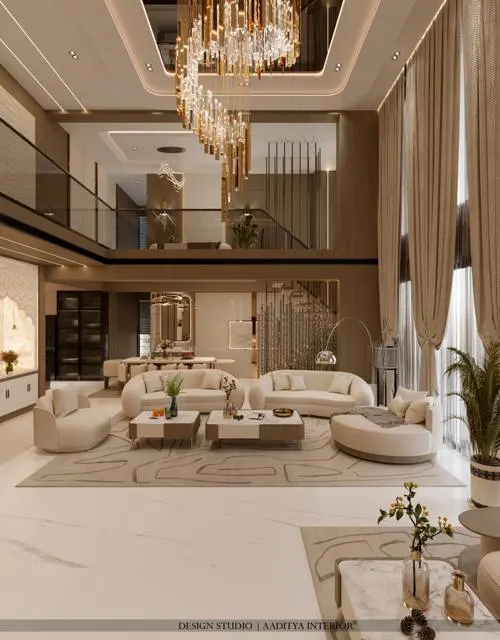
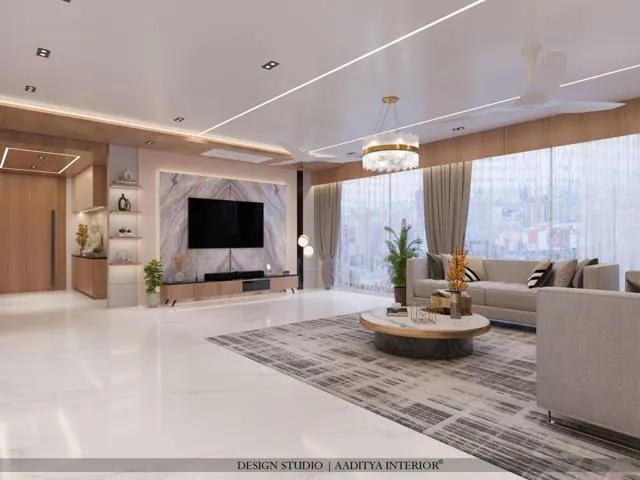
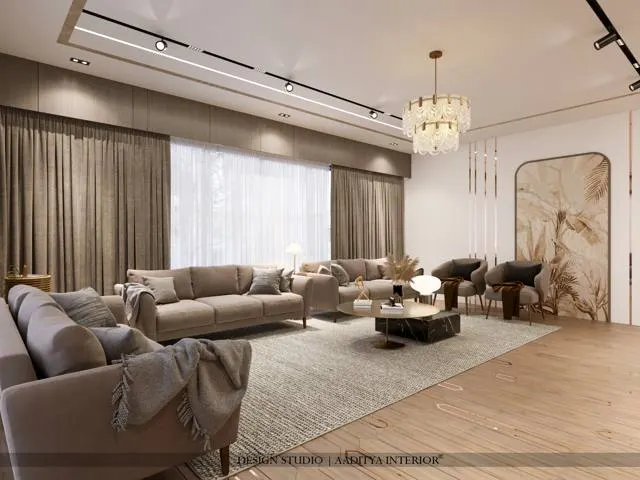
By the week before Diwali, most Indian homes have the same problem: a carton of fairy lights, a packet of diyas, a few marigold strings, and no plan. Everything comes out at once, drapes over every surface, and the house ends up busy rather than festive. The homes that look genuinely special on Diwali night are almost always the ones that did less and placed it better — one glowing entrance, one focal wall, a warm wash of light, and calm everywhere else. Good festive styling is editing, not accumulation.
The ideas below are drawn from real interiors the studio has designed, and each works because the room was already doing half the job — a panelled feature wall, a jaali screen, a cove of warm light — and the Diwali layer simply switched it on. Each idea is small enough to do in an afternoon, and the last word, every year, is safety: keep live flames away from fabric and synthetic décor, and never overload a socket with light strings.
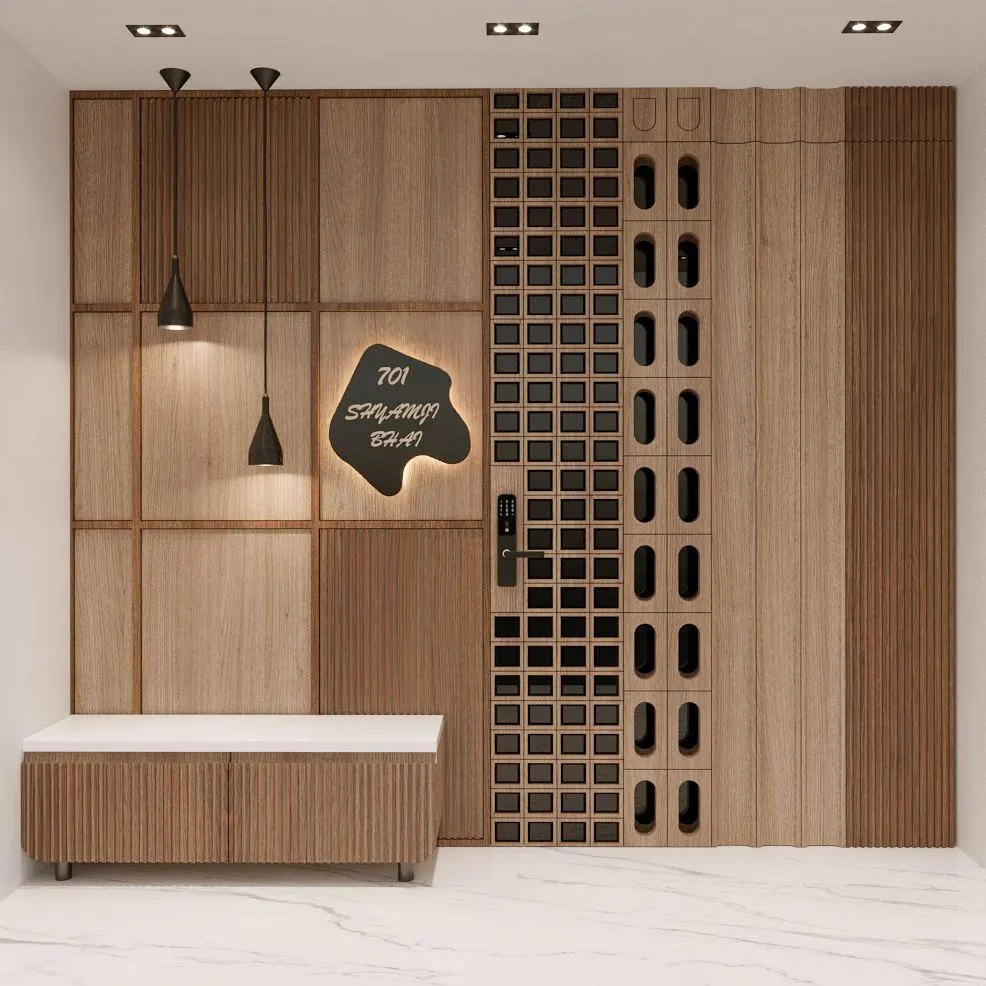
1. Start the glow at the front door
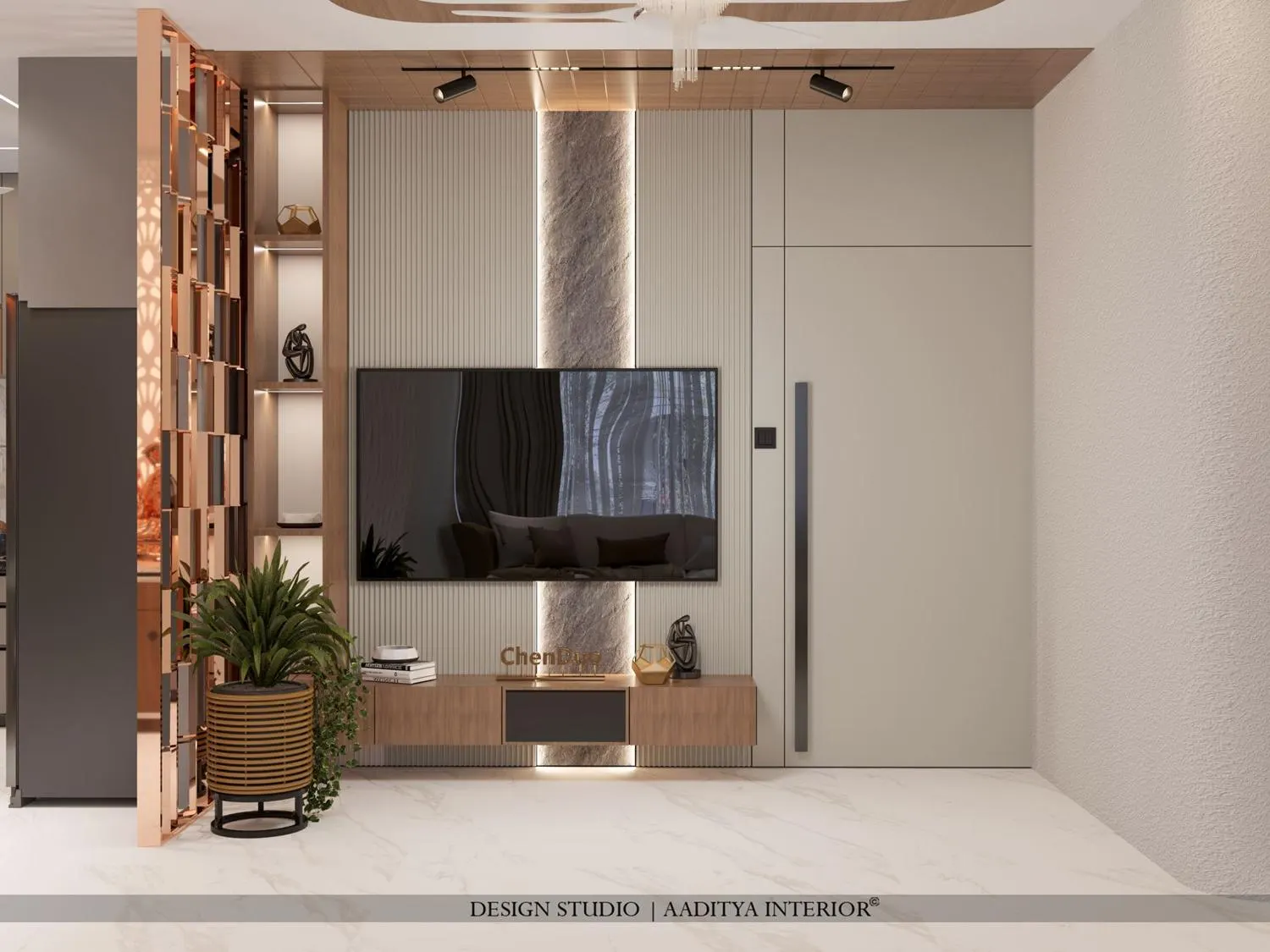
Diwali is read from the entrance first, so spend your best effort there. A foyer that already has warmth — wood panelling, a backlit nameplate, a slim console — needs only a little to become festive: a low brass urli of floating flowers and tea-lights on the console, a short marigold toran across the top of the door, and a single diya on each side at floor level. Keep the lighting warm and pooled rather than bright and flat. The aim is that the first thing a guest sees when the door opens is a soft, golden, uncluttered welcome, not a wall of fairy lights.
2. Give the living room one festive focal wall
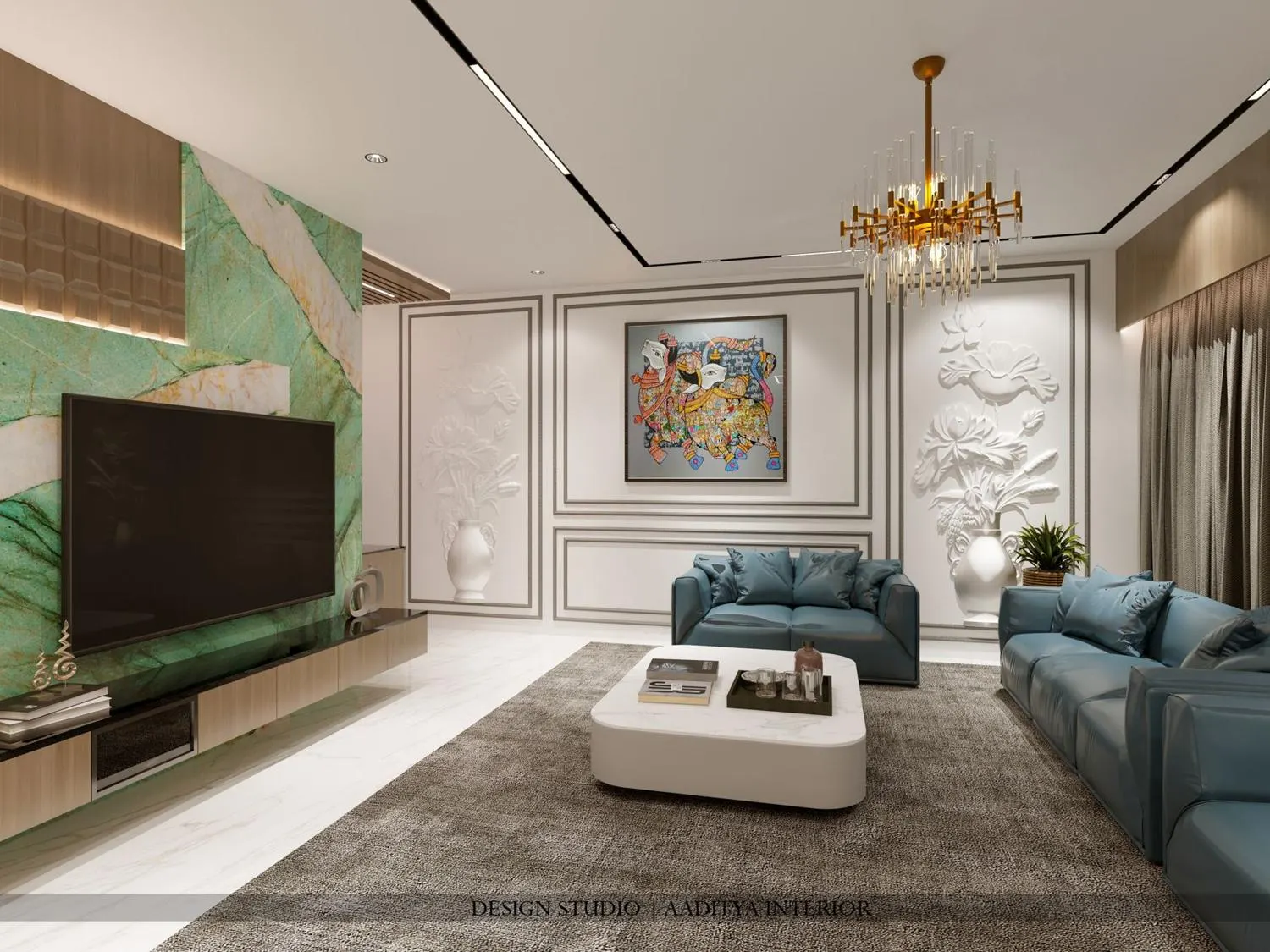
Resist decorating every wall of the living room; choose the one the eye already goes to — usually the panelled feature wall or the one behind the sofa — and let it carry Diwali. A traditional artwork, a Pichwai or a framed deity, flanked by warm uplight and a pair of tall candle stands, does more than lights strung around the whole room. If the wall has moulded panels or relief, a warm picture light or a discreet spot makes the relief glow at night. One confident focal wall reads as considered; a dozen decorated surfaces read as cluttered.
3. Switch off the cool white, layer the warm light
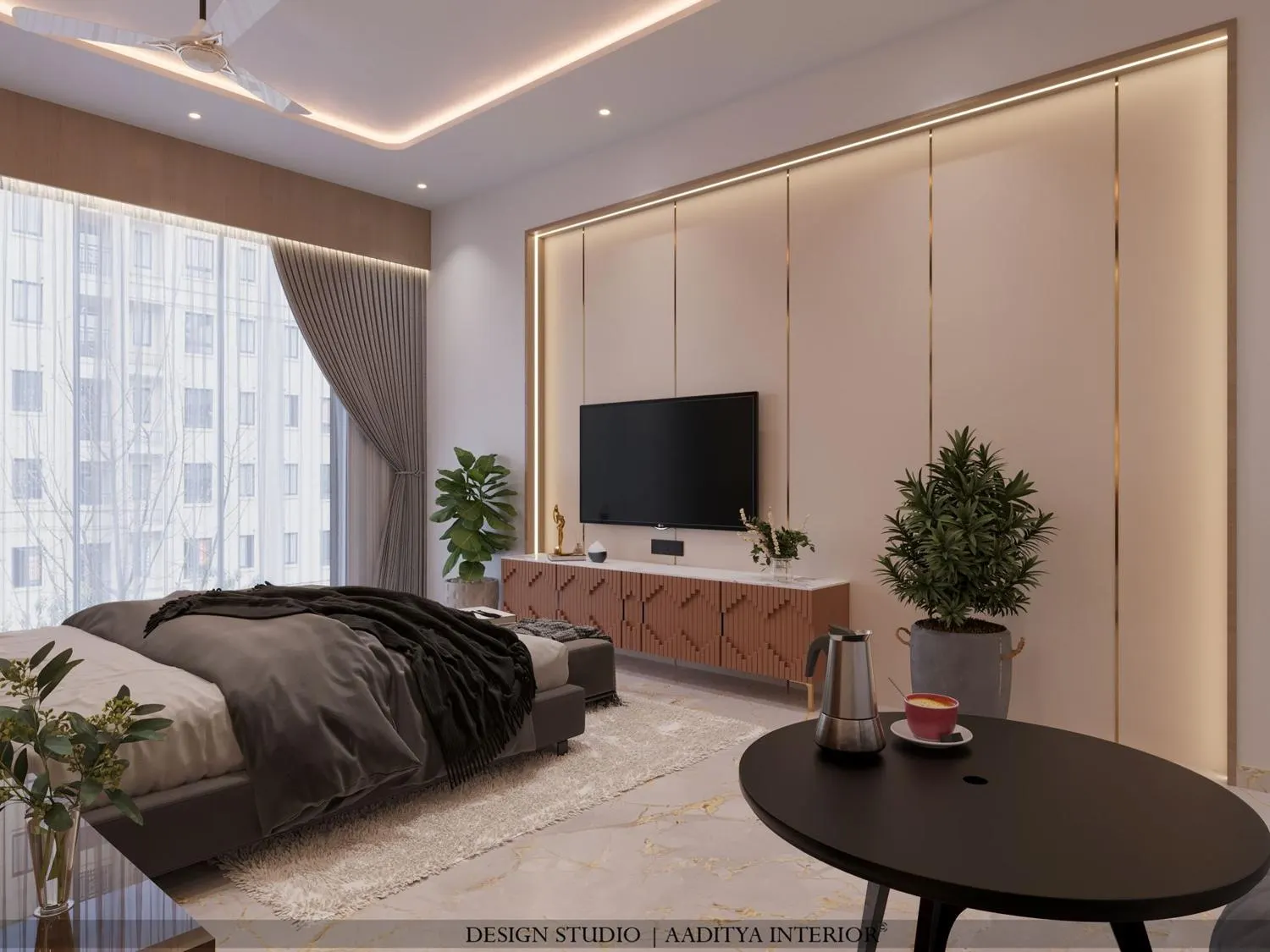
The quickest way to make any room feel festive is to change the light, not add objects. Turn off the flat, cool-white ceiling lights and switch to the warm layers the room already has — the cove strip, the picture lights, a table lamp — and add candles and diyas at low level. Warm light around 2700–3000 kelvin flatters wood, brass, marigold and skin; cool white flattens everything. A bedroom or living wall with a hidden warm cove and a styled console needs only a few tea-lights to glow. Think of it as turning the room's existing lighting into a festival, rather than importing a new one.
4. Let a jaali or screen throw patterned light
A jaali screen or a metal room divider is a gift at Diwali, because a light source behind it throws a pattern of shadow across the floor and walls. If the home has a decorative screen — a rose-gold lattice divider, a temple jaali, a fluted partition — place a warm lamp or a cluster of diyas behind or beside it and let the perforations do the decorating. It is the same principle the historic jaali used for daylight, borrowed for the evening. The effect is quiet, moving and impossible to buy in a packet.
5. Plan a rangoli zone that survives the evening
A rangoli is the heart of Diwali floor décor, but a loose-powder design by the door gets scuffed within the hour. Plan its zone like a designer: pick a spot just inside or beside the entrance, out of the main walking line, size it to the space, and ring it with diyas so it is both protected and lit. For a design that must last the whole evening, outline it in flower petals or use a reusable stencil with coloured salt or rice, which brush up cleanly. The sketch below shows a simple, safe placement — centred in a calm corner, framed by diyas, clear of the door swing.
6. A few metallic swaps in the bedroom
Bedrooms are usually left out of Diwali, which is a missed chance, because a bedroom needs the least to feel festive. If a wall already carries metallic art — a gold leaf or ginkgo wall sculpture — a warm cove or a picture light makes it the room's quiet centrepiece. Swap the everyday cushion covers for a few in silk, brocade or a festive colour, add a single scented candle on the bedside, and let the warm ceiling cove do the rest. These are five-minute changes that make the private rooms feel included without turning them into display pieces.
7. Warm up the master with flowers and candles
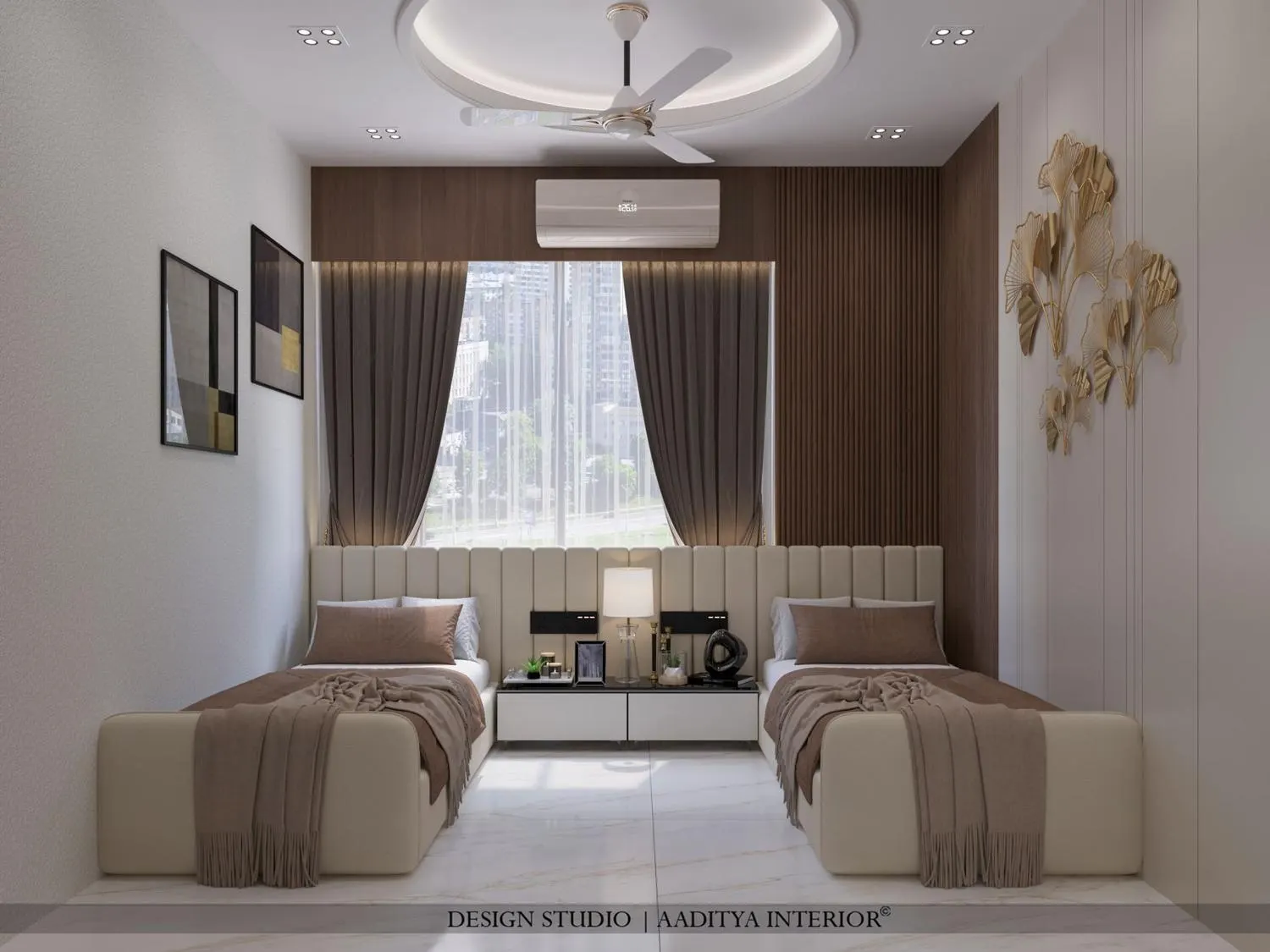
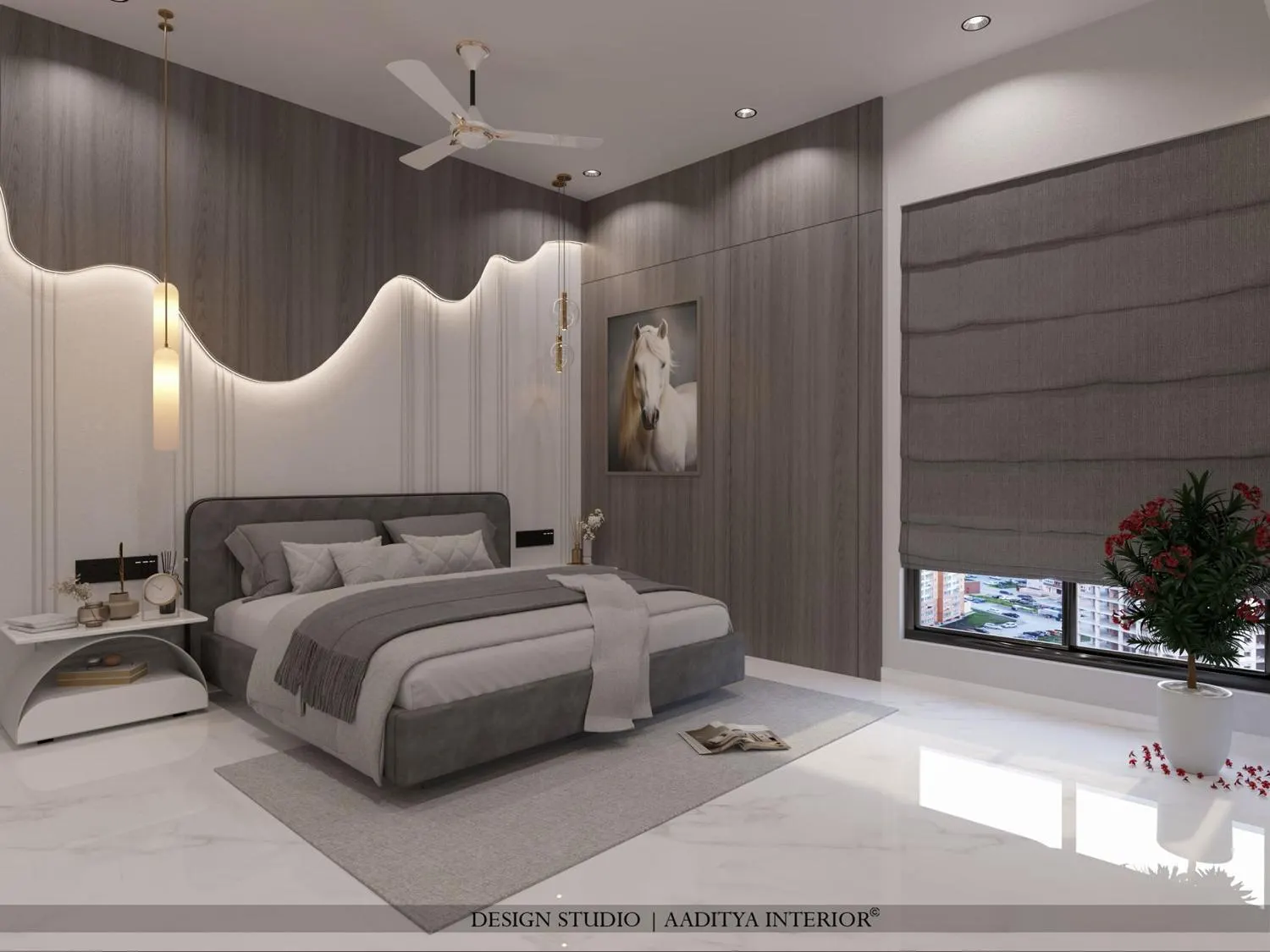
For the master bedroom, lean into warmth rather than colour. A wave-profile cove or a soft pendant already gives the room a golden glow; add a low arrangement of fresh flowers — marigold, rose, tuberose — on a side table or the bed-foot bench, a cluster of pillar candles on a tray, and a throw in a festive tone across the bed. Keep the candles on a stable, heat-proof tray and well away from the curtains and bedding. The result is a calm, scented, candle-lit retreat to return to after the noise of the evening, which is exactly what the festival's busiest night needs.
How to choose where to spend your effort
| Idea | Effort | Cost | Best where |
|---|---|---|---|
| Glowing entrance | Low | Low | Every home — the first thing guests see |
| One festive focal wall | Low | Low–medium | A living room with a feature or panelled wall |
| Warm layered light | Very low | Very low | Any room with cove or lamp lighting |
| Jaali / screen light play | Very low | Very low | Homes with a decorative screen or divider |
| A planned rangoli zone | Medium | Low | By the entrance, out of the walking line |
| Bedroom metallic swaps | Very low | Low | Bedrooms with metallic art or a warm cove |
| Flowers and candles in the master | Low | Low | The private retreat for the evening |
Frequently asked questions
How can I decorate my home for Diwali on a budget?
Spend on light and placement, not objects. Switch the home to warm light, add diyas and a few tea-lights at the entrance and on one focal wall, hang a marigold toran on the door, and lay a simple rangoli. Fresh flowers, clay diyas and a few silk cushion covers cost little and do more than an armful of plastic décor.
What lighting is best for Diwali at home?
Warm light around 2700–3000 kelvin, layered low rather than one bright ceiling light. Use the home's existing cove strips, picture lights and lamps, and add diyas and candles for the living flame. Avoid cool-white light, which flattens the warmth of wood, brass and marigold that the festival is built on.
Where should I place the rangoli?
Just inside or beside the main entrance, out of the direct walking line and clear of the door swing, so it is not scuffed within the hour. Ring it with diyas to protect and light it, and outline the design in flower petals or use a stencil with coloured salt or rice if it needs to last the whole evening.
Sources & standards
- Aaditya Interior project interiors, Surat and Gujarat — entrance, living, bedroom and screen details shown in the photographs
- General lighting guidance — warm colour temperature of about 2700–3000 K for residential and festive settings (BEE / lighting good practice, described generically)
- Fire-safety good practice for open flames and decorative lighting in homes (keep flames clear of fabric; do not overload sockets)
- Price and effort notes are indicative for October 2026 and vary with city and choices — confirm locally