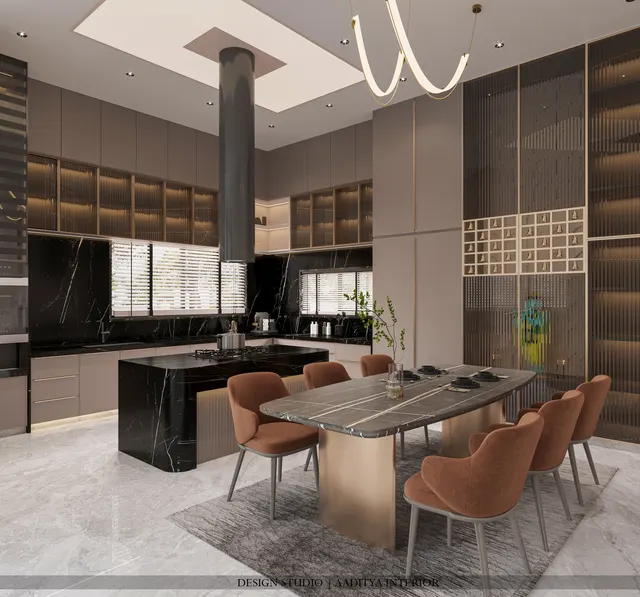
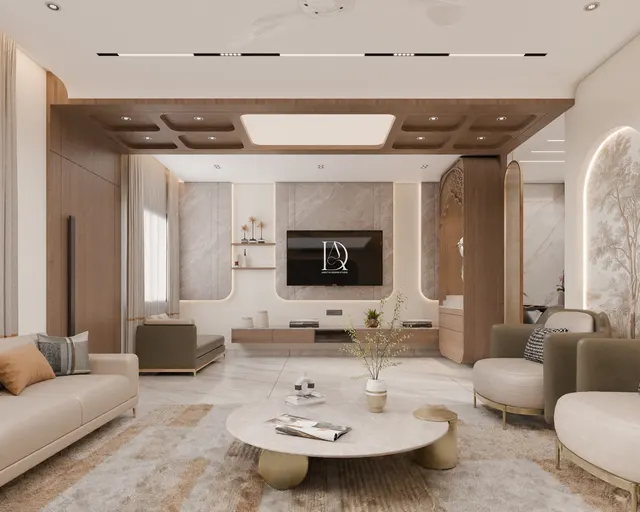
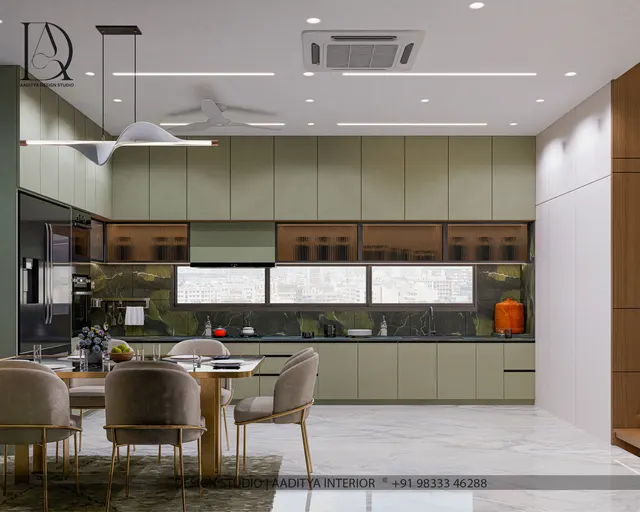
Most Indian homes are eclectic whether their owners planned it or not. A carved teak cupboard from a grandparent stands beside a new fabric sofa; a brass diya sits on a glass side table; a Kutch embroidery cushion lies on a mid-century armchair bought online; a Madhubani painting hangs above a modular TV unit. The question is not whether to mix styles, but whether the mix looks collected and intentional or simply accumulated.
Eclectic interior design is the discipline of mixing styles successfully. It is often misunderstood as anything goes, and the result of that misunderstanding is familiar: a room where every piece shouts, colours fight, furniture heights jump up and down, and nothing has space to breathe. Done well, eclectic design is one of the most personal and long-lasting approaches there is, because it lets a family keep heirlooms, craft and travel pieces while living comfortably in a modern home.
This article explains where eclectic design came from, how it differs from bohemian and maximalist interiors, and the practical rules designers use to make a mix work: proportion, a common thread, consistent furniture heights, pattern scale, edited display and the right place to spend. Dimensions are given in millimetres because a mixed room depends more on proportion than any single-style room does.
What eclectic design is — and is not
An eclectic interior combines pieces from different periods, places and styles in one space, held together by deliberate choices about colour, proportion and arrangement. The word comes from a Greek root meaning to pick out or select, and selection is the heart of it: every piece is chosen, and many pieces are left out. Eclectic design is close to several neighbouring styles, and the differences matter when briefing a designer or shopping.
| Style | What defines it | How it differs from eclectic | Risk |
|---|---|---|---|
| Eclectic | Deliberate mix of eras and styles with a unifying thread | — | Becomes a jumble if there is no anchor or thread |
| Bohemian | Relaxed, layered, textile-rich, many plants, travel finds | A specific mood; eclectic can be crisp or formal too | Clutter, dust, fading textiles |
| Maximalist | More of everything: colour, pattern, collections | Maximalism is about quantity; eclectic is about mixture | Visual fatigue in small rooms |
| Transitional | Blend of traditional and contemporary, in neutral tones | A gentle two-style blend; eclectic can mix many | Can feel bland |
| Collected / heritage modern | Modern shell with antiques and craft | A common Indian form of eclectic | Antiques overwhelmed by modern gloss |
| Accidental mix | Pieces bought over years without a plan | No anchor, no thread, no editing | The problem eclectic design solves |
Where eclecticism came from
In nineteenth-century Europe, architects and decorators revived and combined many historical styles — Gothic, Classical, Renaissance, Oriental — sometimes in the same building or room. This was called eclecticism, and it produced some of the period's grandest and some of its most overloaded interiors. Wealthy Victorian homes collected objects from across the world and displayed them densely, which is why eclectic rooms are still sometimes associated with clutter.
India has its own long history of mixed interiors. The late nineteenth century produced Indo-Saracenic and Indo-Gothic buildings that combined European and Indian forms; the Chhatrapati Shivaji Maharaj Terminus in Mumbai, completed in 1888 and now a UNESCO World Heritage Site, is described by UNESCO as Victorian Gothic Revival architecture with elements derived from Indian traditional buildings. Inside homes, the mix was even more personal. Merchant mansions in Chettinad combined Burma teak, imported tiles and local craft; Parsi and Bohra homes in Mumbai and Gujarat mixed European furniture with Chinese porcelain and Indian textiles; colonial-era bungalows paired planter's chairs and Indian rosewood with Victorian lamps. Many Indian families have inherited exactly this kind of mix.
In the twentieth century, as modernism pushed towards single-style rooms, designers and homeowners kept returning to the mix: a classic modern chair in a traditional room, a contemporary painting above an antique chest. In recent years the interest in reuse, craft and individuality has made the eclectic approach popular again, partly as a reaction to identical catalogue interiors.
Rule one: choose an anchor and keep the proportion
The most reliable way to make a mix look intentional is to let one style lead. Designers often describe this as a 70/20/10 or 80/20 rule: roughly 60–70 per cent of the room — the architecture, large furniture and main finishes — in one anchor style; about 20–30 per cent in a second, contrasting style; and about 10 per cent in accents from anywhere. The anchor gives the eye a resting place; the second style gives contrast; the accents give personality. These are rules of thumb, not formulas, but they prevent the commonest failure, which is three or four styles each claiming a third of the room.
Choosing the anchor is usually easy once the family looks at what it already owns and at the architecture. A new apartment with plain walls, aluminium windows and a modular kitchen suits a contemporary anchor, with antiques and craft as the second style. A bungalow with arches, a courtyard or carved doors may suit a traditional Indian anchor with a few sharp modern pieces as contrast. The anchor should also be the style of the largest and most expensive items — the sofa, the dining table, the bed and the built-in storage — because those are the hardest to change later.
Rule two: find the common thread
Pieces from different styles look related when they share something visible. Designers call this the common thread, and it can be colour, material, shape, finish or period. A modern sofa and an antique chair look like they belong together if both pick up the same rust colour; a rosewood chest and a contemporary dining table relate if both are dark timber; a round mirror, a round coffee table and an arched niche relate by shape. The more different the styles, the stronger the thread needs to be. Most successful eclectic rooms use two threads at once, for example a limited colour palette and a repeated material.
| Thread | How it works | Example in an Indian home | Tip |
|---|---|---|---|
| Colour | Repeat 2–3 colours across all styles | Indigo in a block-printed cushion, a modern rug and a painted cabinet | Repeat each colour at least three times in the room |
| Material | Repeat one material across eras | Brass in an antique lamp, new door handles and a picture frame | Mix finishes of the same metal sparingly |
| Wood tone | Keep timbers within one family, or deliberately contrast two | Teak antique, walnut-tone veneer TV unit | Avoid three or more unrelated wood tones |
| Shape | Repeat a curve, arch or line | Arched mirror, round table, curved-back chair | Use one dominant geometry per room |
| Finish / sheen | Keep surfaces mostly matte or mostly polished | Matte walls, matte lacquer, waxed antique | Too many gloss finishes look cheap together |
| Craft or origin | A shared hand-made quality | Kutch embroidery, Channapatna toys, dhurrie, terracotta | Mix crafts from one or two regions for coherence |
| Period | Two eras that share proportions | Mid-century chairs with Indian colonial furniture | Both use slim legs and low, horizontal lines |
Building a colour thread
The simplest thread is colour. Choose a base of two neutrals — for example a warm white for walls and a mid-tone for large upholstery — then one or two main colours and one accent. Let the main colours appear in pieces of different styles: a modern rug, an antique textile and a painted chair. The accent can be the boldest colour, used in small amounts. Indian craft is full of strong colour, so an eclectic room often works best with calm walls and large surfaces, leaving the colour to the objects.
Rule three: keep heights and scale in step
Furniture from different periods and countries is built to different proportions. Older Indian and colonial pieces are often lower or deeper than modern ones; some contemporary sofas are very low; antique cupboards can be very tall. When pieces of different heights sit side by side, the room looks restless even if the colours work. The cure is to keep a few key heights consistent within a seating group, and to let tall pieces stand alone on their own wall.
| Element | Typical dimension (mm) | Rule when mixing styles |
|---|---|---|
| Sofa and armchair seat height | 420–450 | Keep all seats in one group within about 30 mm |
| Armrest height | 550–650 | Side table top within about 50 mm of the arm |
| Coffee table height | 400–450 | Same as or slightly below seat height, whatever its style |
| Coffee table to sofa gap | 400–450 | Reachable without leaning; walkways 750–900 elsewhere |
| Console or chest height | 750–850 | Antique chests often fall in this band and pair well with a mirror |
| Dining table height | 740–760 | Mismatched chairs must all have seats 440–470 |
| Picture or gallery centre | 1450–1500 from floor | Same centre line for art of every style |
| Pendant over dining table | 750–900 above the table top | Antique or modern fitting, same hanging height |
Rule four: mix patterns by scale
Pattern is where eclectic rooms most often go wrong, and where Indian homes have the richest material: block prints, ikat, bandhani, Kutch embroidery, Mughal florals, kilim geometry. The rule designers use is to vary the scale of patterns rather than the number. Combine one large-scale pattern, one medium and one small, and keep them within the same colour family. Two patterns of the same scale and different colours compete; three patterns of different scales and shared colours layer. Plain surfaces are part of the plan too: every patterned piece needs some solid colour around it.
| Pattern scale | Typical repeat | Where to use it | Indian examples |
|---|---|---|---|
| Large | ≥ 150–300 mm repeat | Rug, curtains, one feature chair or wall | Large dabu or Bagru florals, big kilim medallions |
| Medium | ≈ 50–150 mm repeat | Cushions, upholstered ottoman, bedspread | Block-printed booti grids, ikat |
| Small | ≤ 50 mm repeat | Piping, small cushions, lampshades, trims | Bandhani dots, fine stripes, mirror-work borders |
| Solid / texture | No repeat | Sofa, walls, large surfaces | Khadi, handloom cotton, lime plaster, jute |
| Geometric vs floral | Any | Pair one geometric with one floral | Ajrakh geometry with a floral chintz |
Rule five: edit and display with intent
An eclectic room holds more objects than a minimalist one, so display needs structure. Group small objects in odd numbers on a tray or a shelf rather than scattering them. Give the most important piece — an heirloom chest, a large painting, a carved door used as a headboard — clear wall space around it. Use closed storage for everything that is not on display, so the collection never becomes clutter. And rotate: many families keep festival pieces, brass and textiles in storage and bring different items out through the year, which keeps the room fresh and protects fragile pieces.
Pairings that work in Indian homes
Some combinations have proved themselves again and again in Indian projects, because the styles share proportions, materials or colours. They are good starting points for families who want an eclectic home without risk. In Aaditya Interior's experience, the most successful mixes almost always include at least one inherited or handmade piece; it gives the room a story that new furniture alone cannot.
| Anchor style | Second style | Shared thread | Example room |
|---|---|---|---|
| Contemporary flat | Indian colonial and antique teak | Warm timber, slim legs | Living room with a teak planter's chair beside a modern sofa |
| Mid-century modern | Indian craft textiles | Low, horizontal lines; earthy colours | Walnut-tone sideboard, dhurrie, block-printed cushions |
| Japandi / warm minimal | Indian brass and terracotta | Natural, matte, handmade | Pale oak dining with brass lamps and terracotta planters |
| Traditional Indian bungalow | Sharp contemporary pieces | One colour family | Carved door and swing, with a modern sofa and abstract art |
| Art Deco revival | Gujarati mirror work and Kutch embroidery | Geometry and shine | Fluted cabinet, arched mirror, embroidered cushions |
| Scandinavian | Kerala or Chettinad elements | Simple timber, clear forms | Light walls, oxide floor, antique pillar or chest |
Room by room
In the living room, the sofa and the rug set the anchor; the second style arrives as a pair of chairs, a chest or a console; accents are lamps, cushions and art. In the dining area, a modern table with mismatched chairs is a classic eclectic move, but it works only when seat heights stay within the same band and the chairs share either a colour or a material. In bedrooms, an antique or carved headboard against plain walls and modern bedside lamps is calm and personal. Foyers are ideal for one statement heirloom — a carved bench, an old mirror, a brass urli — because they are seen briefly and need little furniture. Kitchens and bathrooms are best kept in one style, with eclectic touches in hardware, lighting or a single vintage piece.
A worked example: an eclectic living room in a new flat
Consider a typical brief in a new apartment in Surat or Ahmedabad: a living room of about 3650 × 4900 mm, a family that owns a carved teak chest and a pair of old cane armchairs from a grandparent's bungalow, a collection of brass objects, some Kutch embroidery and a few contemporary paintings, and a wish for a modern, easy-to-clean home. The architecture is plain — flush walls, vitrified tiles, aluminium windows — so the anchor is contemporary.
The large pieces follow the anchor: a clean-lined three-seater sofa of about 2200 mm in a warm, mid-tone fabric, a low TV console in a walnut-tone veneer, plain warm-white walls and a simple rug. The second style is the family's own history: the cane armchairs, re-caned and placed opposite the sofa at the same seat height, and the teak chest on its own wall near the entrance with a round mirror above it. The common threads are the timber tone, which links the chest, the chairs and the console, and a colour palette taken from the Kutch embroidery — indigo, rust and off-white — repeated in two cushions, the rug border and one painting. Brass is the accent: a lamp on the chest, a small tray on the coffee table, and the frames of two pictures in the gallery above the sofa.
What is left out matters as much. The brass collection is not all displayed at once; a few pieces are out and the rest rotate with the festivals. The paintings are hung as one gallery block rather than scattered on every wall. The TV wall stays plain. The result has perhaps a dozen visible objects, each with a clear place and a story, and nothing that has to be moved to clean. Furnishing a room like this usually costs less than a new single-style set, because the most characterful pieces already belong to the family; the spend goes into restoration, upholstery, lighting and good storage.
Restoring and adapting heirlooms
Old furniture often needs small changes to live comfortably in a modern flat. A low antique chair can be raised on discreet blocks or given a thicker seat cushion to reach the 420–450 mm band; a deep chest can become a console or a TV base if its top is reinforced and cable holes are planned at the back; a carved door or window frame can be fixed to the wall as a headboard or a mirror surround. Restoration should be done by a carpenter or polisher who understands old timber, and any piece with active termite or borer damage should be treated before it enters the home. Fragile textiles are best framed behind glass or displayed away from direct sun.
Common mistakes and how to fix them
| Mistake | What it looks like | Fix |
|---|---|---|
| No anchor style | Every piece competes; the room feels like a shop | Choose one style for the large pieces and finishes; move others to accents |
| No common thread | Pieces look randomly assembled | Repeat two or three colours or one material at least three times |
| Too many wood tones | Teak, walnut, oak and white-wash side by side | Keep to one or two tones; paint or re-polish the odd one out |
| Uneven heights | Low antique chair beside a high modern sofa | Keep seats within about 30 mm; raise with cushions or choose another piece |
| Same-scale patterns | Busy, flickering surfaces | One large, one medium, one small; add solids |
| Every surface covered | No resting place for the eye | Leave about a third of shelves and surfaces clear; rotate displays |
| Heirlooms hidden or crowded | A fine chest lost among new furniture | Give it its own wall, light it, and keep the area around it simple |
Where eclectic design is heading
Several trends favour the eclectic approach. Interest in sustainability encourages reuse: restoring an old chest, re-upholstering a grandparent's armchair or turning a carved door into a headboard keeps materials in use and gives a home character that a catalogue cannot. Indian craft is more accessible than ever, through craft cooperatives, design fairs and online platforms that sell directly from artisans, and schemes such as the Geographical Indication registry help identify authentic regional crafts. Online shopping also makes it easier to find vintage and international pieces, which increases the risk of accidental mixing — and the value of the rules in this article. The likely future is not a new single style but more personal homes, where a clear anchor, a strong thread and careful editing let many stories live in one room.
Seven rules for a successful eclectic interior
- Pick one anchor style for about 60–70 per cent of the room, usually the style of the largest furniture and the architecture.
- Limit the second style to about 20–30 per cent and accents to about 10 per cent.
- Choose at least two common threads — for example a colour palette and one repeated material.
- Keep seat heights within about 30 mm in a group, side tables within about 50 mm of arm height.
- Mix patterns by scale — large, medium, small — within one colour family, with plenty of solids.
- Give heirlooms and statement pieces their own wall and light, with simple surroundings.
- Hide everything else in closed storage and rotate what is on display.
Frequently asked questions
What is eclectic interior design?
It is an approach that deliberately mixes furniture, objects and finishes from different periods, places and styles, held together by a dominant style, shared colours or materials and careful editing. The aim is a personal, collected look rather than a single catalogue style.
How many styles can be mixed in one room?
Two main styles plus accents is the safest approach for most rooms. Experienced designers sometimes mix three or more, but they keep one style clearly dominant and use very strong common threads in colour and material.
Can modern and traditional Indian furniture be mixed?
Yes — it is one of the most successful mixes for Indian homes. Let the modern pieces be the anchor in a new apartment, or the traditional pieces in an older bungalow, and connect them through timber tones, a shared colour palette and consistent seat and table heights.
What is the difference between eclectic and bohemian style?
Bohemian is a specific relaxed, layered look with many textiles, plants and travel pieces. Eclectic is broader: it can be crisp, formal or relaxed, and it is defined by the deliberate mixing of styles rather than by a particular mood.
How do I stop an eclectic room looking cluttered?
Choose an anchor style, limit the colour palette, keep large surfaces plain, leave about a third of shelves and tabletops clear, group small objects in odd numbers, and store everything not on display behind closed doors.
Sources & standards
- UNESCO World Heritage Centre — Chhatrapati Shivaji Terminus (formerly Victoria Terminus), Mumbai: official description
- Ernst Neufert — Architects' Data (seating, table and circulation dimensions)
- Julius Panero and Martin Zelnik — Human Dimension and Interior Space (anthropometrics of seating and tables)
- Joseph De Chiara, Julius Panero and Martin Zelnik — Time-Saver Standards for Interior Design and Space Planning
- Geographical Indications Registry, Government of India — registered GI crafts and textiles
- Ministry of Textiles, Government of India — handloom and handicraft schemes, including the India Handloom Brand