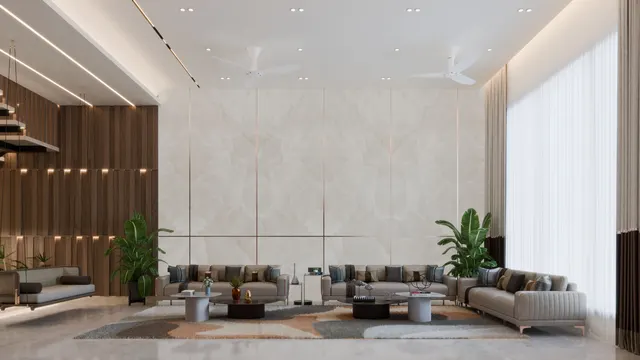
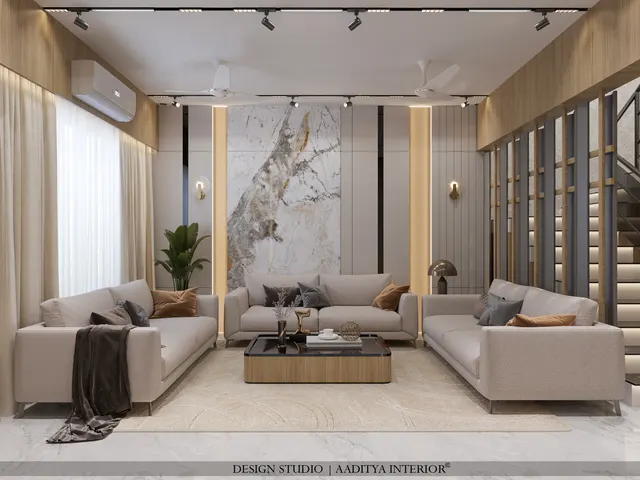
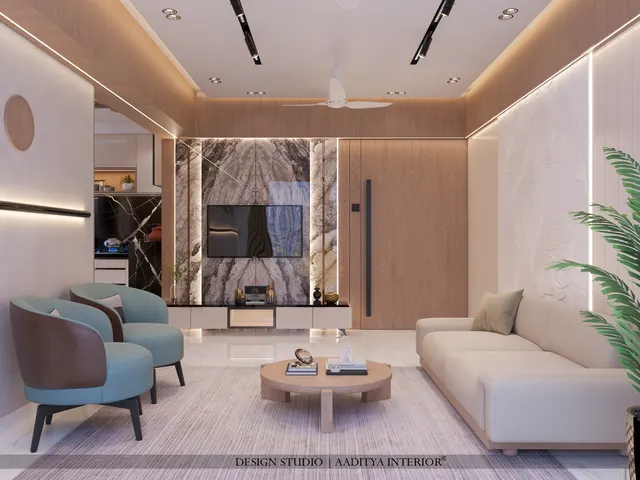
"Pastel means baby pink, na?" It is the first thing clients say, and it is where warm-tone bedrooms usually go wrong. A whole room painted one sweet pastel feels flat and childish; a whole room in dark wood feels heavy. The bedrooms that actually feel calm and grown-up in 2026 do something quieter: they start from a warm neutral base — taupe, greige, oat, soft beige — then add just one soft colour and one deeper accent to give the room depth. The warmth comes as much from the lighting and the textures as from the paint.
The eight ideas below are drawn from the studio's recent residential work across Surat and Ahmedabad. Each one isolates a single move — a base tone, an accent, a pairing, a light temperature — so it can be copied room by room. A short how-to table and a quick palette box at the end turn the ideas into a shopping list. Caption project names are the studio's public project titles.
1. Start with a warm neutral base, not a colour
The most reliable warm bedroom is mostly neutral. Taupe and greige — grey-beige — on the walls and large surfaces give a calm, flattering background that never dates, and they let bedding, art and a single accent do the talking. In the master suite below, warm beige curtains, a soft taupe bed and wood-fluted panelling share one quiet family of tones; a warm cove light along the ceiling keeps the whole room glowing rather than lit. Decide this base first, because every accent later is chosen against it. A warm neutral also photographs and lives well in Indian daylight, which is strong and slightly warm for most of the year.
2. Add blush and dusty rose, not candy pink
When a soft colour is wanted, the grown-up version of pink is blush or dusty rose — a muted, greyed-down pink that reads as warm neutral from across the room and only shows its colour up close. It works best as an accent on soft things: a throw, a cushion, a bench, the lining of a wardrobe — rather than on all four walls. In the room below, a blush satin throw and warm beige bedding sit against a glass-front wardrobe and marble floor; the pink is a whisper, not a statement, which is exactly why the room feels calm rather than sweet. Keep blush to roughly a tenth of the room and let neutrals carry the rest.
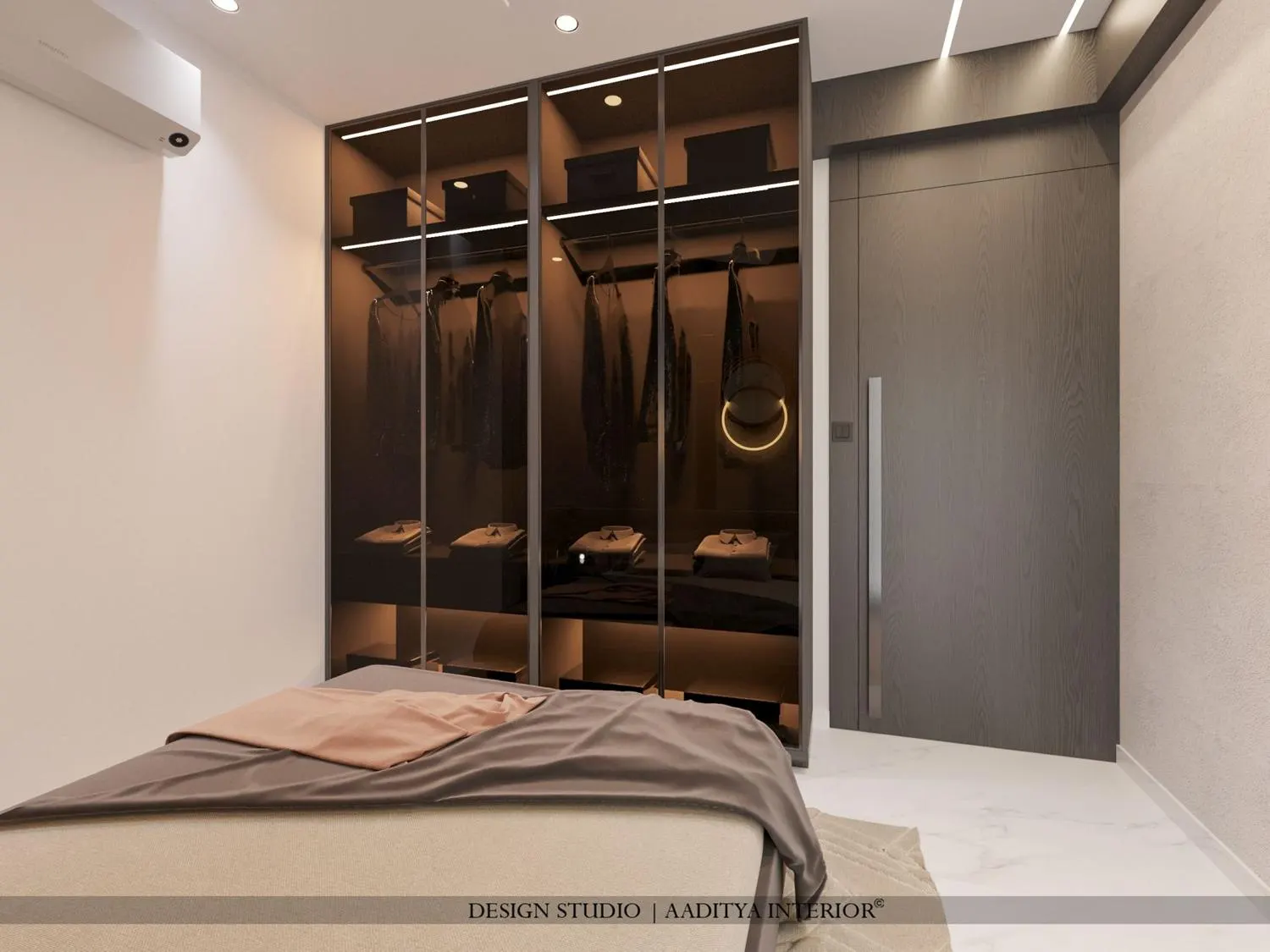
3. Ground pastels with one deeper accent
A room of only pale tones can feel washed out; it needs one deeper note to anchor it and give the eye somewhere to land. A single ink-navy headboard, a charcoal panel or a deep-green upholstered piece does the job without making the room dark. In the bedroom below, a navy upholstered headboard grounds a soft cream-and-taupe palette, with warm wood wardrobes and a circular backlit mirror keeping the mood gentle. The rule is one deep accent per room, on one element — the headboard is the natural place, because it frames the bed without touching the ceiling or the floor.
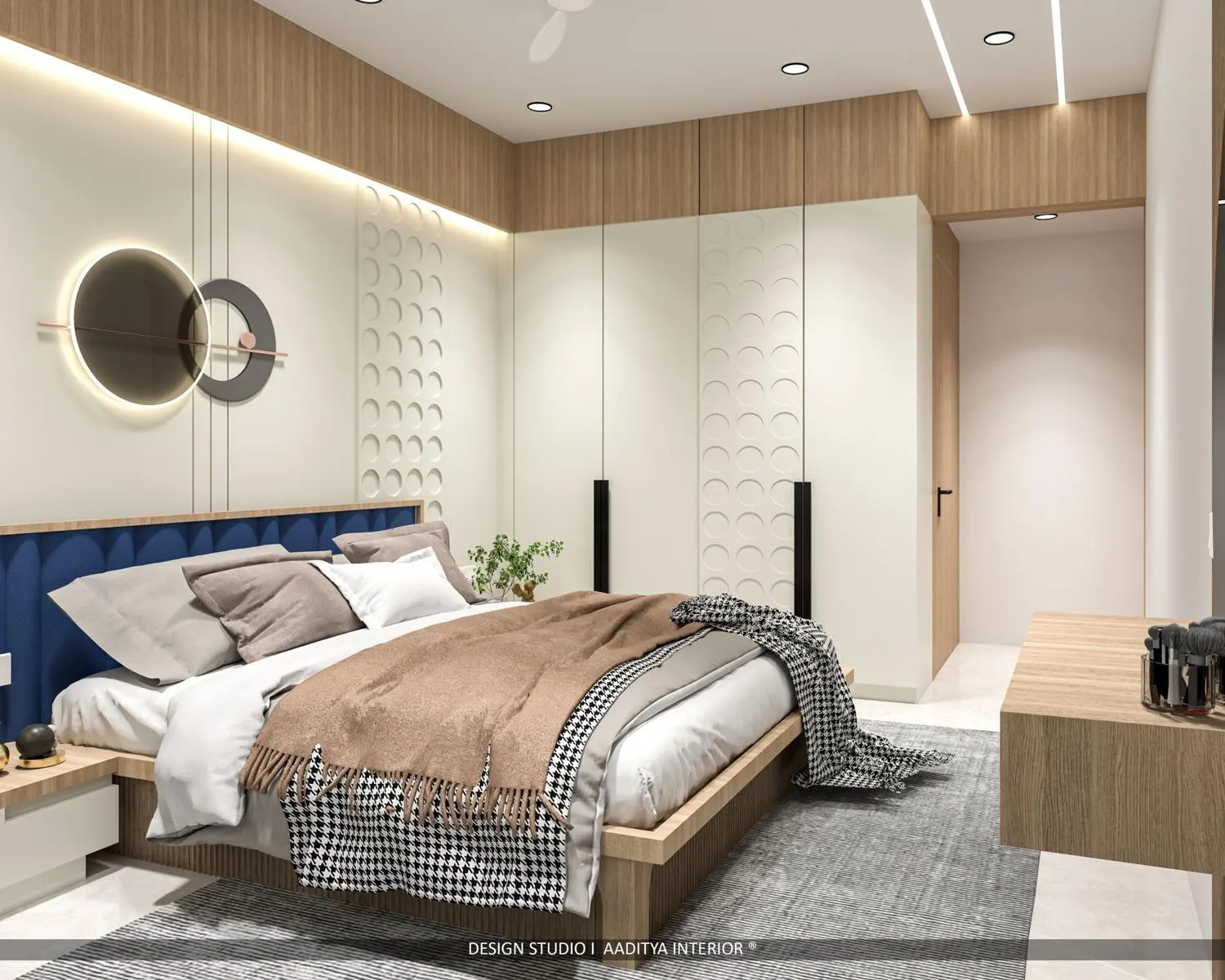
4. Pair warm walnut with soft whites
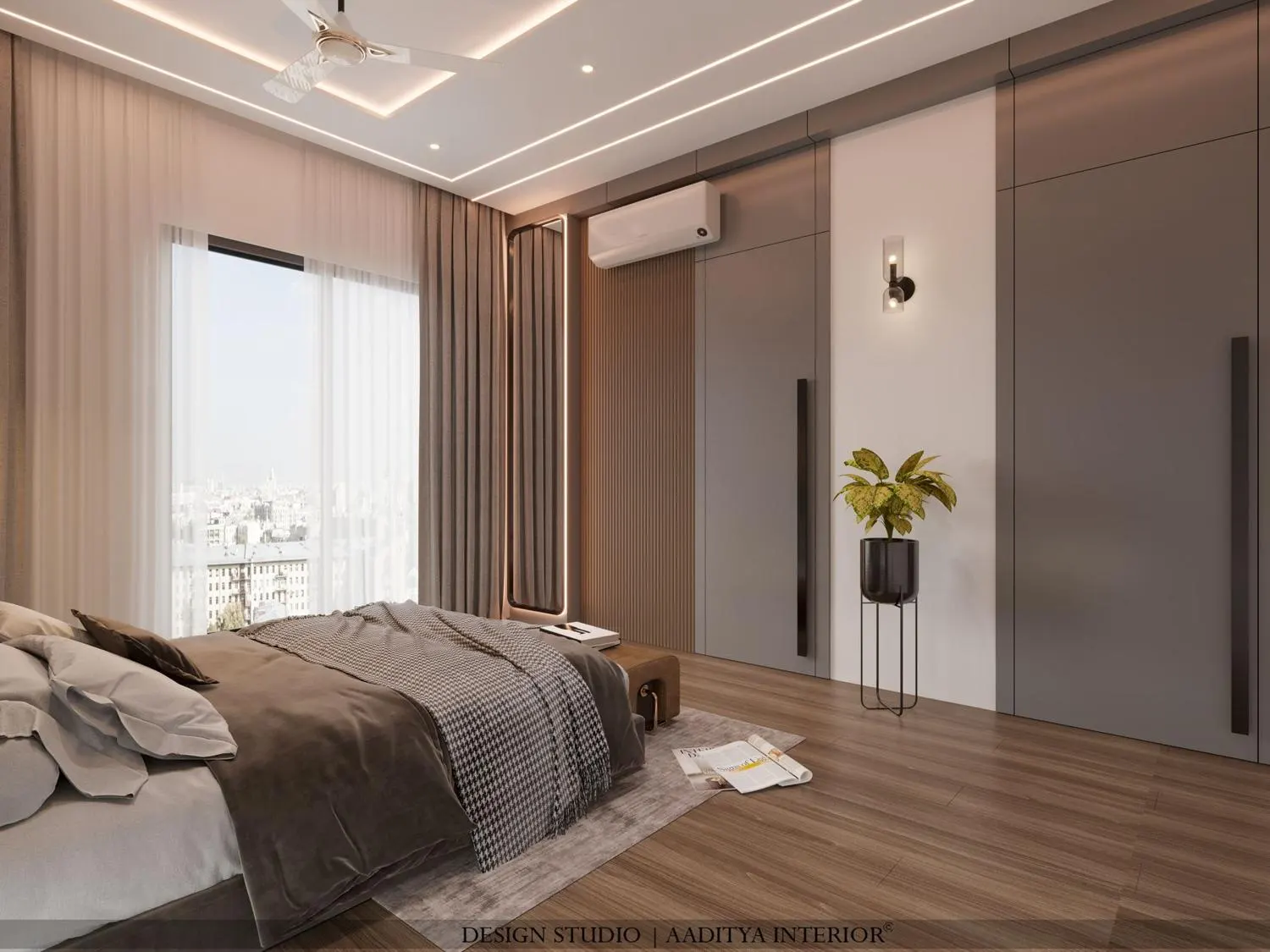
The easiest warm bedroom for Indian homes pairs a warm walnut or teak-toned wood with soft whites and greys. The wood brings the warmth and the whites keep it light, so the room feels cosy without feeling closed. In the room below, full-height walnut-toned panelling wraps the wall behind the bed, balanced by soft grey-taupe bedding, sheer curtains and a city view; a slim dressing mirror continues the wood. This pairing suits most Indian climates because the wood tone stays warm under both daylight and lamplight, and soft white bedding is easy to keep fresh. Choose a matt wood finish rather than high gloss so the panelling reads warm, not shiny.
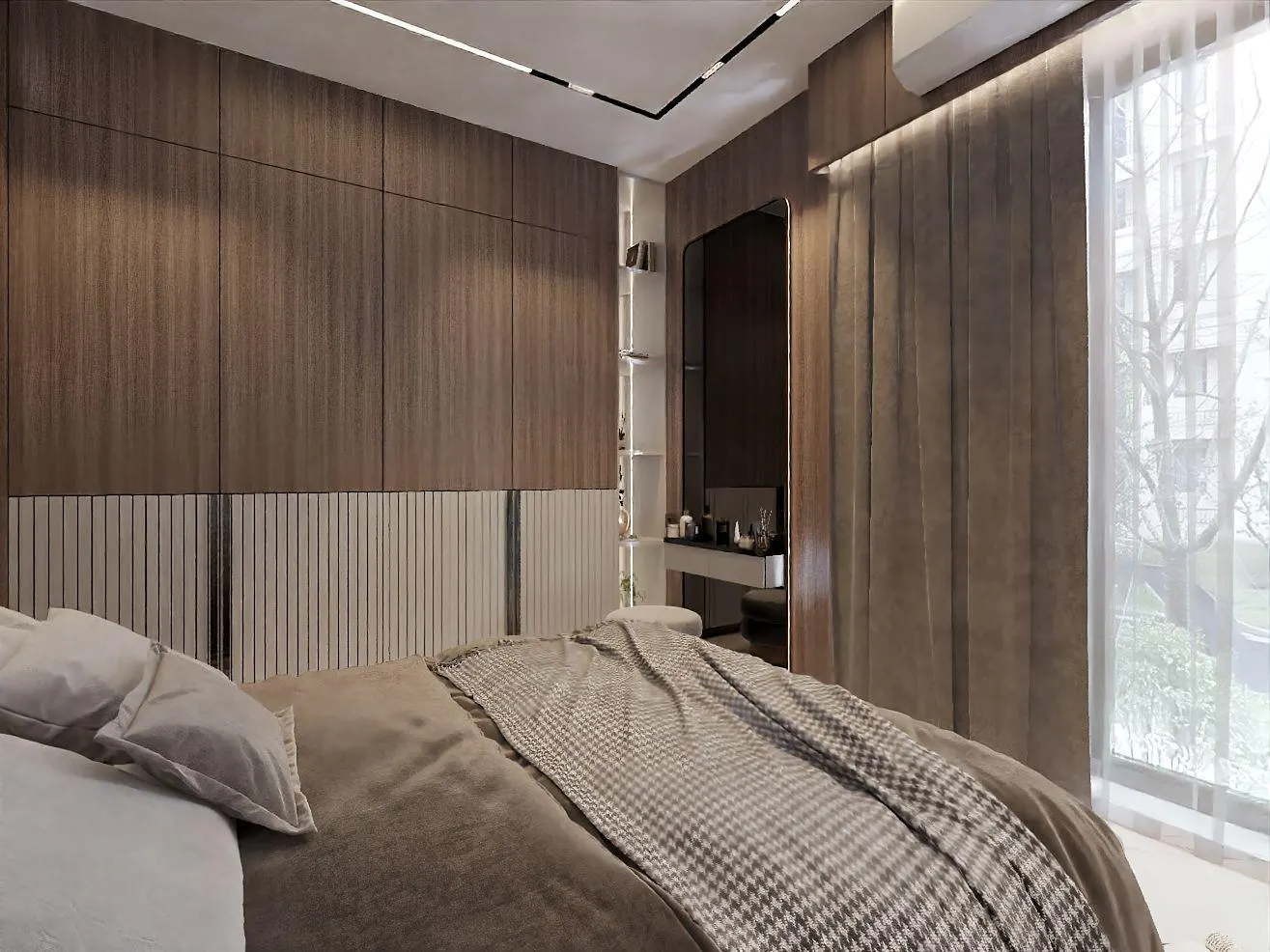
5. The moody warm bedroom: charcoal, olive and rust
Warm does not have to mean pale. A darker, moody bedroom can be deeply warm if the dark tones are warm ones — charcoal, deep olive, chocolate, rust — rather than cold black and grey. In the master below, a dark fluted and panelled wall is softened by warm wood lines, an olive-and-rust cushion palette and ambient shelf lighting, so the room feels enveloping rather than gloomy. The key to a dark warm room is lighting: layered, warm and low, with lit niches and shelf glow instead of a single bright ceiling light, so the dark surfaces are washed with warm light rather than left flat. Reserve this look for a master or a couple's room where cosiness is wanted over brightness.
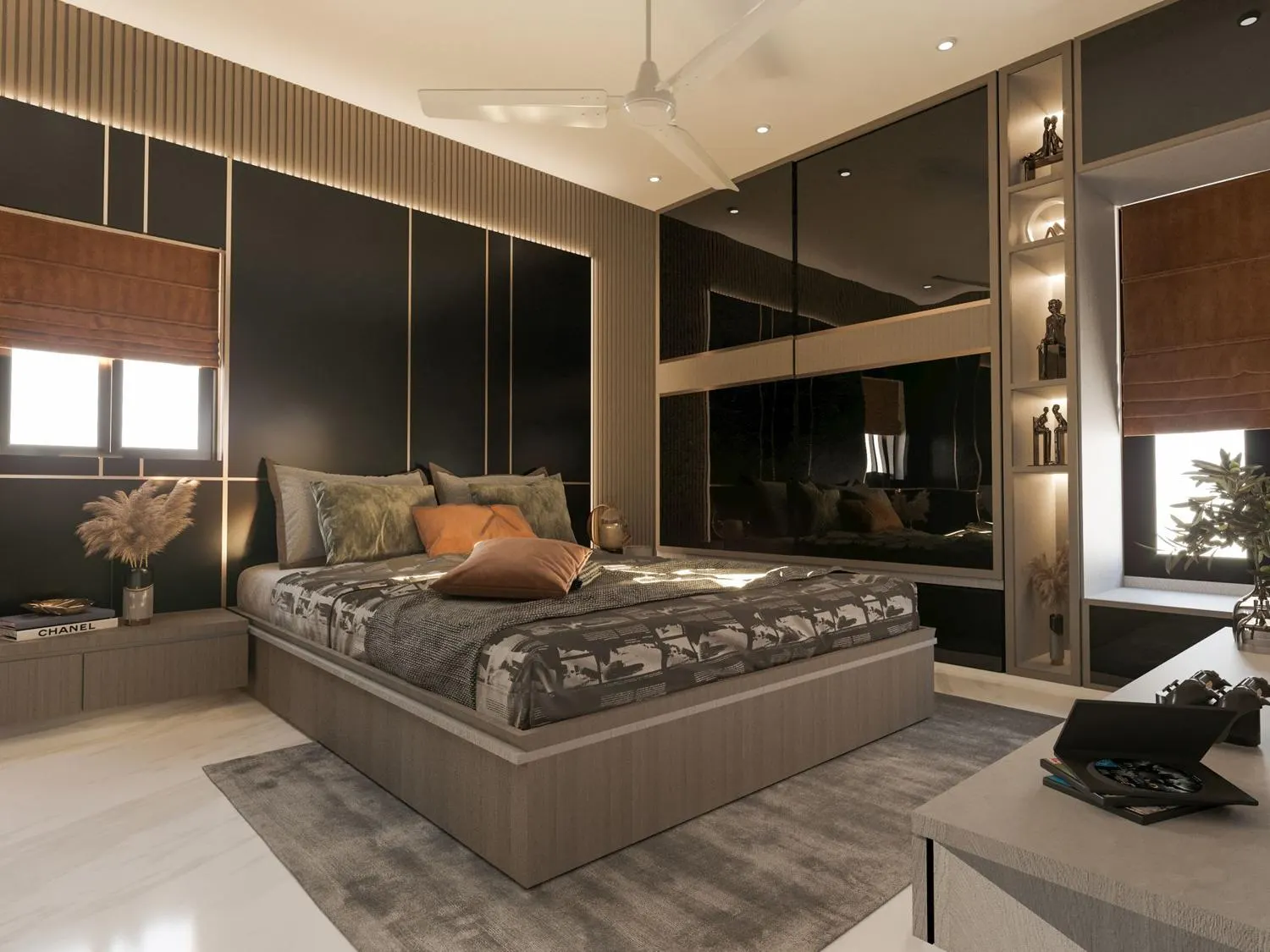
6. Give the room a warm-lit corner
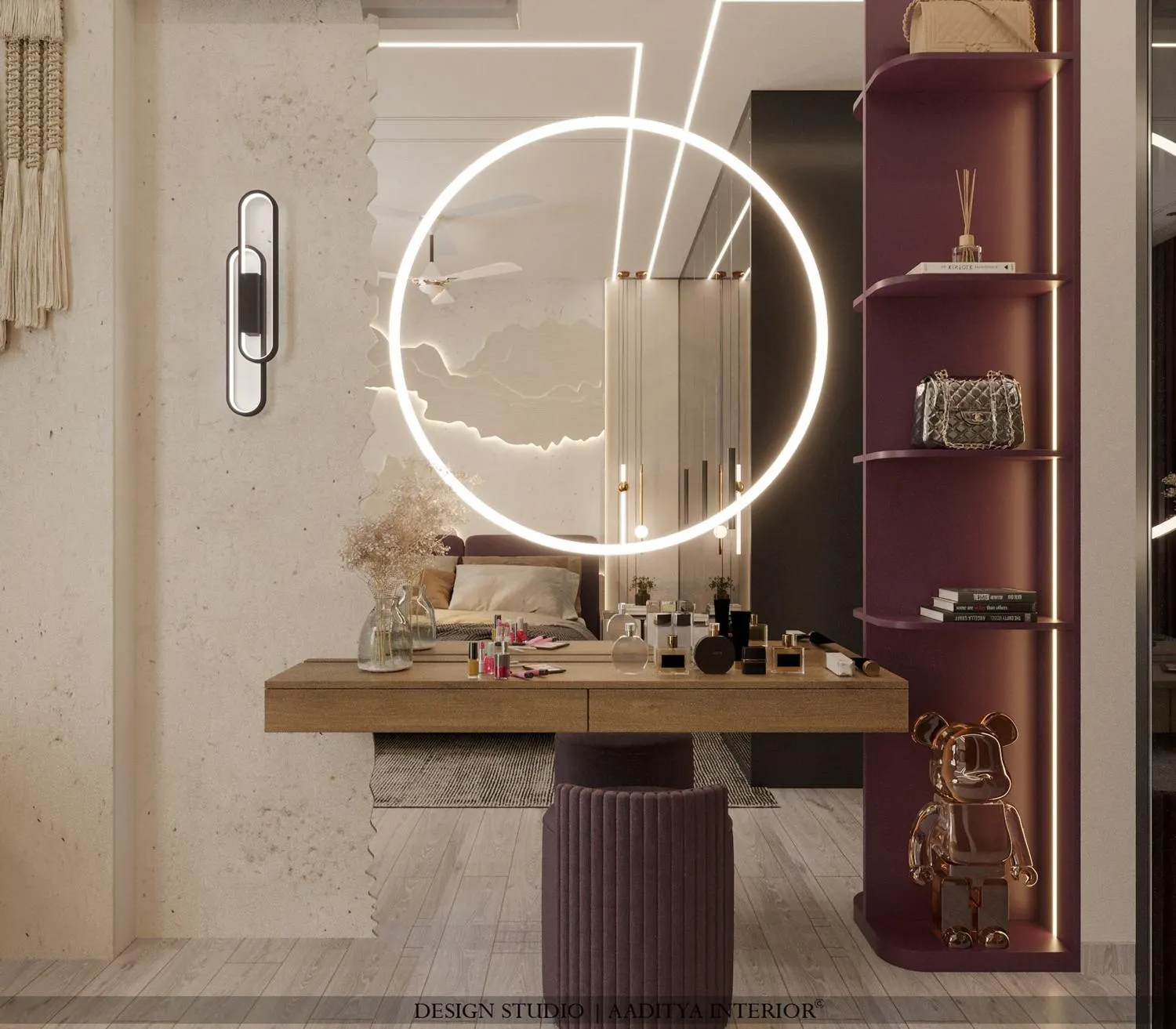
A warm bedroom is made as much by a corner as by the bed. A dressing nook or reading corner with its own warm light becomes the softest spot in the room and takes pressure off the main lighting. In the corner below, a warm beige textured wall, a round backlit mirror and a wood dressing table are accented by a single deep plum shelving column; the backlight behind the mirror throws a warm glow that makes the whole corner feel inviting. A corner like this needs only a warm-white light source, one accent colour and a comfortable surface — it is the cheapest way to add warmth to a plain bedroom.
7. Layer three tones: wall, bedding, accent
Behind every calm warm bedroom is a simple three-tone recipe: a light warm neutral on the walls and large surfaces (about 60 % of the room), a mid warm tone on the bed and curtains (about 30 %), and one soft or deep accent on cushions, a throw or the headboard (about 10 %). Keeping to three tones is what stops a warm room from becoming busy. The sketch shows the split; the table that follows turns it into choices for the three big surfaces. Pick the three tones before buying anything, and test them together in the room's actual light — a warm neutral can look grey in north light and almost pink under a warm lamp.
8. Get the light temperature right
A warm palette fails under cool light. The single most common reason a carefully chosen beige or blush bedroom looks grey and clinical is a cool-white (around 6500 K) ceiling light. Warm-tone bedrooms want warm-white light, roughly 2700–3000 K, on dimmable circuits, layered as cove or wall light plus bedside lamps rather than one bright central fitting. The warm light makes the neutrals glow and the wood look rich; a dimmer lets the room drop to a soft evening level. Keep every bulb in the room the same temperature — a mix of warm and cool in one bedroom is jarring and undoes the whole palette.
| Surface / choice | Warm-tone option | Keep in mind |
|---|---|---|
| Walls (about 60 %) | Taupe, greige, oat, soft beige | Test in the room's own light before finalising |
| Bed, curtains (about 30 %) | Mid beige, warm grey, walnut wood | Matt finishes read warmer than gloss |
| Accent (about 10 %) | Blush, dusty rose, ink navy, olive, rust | One accent per room, on one element |
| Light temperature | Warm white 2700–3000 K, dimmable | Keep every bulb the same temperature |
| Textures | Linen, cotton, wool, cane, matt wood | Texture carries warmth as much as colour |
Frequently asked questions
What colours count as warm tones for a bedroom?
Warm tones are the ones with red, yellow or brown in them: beige, taupe, greige, oat, terracotta, blush, rust, olive, chocolate and warm woods like walnut and teak. Cool tones — true grey, blue-grey, stark white and cool blues — can be used as a small accent, but a warm bedroom should be led by the warm family.
Will a pastel or warm bedroom make a small room look smaller?
No — light warm neutrals actually make a small bedroom feel larger and calmer than strong colours do, because there is little contrast to break up the walls. Keep the base pale, use the accent sparingly, and light the room warmly and evenly. Avoid a dark moody scheme in a genuinely small room unless the lighting is very well layered.
How many colours should a warm bedroom have?
Three is the reliable number: a warm neutral base, a mid tone and one accent, roughly in a 60-30-10 split. More than three colours usually makes a warm room look busy and undoes the calm that the palette is meant to create. Texture and wood tone can add interest without adding more colours.
Sources & standards
- Aaditya Interior project photography — Shree Valley Residence, Rivanta Residence, Alexa Residence, Maniya Residence and Amrapura Bedroom (public project titles)
- Colour-interaction and 60-30-10 proportioning — standard interior design practice
- Lighting colour temperature guidance — warm white 2700–3000 K for bedrooms (general lighting practice, consistent with this blog's lighting articles)
- Price ranges are not quoted in this ideas article; confirm material and finish costs locally before budgeting