


Bharat Patel
Founder, Aaditya Interior
Bharat is the founder of Aaditya Interior and leads client relationships, space planning and site execution across 180+ active projects.
Blog
Thoughts on homes, materials, detailing and craft – written by the people who design your spaces.
Latest Articles

A good foyer in a flat needs only about 1200 × 1200 mm of standing space, a 300–350 mm deep ventilated shoe cabinet, a 420–450 mm high bench, a mirror, and bright warm light around 200 lux. Where the main door opens straight into the living room, a 30–40 per cent open screen creates the foyer without losing light.
 Afrin Mirza · 02 Oct 2026 · 26 min read

India's great buildings — from the Rani ki Vav stepwell to Charles Correa's Kanchanjunga Apartments — are full of lessons that work at the scale of a flat or a bungalow. The most useful are simple: shade glass before it heats, let air cross the house, give rooms a buffer, use an axis to bring order, and build with materials that age well.
Bharat Patel · 02 Oct 2026 · 28 min read

The jaali began as a stone answer to sun, heat and privacy, and it still works for the same reasons. Today it is cut in MDF, metal, stone and concrete — but it only works if the openness, bridge width, module size and fixing detail are designed, not picked from a catalogue.
Afrin Mirza · 02 Oct 2026 · 23 min read

Plywood wins for strength and moisture tolerance, HDHMR for painted shutters, MDF for decorative work in dry rooms, and particle board only for temporary budget use. There is no single best board — only the right board for each part of the furniture.
Afrin Mirza · 01 Oct 2026 · 14 min read

BWR (IS 303) survives boiling-water immersion and suits dry-room furniture; BWP (IS 710) faces a harsher proof test and is mandatory near water. The real difference is the test severity — and the price gap it creates.
Afrin Mirza · 01 Oct 2026 · 12 min read

For Indian cooking, quartz wins on stain resistance, granite on heat tolerance and value, marble loses on maintenance despite its beauty, and nano white is a premium looker that needs local price verification.
Afrin Mirza · 30 Sep 2026 · 12 min read

Laminate wins on value and repairability, acrylic on mirror gloss, PU on seamless colour, membrane on budget-friendly curves. The right finish is the one that survives the room it lives in.
Afrin Mirza · 30 Sep 2026 · 12 min read

Wooden flooring wins on warmth, acoustics and feel — but only in dry bedrooms. Vitrified tiles win everywhere water, humidity or heavy traffic exists. In humid coastal cities, the room decides, not the preference.
Afrin Mirza · 29 Sep 2026 · 12 min read

Vitrified tiles win on installed cost, zero maintenance and repairability; marble wins on natural depth and prestige but demands polishing cycles and careful maintenance. Over ten years, the cost gap usually widens, not narrows.
Afrin Mirza · 29 Sep 2026 · 10 min read

Paint wins on economy and repairability, texture paint on drama per rupee, wallpaper on instant pattern, panels on depth and acoustics. The wall's moisture exposure and the household's tolerance for maintenance decide.
Afrin Mirza · 28 Sep 2026 · 12 min read

Gypsum wins for crisp finishes and designer ceilings, POP for artisanal curves and ornamental work, PVC for wet areas and budgets. The right ceiling is the one that suits the room's moisture and the design's geometry.
Afrin Mirza · 28 Sep 2026 · 11 min read
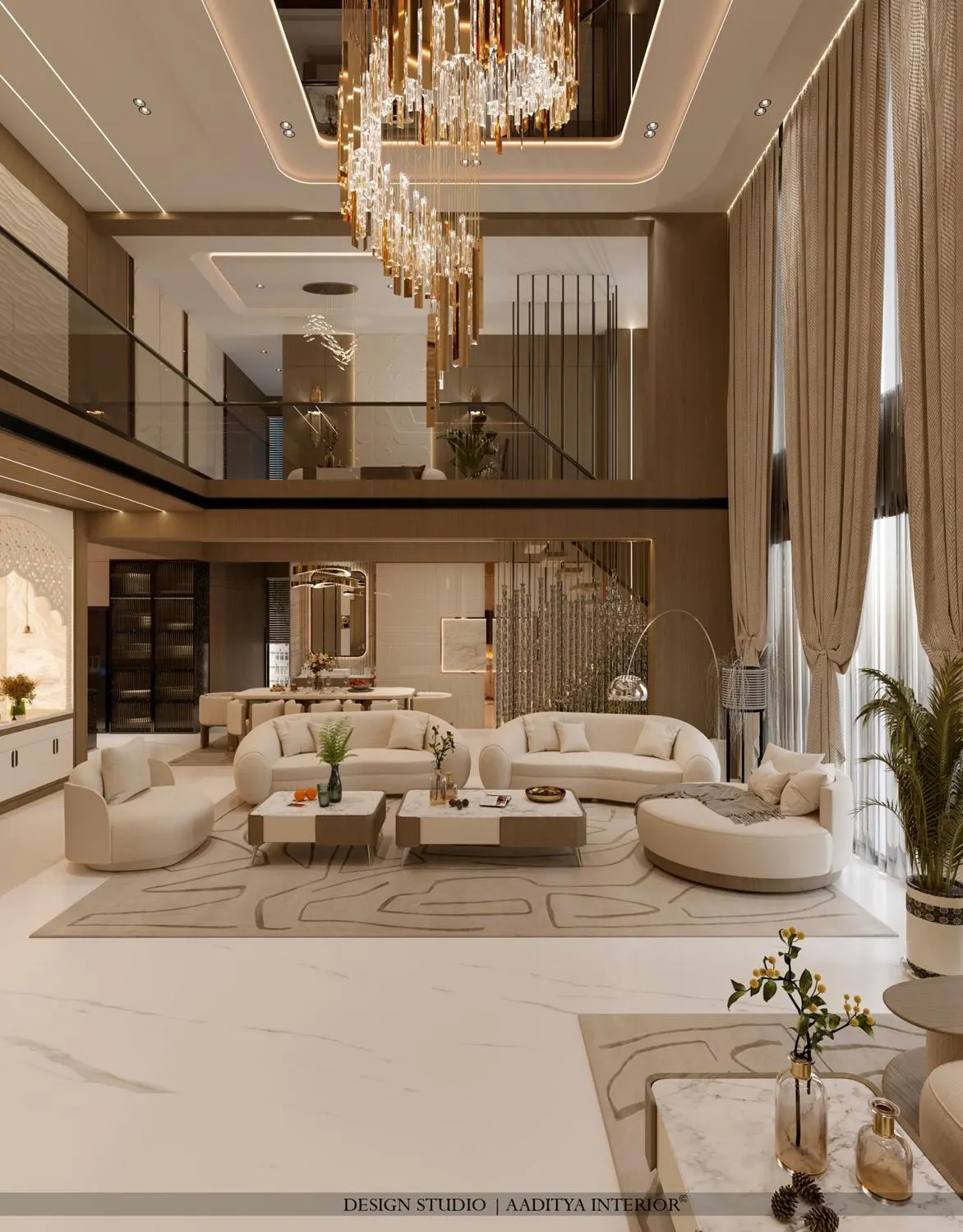
Every family uses a home differently. Our job is to understand your routine first – and let the design follow it.
Bharat Patel · 28 Sep 2026 · 3 min read
The People
Founder, Aaditya Interior
Bharat is the founder of Aaditya Interior and leads client relationships, space planning and site execution across 180+ active projects.
Co-founder, Aaditya Interior
Afrin is the co-founder of Aaditya Interior, leading the design studio – materials, colour, detailing and finishing – along with the office and design team at Katargam, Surat.